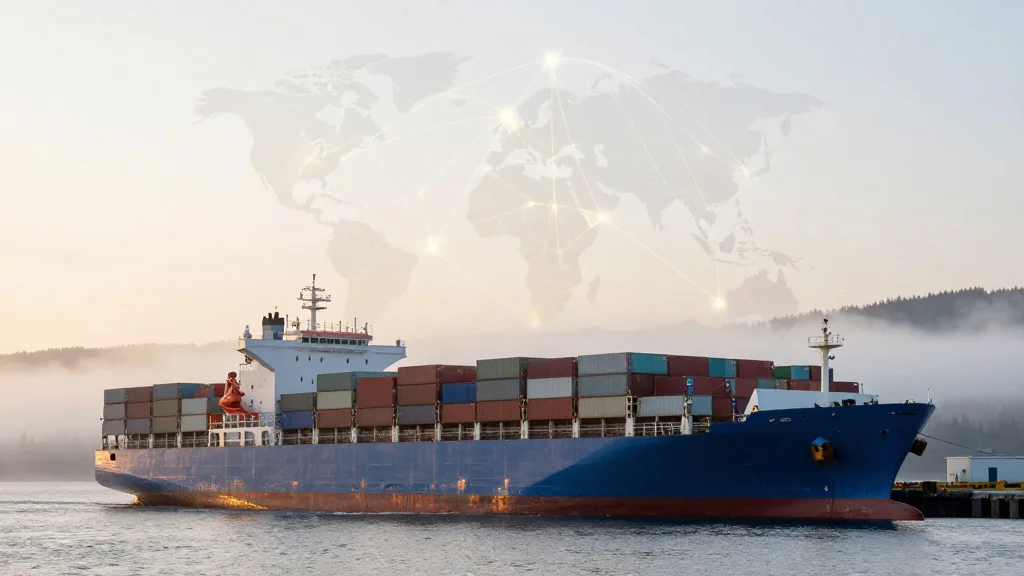
Study: North American Ports Are Getting Fewer Direct Connections
Why It Matters
Reduced port connectivity erodes North America’s trade resilience and could increase import costs, prompting urgent infrastructure investment to safeguard supply chains.
Key Takeaways
- •Canadian ports' degree centrality fell 78% from 2016 to 2023.
- •Total deadweight tonnage at Canadian ports dropped 28% over same period.
- •U.S. ports also lost top‑10 connectivity, shifting dominance to East Asia.
- •Government pledged ~US$2.6 billion for port upgrades, including US$1.2 billion for Montreal.
Pulse Analysis
The Bank of Canada’s recent connectivity study highlights a structural shift in global maritime routes. By measuring degree centrality—a metric that counts unique direct destinations—researchers found that Canada’s top five ports saw their connectivity percentages plunge, leaving them far behind the world’s most linked hub, Zhoushan, China, which sits at 2.9% in 2023. This decline is not isolated; U.S. ports experienced a parallel erosion, signaling a continent‑wide reorientation toward Asian trade corridors driven by faster growth in developing economies.
From a supply‑chain perspective, the drop in both connectivity and deadweight tonnage—down 28% to 119 million tonnes—means fewer vessels and routes are available to move goods into and out of North America. The resulting bottlenecks can extend transit times from days to weeks, amplifying price volatility for commodities and manufactured products. Companies that rely on just‑in‑time inventory models may need to reassess risk buffers, while exporters could face higher freight premiums as carriers prioritize higher‑volume Asian lanes.
Policy makers are responding with a sizable fiscal push. Ottawa has committed roughly US$2.6 billion to modernize port infrastructure, with a US$1.2 billion tranche dedicated to expanding Montreal’s container capacity by 60%. These investments aim to boost productivity, attract new shipping services, and re‑balance the trade network. However, success will depend on coordinated upgrades across rail, road, and inland waterways to ensure that enhanced port facilities translate into faster, more reliable market access for Canadian and U.S. businesses.
Study: North American Ports are Getting Fewer Direct Connections
Comments
Want to join the conversation?
Loading comments...