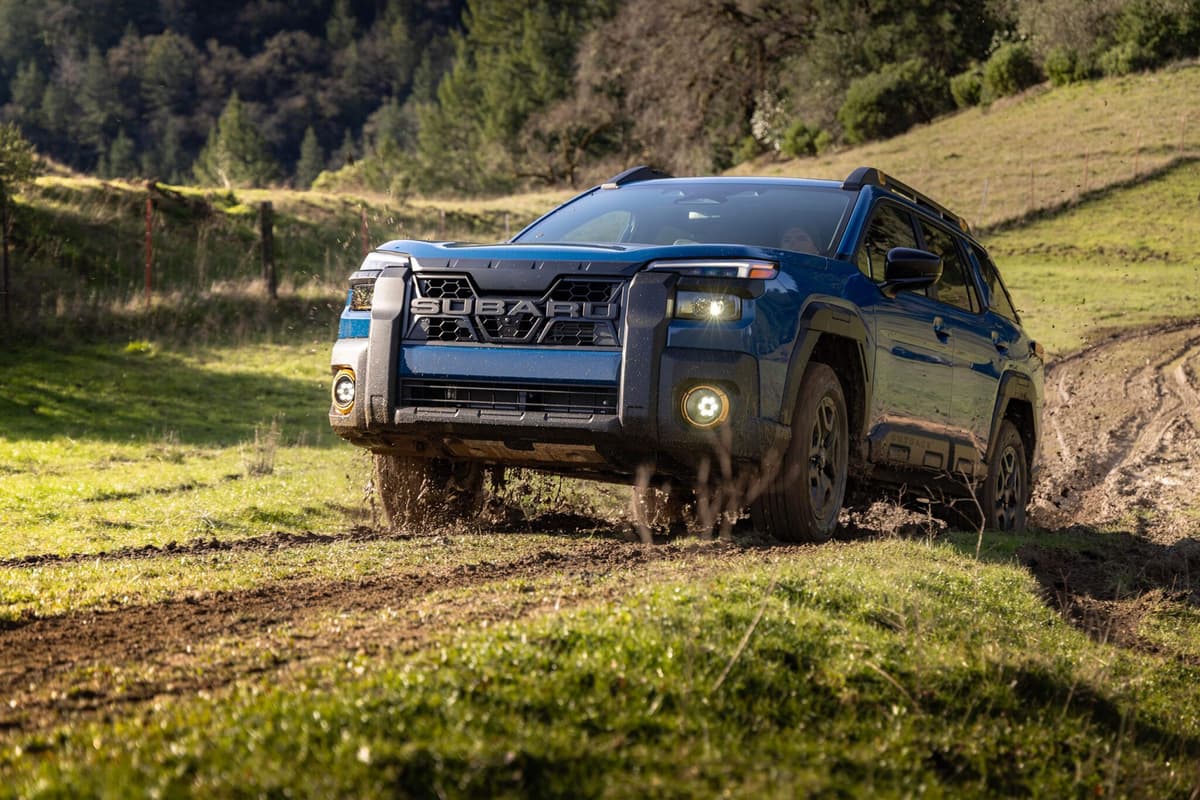
Subaru Profile and Production Forecast to 2030
Why It Matters
Subaru’s expanding production capacity signals a strategic push into electrified models and deeper market penetration, reshaping competitive dynamics in the midsize SUV segment. Investors and suppliers must adjust to higher volume forecasts and evolving power‑train mixes.
Key Takeaways
- •Subaru posted 5% global sales growth in 2025.
- •Production forecast peaks at 1.8 million units by 2030.
- •New EV model slated for 2027 Japanese market launch.
- •North American market remains 60% of Subaru's revenue.
- •Plant upgrades target 15% efficiency gain by 2029.
Pulse Analysis
Subaru’s recent earnings reveal a resilient brand that has capitalized on its reputation for all‑wheel‑drive reliability while expanding its crossover portfolio. In 2025 the company delivered roughly 1.2 million units worldwide, a 5% increase over the prior year, with the United States accounting for nearly two‑thirds of that volume. Profit margins improved as the firm leveraged cost‑saving initiatives and a modest price‑rise strategy, positioning it as a stable performer amid a volatile macro‑economic backdrop.
Looking ahead, Automotive World projects Subaru’s annual production to rise to about 1.8 million vehicles by 2030. The growth trajectory is anchored by a phased rollout of three electric models, beginning with a compact EV slated for a 2027 launch in Japan, followed by two larger battery‑electric SUVs for North America and Europe. To meet the higher output, Subaru plans to modernize its Yajima and Gunma plants, targeting a 15% boost in manufacturing efficiency and a 10% reduction in carbon emissions by 2029. Capacity expansions will be balanced with a shift toward flexible assembly lines that can accommodate both internal‑combustion and electric powertrains.
The forecast carries broader implications for the automotive sector. Subaru’s commitment to scaling EV production while maintaining its core AWD appeal could pressure rivals to accelerate their own electrification timelines, especially in the highly competitive midsize SUV market. Suppliers will need to adapt to a mixed‑technology supply chain, and investors may view the projected output increase as a catalyst for long‑term earnings growth. Ultimately, Subaru’s 2030 outlook underscores a strategic blend of heritage strengths and forward‑looking innovation, positioning the brand to capture market share as consumer preferences evolve.
Subaru profile and production forecast to 2030
Comments
Want to join the conversation?
Loading comments...