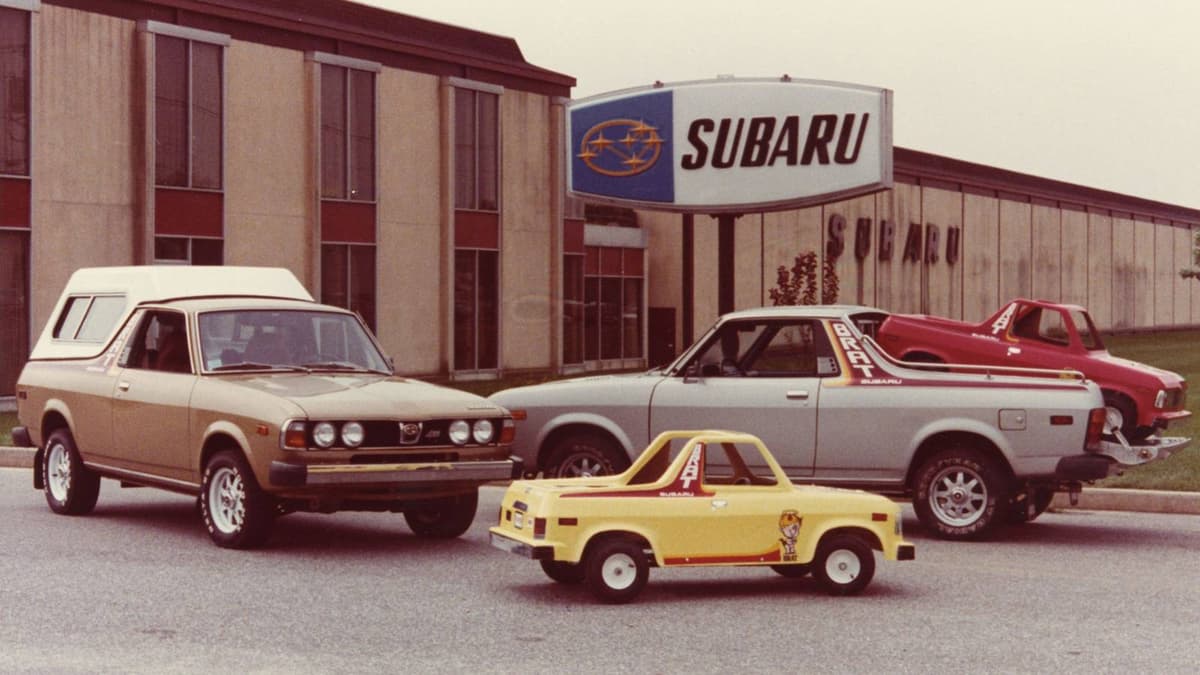
Subaru’s Forgotten BRAT Might Be the Answer to America’s Truck Problem
Companies Mentioned
Why It Matters
A revived BRAT would let Subaru capture a fast‑growing, efficiency‑focused market while leveraging Toyota’s platform to slash development costs. It also offers a price‑point and emissions profile that many buyers cannot find in traditional pickups.
Key Takeaways
- •Compact pickup market growing, Maverick sold 155k in 2025.
- •Subaru sold 100k BRATs 1978‑87, could revive.
- •Toyota stake enables shared platform, cutting development costs.
- •BRAT’s jump seats avoided 25% Chicken Tax tariff.
- •Target price $30k‑$40k fills gap between trucks and SUVs.
Pulse Analysis
The compact pickup segment has transformed from a niche hobbyist market into a mainstream revenue driver. Consumers, especially younger buyers, are gravitating toward vehicles that combine utility with lower ownership costs, and the success of the Ford Maverick and Hyundai Santa Cruz proves that demand is not limited to traditional full‑size trucks. Rising fuel prices and tightening emissions standards further amplify the appeal of smaller, more efficient pickups, creating a clear opening for a brand‑new entrant that can blend practicality with lifestyle branding.
Subaru’s historic BRAT offers a unique blueprint for re‑entry. Its original design cleverly used rear‑facing jump seats to classify the vehicle as a passenger car, sidestepping the 25% “Chicken Tax” that still inflates the cost of imported trucks. By partnering with Toyota—owner of a 20% stake and developer of an upcoming compact pickup platform—Subaru could adopt a modern unibody architecture without the expense of a ground‑up build. This collaboration would also enable shared powertrain options, such as a hybrid system or a fully electric drivetrain, aligning the revived BRAT with today’s sustainability expectations.
From a strategic standpoint, a $30,000‑$40,000 BRAT would sit squarely between premium compact pickups and overpriced full‑size trucks, filling a pricing gap that many consumers currently navigate. The nostalgic cachet of the original model, combined with contemporary safety and connectivity features, could attract both Gen X nostalgia seekers and younger eco‑conscious buyers. If launched successfully, the BRAT could not only boost Subaru’s volume sales but also reinforce its reputation for innovative, all‑wheel‑drive vehicles that defy conventional market segments.
Subaru’s forgotten BRAT might be the answer to America’s truck problem
Comments
Want to join the conversation?
Loading comments...