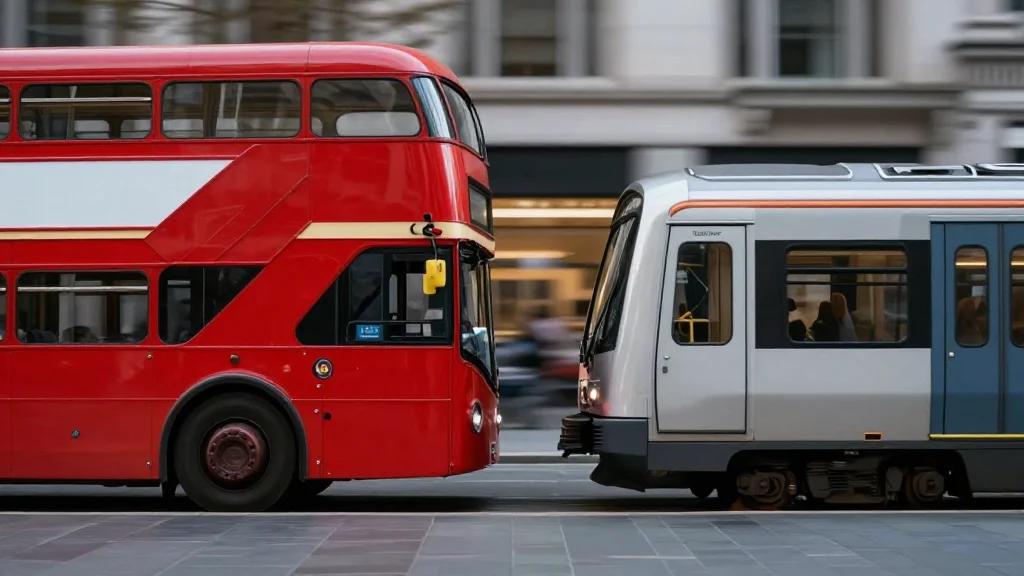
Sunday Movies: London vs Berlin Transit, and North American Cities by Ridership
Key Takeaways
- •London’s tube outperforms Berlin’s U‑U-Bahn in capacity
- •US, Canada, Mexico cities dominate top ridership list
- •Security fears threaten World Cup transit planning
- •ICE policies may depress international event attendance
- •Solaris electric buses promise smoother rides, lower emissions
Pulse Analysis
London and Berlin continue to be benchmark cities for urban rail, but their operational philosophies diverge sharply. London’s Underground, with its 5‑million‑daily passenger peak, relies on high‑frequency service and extensive line extensions, while Berlin’s U‑Bahn emphasizes punctuality and integrated ticketing across modes. Recent data shows London’s capacity utilization edging higher, yet Berlin scores better on on‑time performance and passenger comfort. Planners worldwide watch these metrics to calibrate investments, especially as European cities grapple with aging infrastructure and the need for digital upgrades.
The North American segment of the thread lists the top 15 ridership hubs across the United States, Canada, and Mexico, underscoring a concentration of demand in megacities such as New York, Mexico City, and Toronto. Rapid population growth, transit‑oriented development, and pandemic‑induced shifts toward public transport have propelled these systems into the upper echelon. However, funding gaps, aging fleets, and service reliability remain persistent challenges. Analysts note that sustained ridership growth will hinge on expanding network coverage, integrating fare systems, and leveraging real‑time data to improve the rider experience.
Beyond ridership numbers, the discussion touches on security and technology concerns surrounding the upcoming World Cup. Comments suggest relocating Iranian matches to avoid potential threats to U.S. rail hubs, highlighting how large‑scale events can strain transit security protocols. Simultaneously, the introduction of Solaris battery‑electric buses in Seattle illustrates a parallel push toward greener, smoother‑riding fleets. Early rider feedback points to reduced vibration and lower emissions, signaling that electric buses could become a cornerstone of post‑pandemic transit modernization, provided municipalities address charging infrastructure and procurement costs.
Sunday Movies: London vs Berlin Transit, and North American Cities by Ridership
Comments
Want to join the conversation?