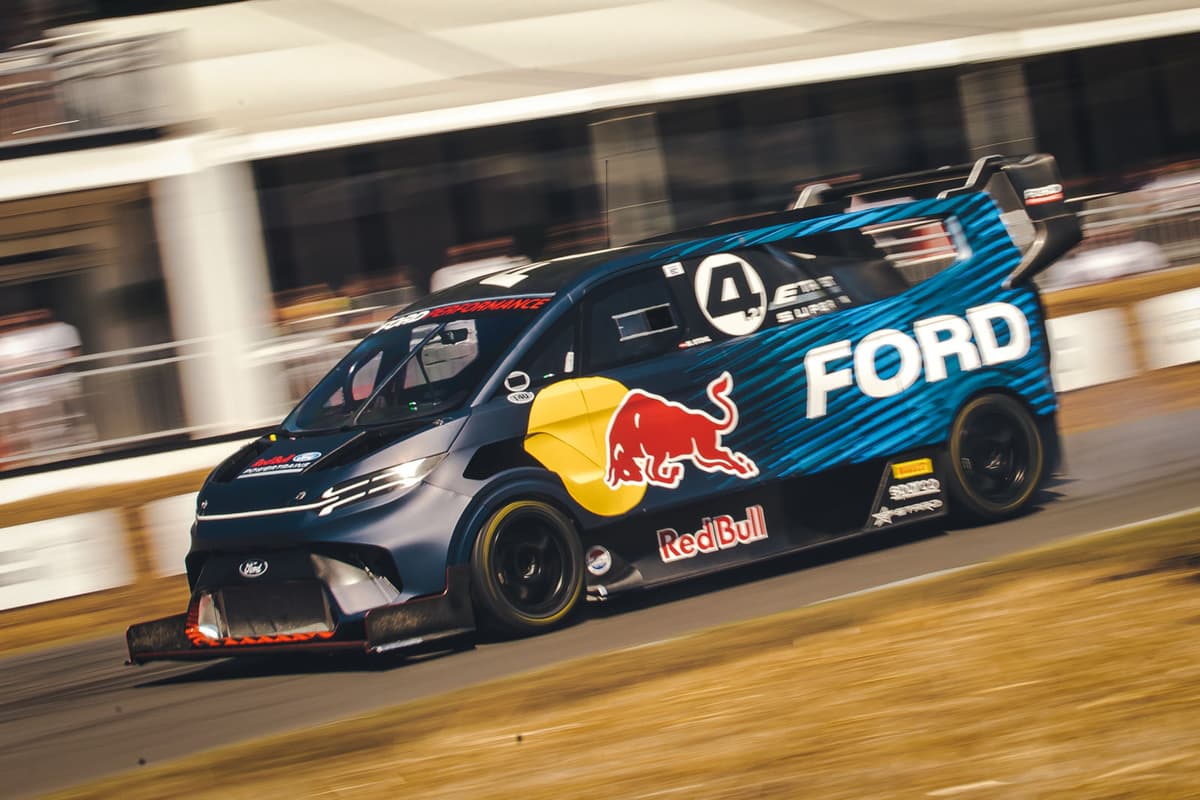
Supervan Successor Could Go ICE: Ford Drops All-EV Focus for Wild Demonstrator Machines
Why It Matters
The pivot signals Ford’s pragmatic bet on power‑train diversification, shaping R&D spend and its competitive edge in performance and commercial markets. It also highlights hybrids as a critical bridge toward full electrification across the auto industry.
Key Takeaways
- •Ford Racing will add hybrid and ICE powertrains to Demonstrators
- •Demonstrators serve as free‑canvas testbeds for battery, motor, and aero tech
- •Shift reflects Ford’s broader strategy to balance EV, hybrid, and combustion development
- •Lessons from Red Bull F1 partnership will accelerate hybrid powertrain expertise
- •Upcoming models may include hybrid Supervan and combustion‑based performance trucks
Pulse Analysis
Ford’s Demonstrator program has long been a showcase for the company’s most daring power‑train experiments. Vehicles such as the 4.2‑bhp Supervan, the F‑150 Lightning Supertruck, and the Mustang Cobra Jet 2200 have raced up Pikes Peak and dazzled crowds at Goodwood, acting as rolling laboratories for battery chemistry, motor control and aerodynamic innovation. By operating outside the rules of formal series, these machines give engineers a “free canvas” to push the envelope on performance, range and integration, feeding insights directly into production‑grade EVs.
The recent strategic shift to incorporate hybrid and internal‑combustion technologies reflects a broader industry reality: full electrification, while essential, will not dominate the market overnight. Ford’s partnership with Red Bull Racing on a Formula 1 power unit has already yielded a wealth of hybrid expertise, from energy‑recovery systems to high‑rpm turbine design. Applying those lessons to Demonstrators accelerates the company’s ability to blend electric torque with gasoline efficiency, a combination that could appeal to performance enthusiasts and fleet customers alike. This hybrid focus also diversifies Ford’s R&D portfolio, reducing reliance on a single power‑train pathway.
For investors and competitors, the move signals that Ford is hedging its bets while still committing to an electric future. By keeping a robust pipeline of ICE and hybrid prototypes, the automaker can respond to regional regulatory variations and consumer preferences that still favor gasoline‑powered trucks and performance cars. Moreover, the Demonstrators act as high‑visibility marketing tools, reinforcing Ford’s image as a technology leader capable of mastering multiple propulsion systems. As the auto sector navigates the transition to net‑zero, Ford’s balanced approach may prove a pragmatic blueprint for sustainable growth.
Supervan successor could go ICE: Ford drops all-EV focus for wild Demonstrator machines
Comments
Want to join the conversation?
Loading comments...