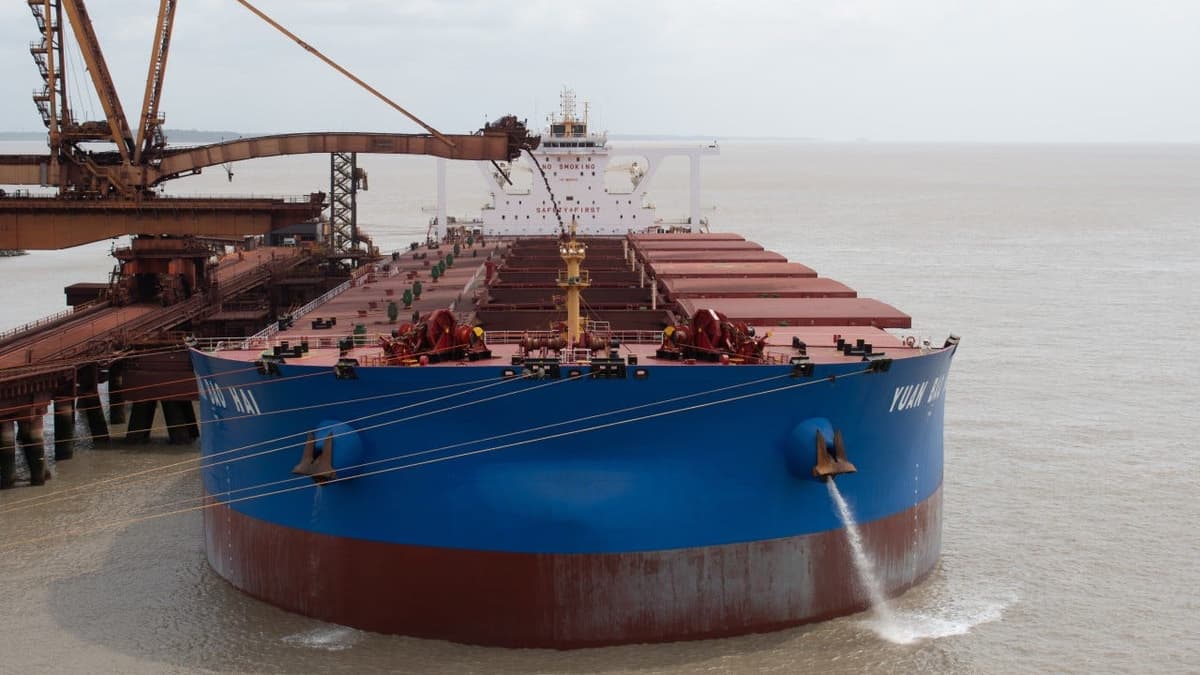
Supply Constraints and Longer Hauls Boost Dry Bulk Market
Why It Matters
The supply squeeze and rerouting raise freight rates and extend transit times, pressuring commodity exporters and importers worldwide. Prolonged fleet aging could constrain capacity growth, affecting the profitability of dry‑bulk operators.
Key Takeaways
- •210 bulk carriers stuck in Gulf, cutting dry‑bulk supply.
- •BDI up 13% since US‑Israel strikes on Iran.
- •Handysize fleet aging; 20% over 20 years, limited new orders.
- •Vessels rerouted via Cape of Good Hope increase tonne‑miles.
- •Fertiliser and iron‑ore exports from Gulf halted, impacting India, Africa.
Pulse Analysis
Geopolitical friction in the Gulf has become a catalyst for a tighter dry‑bulk market. Since the February US‑Israel strikes on Iran, the Baltic Dry Index has jumped 13%, driven by the loss of roughly 30 million tonnes of monthly trade—about 7% of global demand. Drewry’s analysis shows 210 vessels are immobilised, eliminating iron‑ore and fertiliser flows that previously moved through the region, and forcing shippers to reconsider routing strategies.
The blockage has ripple effects across commodity chains. Indian exporters of iron ore, rice and steel are benefiting from a weaker rupee, but they now face longer voyages as ships skirt the Cape of Good Hope, inflating tonne‑miles and freight costs. Meanwhile, a resurgence in gas demand has reversed the coal‑to‑gas transition, spurring demand for supramax and panamax carriers. The agricultural sectors of India and Africa, reliant on Gulf‑sourced nitrogen fertiliser, confront supply shortfalls that could tighten food‑price dynamics.
A deeper structural issue looms: the handysize fleet, crucial for regional trades, is aging rapidly. Nearly 20% of vessels exceed 20 years, and half are older than 15 years, while new orders represent only 2% of sector capacity. With demolition ages averaging 32 years and deliveries not expected until 2029, fleet renewal is delayed, potentially limiting future supply elasticity and pressuring operators’ margins. Stakeholders must monitor both short‑term routing disruptions and long‑term fleet modernization challenges.
Supply constraints and longer hauls boost dry bulk market
Comments
Want to join the conversation?
Loading comments...