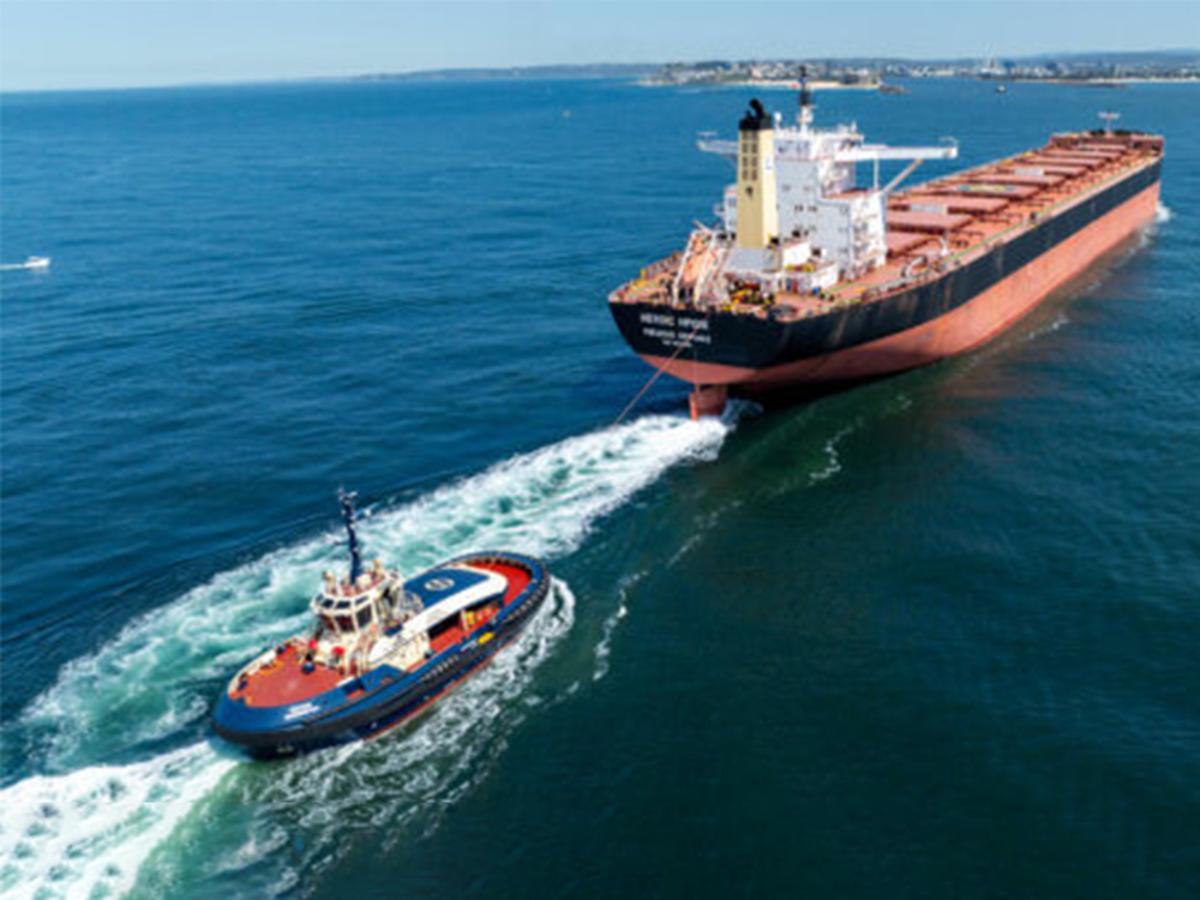
Svitzer’s First Three TRAnsverse Tugs Near 3,000 Commercial Tug Job Total
Why It Matters
The rapid adoption of TRAnsverse tugs boosts port throughput and supports shipping lines’ shift toward larger, more efficient vessels, while the electric Balder advances industry decarbonisation goals.
Key Takeaways
- •Three TRAnsverse tugs completed 2,898 jobs in 18 months.
- •New 35‑m Svitzer Balder is world’s largest electric escort tug.
- •Trials show 88 tonne bollard pull and 150 tonne steering force.
- •Over 75% of Svitzer’s 20‑plus tug order book now TRAnsverse.
- •Operators cite superior maneuverability in tight waterways and harsh weather.
Pulse Analysis
Svitzer, the global towage arm of Maersk, has long been a bellwether for maritime support services. Its introduction of the TRAnsverse class marks a strategic pivot toward vessels that combine high power density with enhanced maneuverability, traits increasingly demanded by mega‑container ships and bulk carriers. By standardising a modular hull form that can be fitted with electric, hybrid or conventional diesel propulsion, Svitzer offers ports a flexible solution that aligns with both operational efficiency and emerging environmental regulations. The near‑3000‑job milestone for the first three units underscores how quickly the market has embraced the design.
The operational data from Amsterdam’s congested canals and Newcastle’s harsh sea states provide a real‑world stress test for the TRAnsverse tugs. Pilots have praised the 88‑tonne bollard pull and more than 150‑tonne steering force of the Balder prototype, noting faster response times and smoother vessel escort in confined waterways. Such performance translates into reduced berth occupancy times and lower fuel consumption for the assisted ships, directly contributing to supply‑chain reliability. Moreover, the electric variant’s zero‑emission profile helps terminals meet tightening carbon caps without sacrificing power.
Looking ahead, the fact that over 75 % of Svitzer’s current order book is dedicated to TRAnsverse models signals a broader industry shift toward high‑efficiency towage. Shipping lines investing in larger, faster vessels are increasingly dependent on tugboats that can unlock terminal capacity without costly infrastructure upgrades. The Balder’s electric architecture also positions Svitzer to capture emerging green‑finance incentives and to comply with IMO’s 2030 decarbonisation targets. As ports worldwide grapple with capacity constraints, the TRAnsverse platform could become the new standard for sustainable, high‑performance maritime assistance.
Svitzer’s first three TRAnsverse tugs near 3,000 commercial tug job total
Comments
Want to join the conversation?
Loading comments...