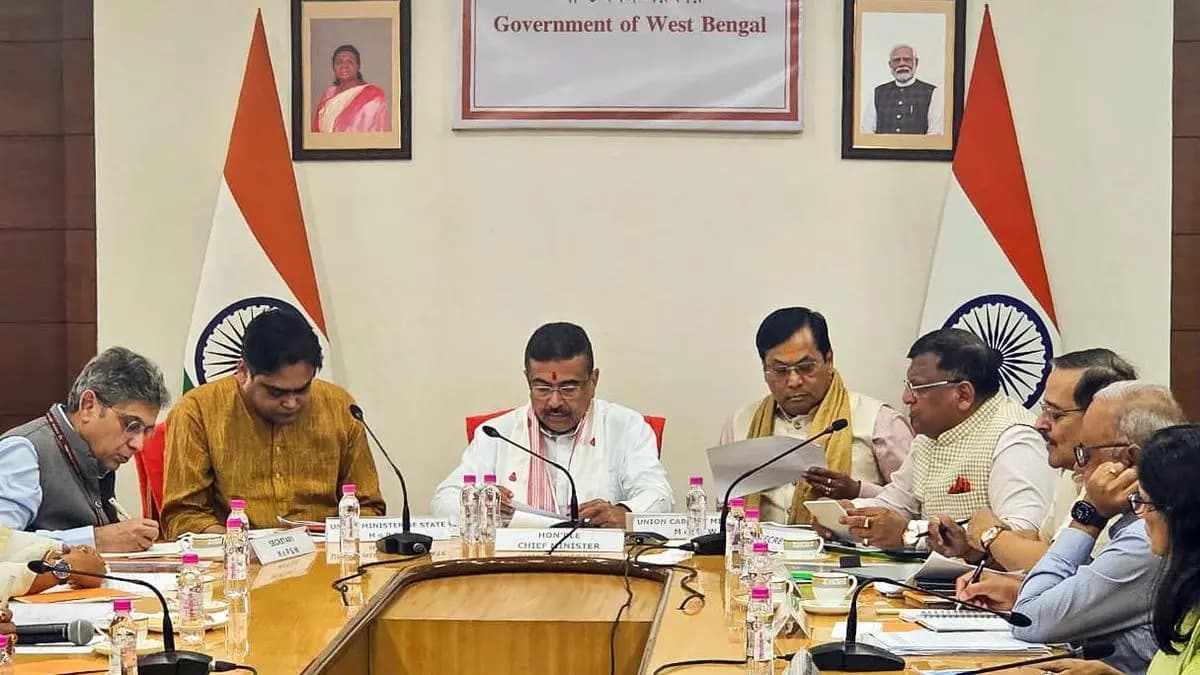
Tajpur Deep Sea Port Declared Unviable, Bengal Proposes New Site at Dadanpatrabar
Companies Mentioned
Why It Matters
Redirecting the port to Dadanpatrabar preserves West Bengal's strategic push to become Eastern India's maritime hub and safeguards a multi‑billion‑dollar investment pipeline. The decision also signals a shift in political and commercial dynamics after the Adani exit, impacting regional logistics competition.
Key Takeaways
- •Tajpur port deemed unviable due to lack of government land
- •West Bengal proposes new deep‑sea port at Dadanpatrabar, 1,700 acres available
- •Centre and state discuss $2.3 billion maritime investment pipeline by 2031
- •Project aims to create over 62,500 direct and indirect jobs
- •Kolkata to join Water Metro network as 18th Indian city
Pulse Analysis
West Bengal’s maritime strategy has taken a decisive turn as the state pivots from the stalled Tajpur deep‑sea port to a new site at Dadanpatrabar. The shift is driven primarily by land constraints; the Tajpur location lacks the requisite government‑owned acreage, prompting the state to leverage the 1,700 acres it already controls near the original site. By securing a more feasible land base, the government hopes to avoid further delays that have plagued the project since the original tender awarded to Adani Ports was rescinded in late 2023. This realignment also reflects the political recalibration under Chief Minister Suvendu Adhikari, who has long opposed the Tajpur plan and now positions Dadanpatrabar as a cornerstone of Bengal’s logistics future.
The federal‑state partnership outlined by Union Minister Sarbananda Sonowal envisions a $2.3 billion investment pipeline through 2031, targeting the development of ports, inland waterways, shipbuilding facilities, and associated logistics hubs. The ambitious plan promises more than 62,500 direct and indirect jobs, positioning Kolkata and Haldia as the primary gateways for eastern India’s trade. A revenue‑sharing model under discussion could align state and central interests, ensuring that fiscal benefits flow back to local economies while attracting private capital. The Dadanpatrabar project, with its proximity to existing maritime corridors, is expected to enhance cargo handling capacity and reduce congestion at older terminals.
Beyond the port, Kolkata’s inclusion in the Water Metro network underscores a broader push toward multimodal connectivity. As the 18th city to adopt water‑based urban transit, Kolkata aims to integrate riverine routes with road, rail, and port infrastructure, fostering smoother freight movement and passenger mobility. This holistic approach aligns with India’s national logistics agenda, which seeks to cut logistics costs and improve supply‑chain resilience. If executed effectively, West Bengal could emerge as a pivotal maritime hub, reshaping trade flows in the Bay of Bengal and offering a competitive alternative to neighboring ports in Odisha and Bangladesh.
Tajpur deep sea port declared unviable, Bengal proposes new site at Dadanpatrabar
Comments
Want to join the conversation?
Loading comments...