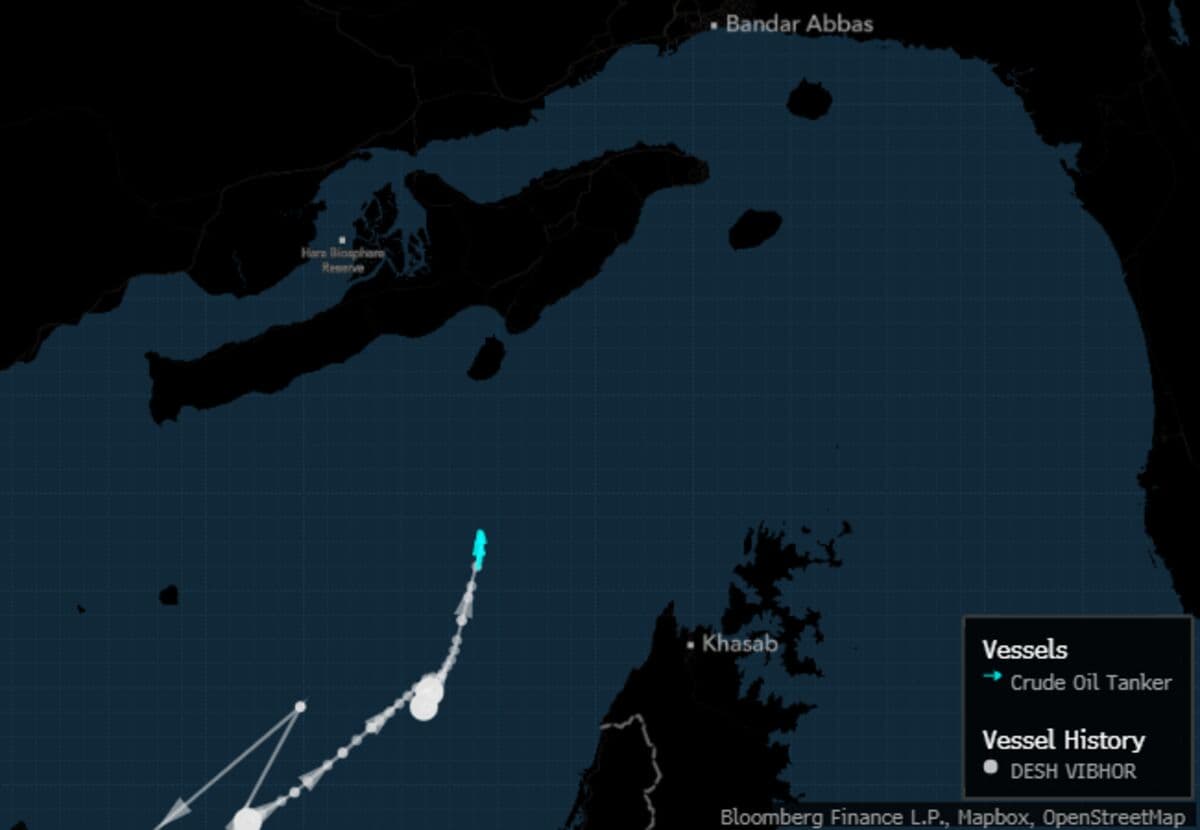
Tanker in Persian Gulf Resumes Voyage to Hormuz After U-Turn
Why It Matters
The maneuver signals persistent geopolitical risk to oil transport through the Hormuz chokepoint, which could affect global crude supply and price stability.
Key Takeaways
- •Supertanker Desh Vibhor resumed northbound route to Strait of Hormuz.
- •Vessel initially turned toward US‑advised southern Gulf route before U‑turn.
- •Bloomberg tracking confirms the ship’s course change amid regional tensions.
- •Potential impact on crude oil flow if further disruptions occur.
- •Incident underscores volatility of Persian Gulf shipping lanes.
Pulse Analysis
The Strait of Hormuz remains one of the world’s most critical oil arteries, funneling roughly 20% of daily global crude shipments. Because the narrow passage lies between Iran and the United Arab Emirates, any deviation by large tankers draws immediate scrutiny from navies, insurers, and commodity traders. U.S. military advisories often promote a southern Gulf corridor to mitigate the threat of hostile encounters, yet the Desh Vibhor’s brief shift to that route and subsequent U‑turn illustrate how quickly operational decisions can pivot amid evolving risk assessments.
Bloomberg’s real‑time tracking revealed the Desh Vibhor’s erratic movements on June 19, underscoring the challenges ship operators face when balancing safety, schedule adherence, and contractual obligations. A sudden course correction can trigger contractual penalties, increase fuel consumption, and raise insurance premiums. Moreover, the vessel’s decision to head north toward the Iranian coastline suggests either a reassessment of threat levels or a strategic choice to capitalize on a more direct path to market, reflecting the delicate calculus that governs maritime logistics in contested waters.
For market participants, such incidents serve as a reminder that geopolitical flashpoints can translate into tangible supply‑chain disruptions. Even brief delays or rerouting of a single supertanker can tighten regional oil inventories, prompting price volatility in futures markets. Analysts therefore monitor vessel‑tracking platforms closely, integrating these signals into broader risk models that forecast price swings and inform hedging strategies. As tensions ebb and flow, the ability to anticipate and respond to route changes will remain a competitive advantage for traders, shippers, and energy firms alike.
Tanker in Persian Gulf Resumes Voyage to Hormuz After U-Turn
Comments
Want to join the conversation?
Loading comments...