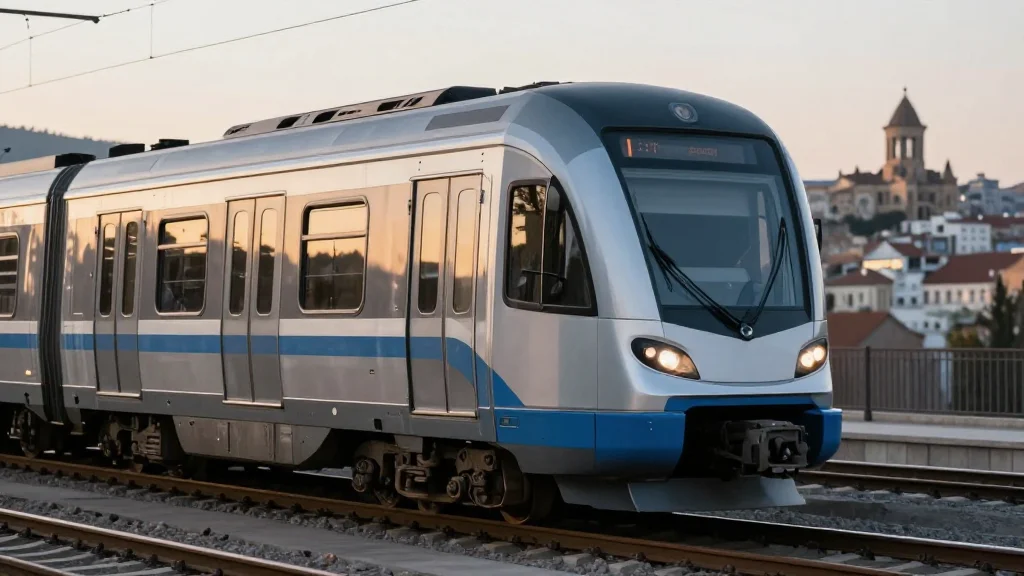
Tbilisi Metro Modernization Project
Why It Matters
Modernizing Tbilisi’s metro will improve urban mobility, attract investment, and stimulate economic growth across Georgia’s transport sector. AIIB’s financing underscores the bank’s commitment to infrastructure development in emerging markets.
Key Takeaways
- •AIIB provides $140 million loan for Tbilisi metro upgrade
- •Total project cost exceeds $232 million, 58% funded by AIIB
- •Procurement includes $230 million electric train contract via open tender
- •Project runs to 2026, key contracts slated 2025‑2026
Pulse Analysis
The Tbilisi Metro Modernization Project represents a landmark investment in Georgia’s urban infrastructure, leveraging a $140 million AIIB loan alongside domestic funding to reach a total cost of $232.36 million. By replacing aging rolling stock with state‑of‑the‑art electric metro cars and upgrading supervisory and design capabilities, the project seeks to double passenger capacity and cut travel times, aligning the city with global standards for sustainable public transport.
A detailed procurement plan outlines a mix of consulting services and a major goods contract. The $58,156 consulting contract for supervision and design review will be awarded through direct selection, while a $2.3 million supervision consultant will be sourced via an international open competitive selection using quality‑cost based criteria. The centerpiece—a $230 million contract for electric metro cars—will follow an open competitive tender, emphasizing lowest evaluated cost. With AIIB financing covering 58% of the train purchase, the timeline stretches from advertisement in late 2024 to contract signing by early 2025, and further consulting contracts slated for 2025‑2026, ensuring a phased rollout.
Beyond the immediate transport benefits, the modernization is poised to catalyze broader economic impacts. Enhanced metro reliability can reduce congestion, lower emissions, and improve labor market efficiency by shortening commute times. For AIIB, the project reinforces its strategic focus on climate‑resilient infrastructure in emerging economies, potentially opening doors for future financing in the Caucasus region. Stakeholders—from local commuters to regional investors—should monitor the procurement milestones, as successful execution will signal Georgia’s readiness for larger-scale infrastructure partnerships.
Tbilisi Metro Modernization Project
Comments
Want to join the conversation?
Loading comments...