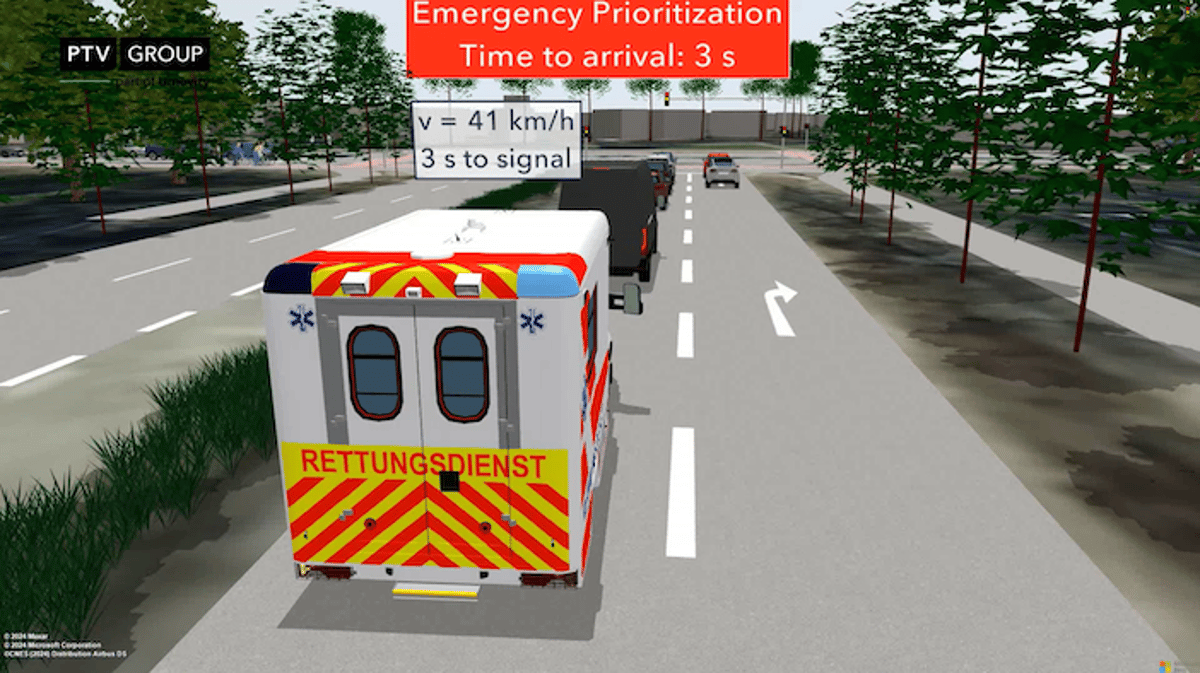
TECH PROFILE: Smarter Intersections with C-ITS and Modelling From PTV Vissim
Why It Matters
C‑ITS‑enabled simulation gives municipalities a low‑risk way to unlock capacity, cut travel times and improve safety, accelerating smart‑city traffic initiatives. It also de‑risk investment by proving benefits before costly infrastructure changes.
Key Takeaways
- •PTV Vissim now simulates V2I communication for traffic signals
- •Planners can test signal priority for emergency vehicles and buses
- •Simulation measures delay, queue length, and throughput across scenarios
- •Supports testing of ITS‑G5, 5G, and cloud‑based C‑ITS links
- •Enables data‑driven decisions without disrupting live traffic
Pulse Analysis
The rapid rollout of Cooperative Intelligent Transport Systems is reshaping how cities manage congestion, but real‑world pilots are costly and disruptive. Microscopic simulators like PTV Vissim bridge that gap by creating a virtual replica of an intersection where V2I data streams can be injected and evaluated. By mirroring the behavior of connected cars, trucks and public‑transport fleets, the platform provides a sandbox for testing algorithms that would otherwise require extensive field trials, accelerating the adoption curve for smart‑signal technologies.
For traffic engineers, the value lies in quantifiable performance metrics. Vissim can model varying C‑ITS penetration rates and instantly report on key indicators such as average delay, queue length and overall throughput. This granularity enables targeted strategies—emergency‑vehicle green‑waves, bus‑priority windows, or dynamic lane assignments—while ensuring that the broader traffic flow remains stable. The ability to compare scenarios side‑by‑side reduces uncertainty, shortens project timelines, and helps justify budget allocations to city councils and transit agencies.
Looking ahead, the platform’s agnostic approach to communication protocols positions it for emerging standards. Whether a city adopts dedicated short‑range communications like ITS‑G5, leverages 5G cellular networks, or relies on cloud‑based data brokers, Vissim can simulate the end‑to‑end interaction. This flexibility not only future‑proofs investments but also encourages innovation in use cases such as vulnerable‑road‑user protection and dynamic lane management. As more vehicles become C‑ITS‑enabled, simulation tools will become indispensable for data‑driven, resilient urban mobility planning.
TECH PROFILE: Smarter intersections with C-ITS and modelling from PTV Vissim
Comments
Want to join the conversation?
Loading comments...