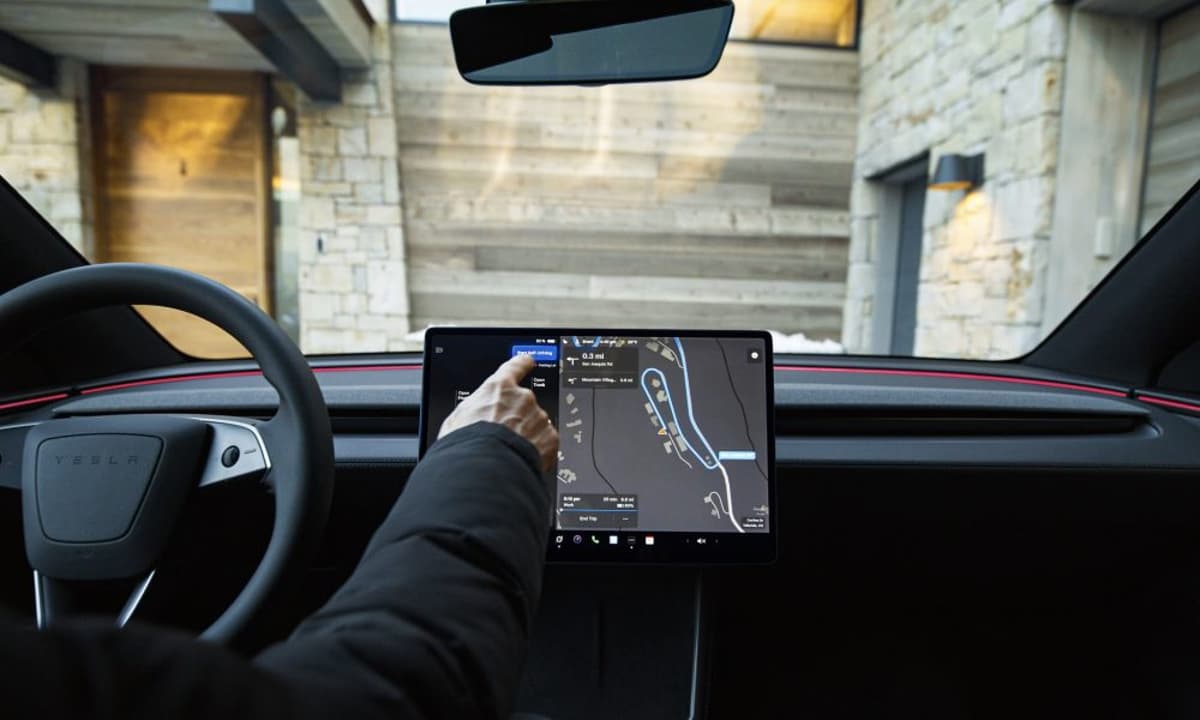
Tesla FSD (Supervised) Fleet Passes 8.4 Billion Cumulative Miles
•March 1, 2026
0
Why It Matters
The volume of supervised miles directly fuels the training of Tesla’s autonomous‑driving neural networks, accelerating progress toward fully unsupervised FSD and strengthening its competitive edge in the emerging robotaxi market.
Key Takeaways
- •8.4 billion miles logged on FSD (Supervised) fleet.
- •Miles grew from 6 M (2021) to 4.25 B (2025).
- •1 billion miles added in first 50 days of 2026.
- •Nearing Musk’s 10 billion‑mile safety benchmark.
- •Data fuels neural‑network training for future unsupervised FSD.
Pulse Analysis
Tesla’s cumulative 8.4 billion supervised miles represent a data set few automotive players can match. By leveraging its expanding fleet of consumer vehicles, Tesla captures edge‑case scenarios that traditional test tracks miss, feeding a constantly evolving neural‑network model. This approach contrasts with competitors that rely on limited fleet trials or simulation, giving Tesla a richer, real‑world training corpus that accelerates algorithmic improvements and safety validations.
Elon Musk has repeatedly cited a 10‑billion‑mile threshold as the tipping point for safe, unsupervised full self‑driving. At the current trajectory—over a billion miles added in just 50 days—Tesla is poised to cross that line within the year. Each additional mile reduces the statistical likelihood of rare, high‑risk events, a critical factor for regulatory approval. The milestone also signals that Tesla’s supervised system is maturing toward the level of robustness required for autonomous operation without driver oversight.
The commercial implications are significant. A larger, data‑rich fleet supports Tesla’s burgeoning robotaxi ambitions, promising revenue streams beyond vehicle sales. Moreover, the milestone strengthens Tesla’s negotiating position with regulators worldwide, who increasingly demand empirical safety evidence. As rivals scramble to build comparable data banks, Tesla’s head start may translate into a durable market advantage, shaping the future landscape of autonomous mobility.
Tesla FSD (Supervised) fleet passes 8.4 billion cumulative miles
0
Comments
Want to join the conversation?
Loading comments...