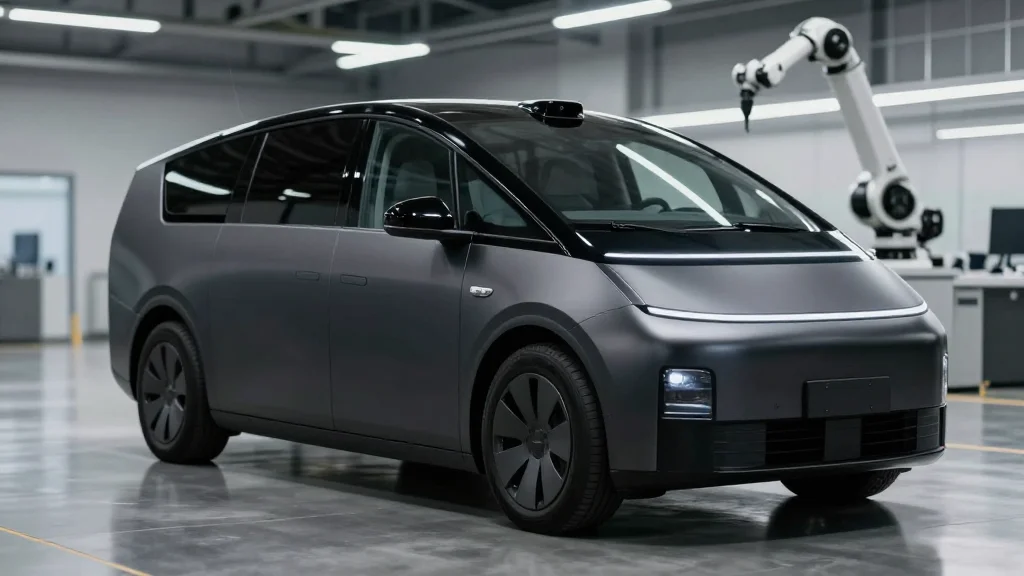
Tesla Is Starting Production of Its Cybercab Robotaxi
Companies Mentioned
Why It Matters
The Cybercab could become the cornerstone of Tesla’s autonomous ride‑hailing business, giving the automaker a regulatory edge and a path to new revenue streams, while delays in full‑self‑driving software and recent leadership exits pose execution risks.
Key Takeaways
- •Tesla started volume production of Cybercab at Giga Texas.
- •Cybercab meets all federal safety standards, avoiding NHTSA 2,500‑vehicle cap.
- •Full Self‑Driving software not expected until Q4 2026, delaying revenue.
- •Management turnover removed all original Cybercab program leaders.
- •Ride‑hailing network aims to expand to six new U.S. cities by mid‑year.
Pulse Analysis
The robotaxi market is heating up as firms race to commercialize driverless rides. Tesla’s decision to move the Cybercab from prototype to volume production at Giga Texas signals confidence in its hardware platform, even as the broader industry grapples with regulatory hurdles and high capital costs. By leveraging its existing battery and vehicle architecture, Tesla can potentially achieve economies of scale that rivals such as Waymo and Cruise struggle to match.
A key differentiator for the Cybercab is its compliance with all Federal Motor Vehicle Safety Standards from the outset. Unlike competitors that must secure a limited NHTSA exemption for non‑compliant prototypes, Tesla can self‑certify the vehicle, sidestepping the 2,500‑unit cap that constrains production growth. This regulatory head‑start could allow Tesla to field a larger fleet more quickly, accelerating data collection for its Full Self‑Driving (FSD) algorithms and strengthening its ride‑hailing network’s market presence.
However, the rollout faces notable headwinds. Musk’s guidance places the release of unsupervised FSD software in Q4 2026, pushing revenue realization to 2027. Coupled with the departure of core program managers, the execution risk is heightened. Investors are watching closely as safety metrics—currently a crash every 57,000 miles—must improve to meet consumer expectations. If Tesla can resolve software gaps and maintain production momentum, the Cybercab could unlock a new, high‑margin revenue stream; failure to do so may erode its competitive advantage.
Tesla is starting production of its Cybercab robotaxi
Comments
Want to join the conversation?
Loading comments...