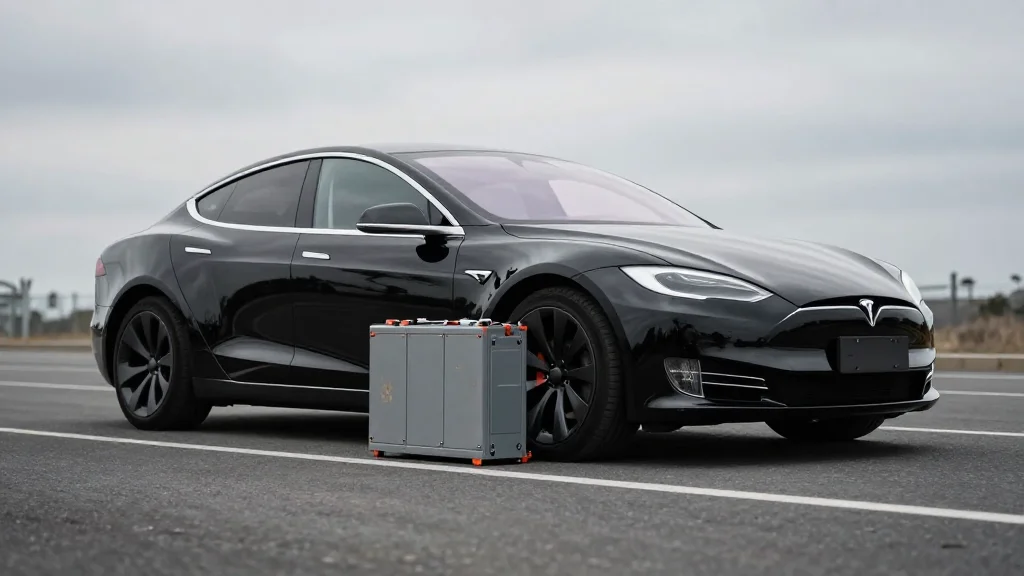
Tesla Just Missed Electric Vehicle Delivery Expectations Yet Again... It Gets Worse Too
Companies Mentioned
Why It Matters
The delivery shortfall and swelling inventory threaten Tesla’s cash‑flow generation, while the aggressive AI spend shifts investor focus from core vehicle sales to speculative autonomous‑technology bets.
Key Takeaways
- •Tesla delivered 358,023 EVs in Q1 2026, missing 370,000 estimate
- •Inventory rose to 50,277 units, the largest backlog in company history
- •Capital‑expenditure plan lifted to $20 billion for AI and robot projects
- •Analysts project over $6 billion negative free cash flow in 2026
Pulse Analysis
Tesla’s latest quarterly numbers highlight a growing disconnect between production capacity and market demand. While deliveries rose 6% year‑over‑year, they remain well below the 2025 baseline, and the company’s total annual deliveries have slipped from 1.79 million in 2024 to 1.64 million in 2025. The shortfall reflects broader sector challenges: intensified competition from legacy automakers, lingering tariff pressures, and the removal of the $7,500 federal EV tax credit under the current administration. As global demand outside China stalls, Tesla’s reliance on its Model 3 and Model Y—accounting for 97% of sales—exposes a narrow product mix vulnerable to macro‑economic shifts.
The inventory buildup is now the most pressing operational risk. With 408,300 vehicles built versus 358,023 delivered, Tesla carries more than 50,000 unsold cars, the largest backlog in its history. This excess ties up working capital and drags on free cash flow, a concern amplified by the company’s decision to lift 2026 cap‑ex spending to $20 billion, up from $8.5 billion a year earlier. Much of the new budget is earmarked for AI chips, autonomous‑driving hardware, and the nascent humanoid‑robot program, projects that are still years from commercial revenue. Analysts at Visible Alpha now expect Tesla to post over $6 billion of negative free cash flow this year, a stark reversal from its historically strong cash‑generation profile.
Investors are forced to weigh Tesla’s traditional automotive fundamentals against its futuristic bets. The stock trades at a forward earnings multiple near 174×, reflecting market confidence in Musk’s robotaxi and humanoid‑robot vision rather than current earnings. However, the robotaxi rollout remains limited, and many rides are still remotely supervised, raising questions about scalability. As the EV market tightens and cash flow deteriorates, the valuation premium hinges on the successful commercialization of autonomous services. For shareholders, the key risk is whether Tesla can translate its AI spend into profitable revenue streams before the inventory drag erodes its balance sheet.
Tesla Just Missed Electric Vehicle Delivery Expectations Yet Again... It Gets Worse Too
Comments
Want to join the conversation?
Loading comments...