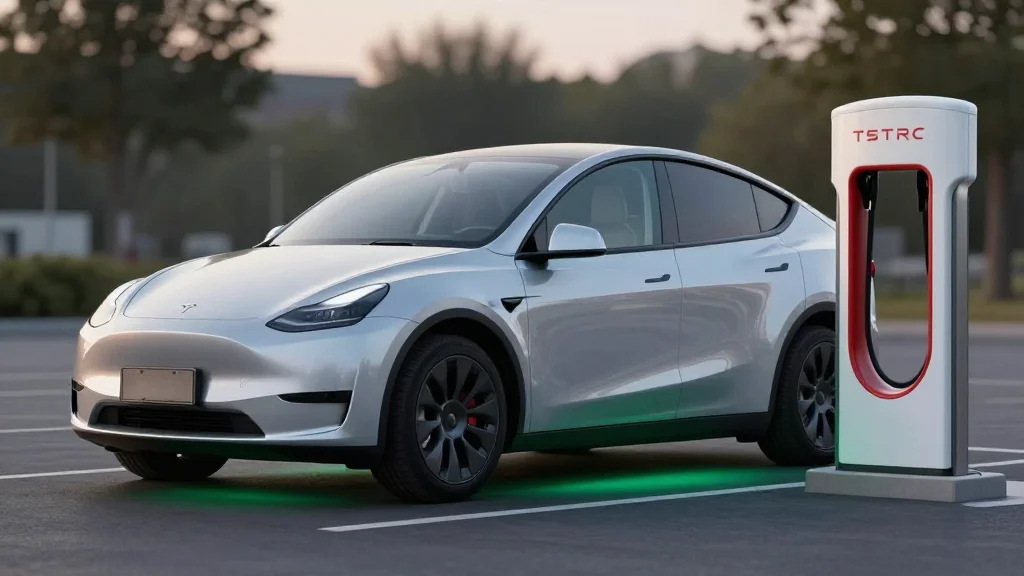
Tesla Model Y Battery Tested After 16,000 Miles Of Mostly Fast Charging
Companies Mentioned
Why It Matters
The test challenges the prevailing belief that frequent DC fast charging inevitably erodes EV battery life, offering owners a practical roadmap to preserve range and resale value. It also informs manufacturers about real‑world impacts of charging strategies on NMC chemistry packs.
Key Takeaways
- •Model Y retained 99% battery capacity after 16,000 miles.
- •Owner capped charging at 75% and kept SOC above 35%.
- •Preconditioning before DC fast charging helped preserve capacity.
- •NMC pack showed slight cell imbalance rise, not concerning.
- •Study suggests fast charging safe if extremes avoided.
Pulse Analysis
Fast‑charging has long been the Achilles’ heel of electric‑vehicle adoption, with studies linking frequent DC bursts to accelerated lithium‑ion wear. Yet not all chemistries react identically; Tesla’s long‑range Model Y uses an NMC (nickel‑manganese‑cobalt) pack, which historically tolerates higher charge rates less gracefully than the newer LFP (lithium‑iron‑phosphate) cells favored for their thermal stability. By juxtaposing the Model Y’s performance against industry‑wide degradation curves, analysts can refine predictive models that separate chemistry‑specific effects from user behavior.
The Canadian owner’s six‑month experiment combined 2,888 kWh of DC fast‑charge energy with 2,588 kWh from a 5 kW home charger, then ran Tesla’s proprietary 20‑hour full‑cycle test. The result—99% retained capacity and unchanged 326‑mile range—underscores two actionable habits: pre‑conditioning the pack before high‑power sessions and avoiding charge extremes. Limiting the charge ceiling to 75% and never letting the state‑of‑charge dip below 35% curtails the voltage swing that drives cathode degradation, while pre‑conditioning stabilizes battery temperature, reducing stress during rapid energy influx.
For fleet operators and private owners alike, the implications are clear. Fast‑charging infrastructure can be leveraged without sacrificing longevity, provided software‑level limits and driver education enforce moderate SOC windows. Automakers may embed these parameters into vehicle‑to‑grid communication protocols, offering dynamic charge‑limit recommendations based on real‑time battery health data. As the EV market scales, such evidence‑based charging strategies will be pivotal in maintaining consumer confidence, preserving resale values, and extending the overall lifespan of high‑capacity lithium‑ion packs.
Tesla Model Y Battery Tested After 16,000 Miles Of Mostly Fast Charging
Comments
Want to join the conversation?
Loading comments...