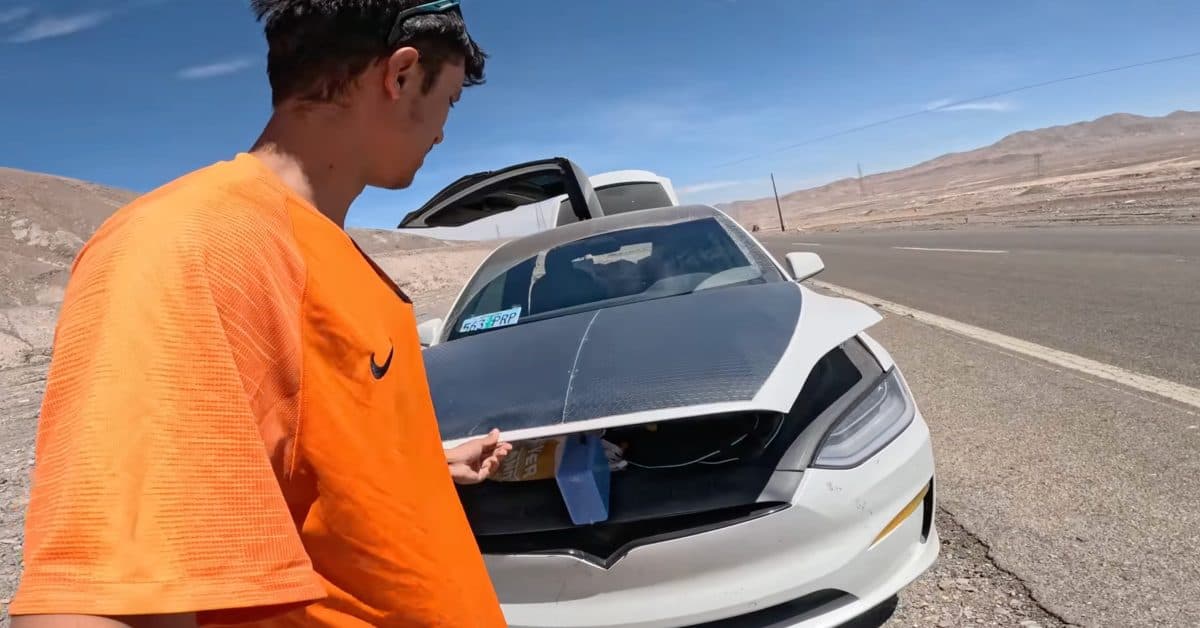
Tesla Owner Uses Emergency Solar to Trickle Charge After Running Out of Battery in Desert
Why It Matters
The incident underscores the infrastructure gap that could impede EV adoption in remote markets, while demonstrating a low‑cost contingency that can boost driver confidence on long‑distance trips.
Key Takeaways
- •Solar panel added 1‑2 km range per hour in Atacama
- •Tesla’s navigation mis‑located Chilean chargers, showing software gaps
- •Copec‑Tesla partnership aims for 250 kW chargers across Chile
- •Emergency solar kept battery alive, enabling tow and recharge
Pulse Analysis
Overlanding with an electric vehicle is still a frontier adventure, and Sandro van Kuijck’s Atacama ordeal illustrates both its promise and its limits. By mounting a 287‑watt solar array on his Model X’s hood, he created a self‑contained power source that, while modest, supplied enough energy to prevent a total shutdown. The trickle‑charge of 180‑200 W translated into roughly one to two kilometres of range per hour—hardly enough for a full‑scale recharge, but sufficient to keep critical systems alive and buy time for external assistance. This real‑world test validates the concept of solar as an emergency lifeline rather than a primary charging solution.
The broader challenge lies in the uneven rollout of charging infrastructure across South America. Tesla entered the Chilean market in late 2024, focusing initially on Santiago and major corridors, while local network operator Copec now operates over 90 fast chargers nationwide. Yet vast stretches of the Pan‑American Highway, especially the high‑altitude desert corridors, remain charging deserts. Navigation software still struggles with regional data, as evidenced by the vehicle’s mis‑identification of its location, further complicating route planning. Policy goals, such as Chile’s 2035 ban on new gasoline vehicle sales, will demand rapid expansion of both public and private charging assets to support long‑distance travel.
For manufacturers and aftermarket innovators, van Kuijck’s experience signals a market for rugged, deployable solar kits tailored to EV overlanders. Coupling higher‑capacity panels with robust energy‑storage units like the EcoFlow Delta 2 could extend emergency range to practical levels, reducing reliance on scarce grid chargers. Meanwhile, automakers must improve navigation databases and integrate solar‑input management into vehicle energy‑optimisation algorithms. As infrastructure catches up, portable solar may shift from a novelty to a standard safety feature, reinforcing consumer confidence and accelerating EV adoption in remote regions.
Tesla owner uses emergency solar to trickle charge after running out of battery in desert
Comments
Want to join the conversation?
Loading comments...