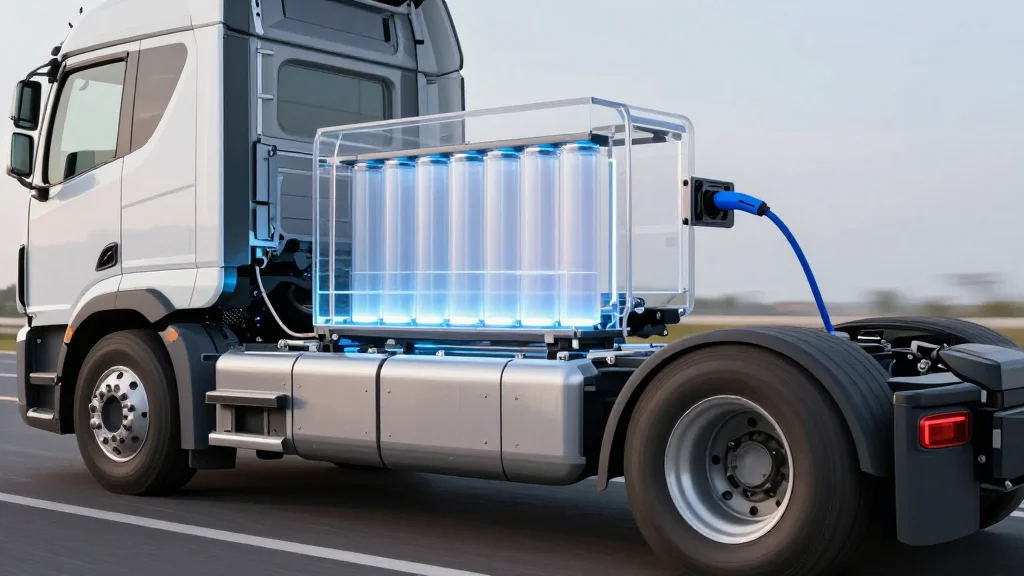
Tesla Semi Nears Mass Production with US‑Made 4680 Battery and 1.2 MW Charger

Companies Mentioned
Why It Matters
The Semi’s transition to a U.S.-made 4680 battery and a 1.2 MW charger could accelerate the shift toward zero‑emission freight, a sector responsible for roughly 25% of U.S. transportation emissions. By delivering a truck that can be recharged in under an hour, Tesla addresses one of the biggest operational hurdles for carriers—downtime. The high‑power charging requirement also forces utilities and policymakers to confront grid‑capacity challenges, potentially spurring investment in renewable generation and storage. If Tesla succeeds, the move could set a new industry standard for electric heavy‑duty trucks, compelling competitors to upscale their own battery and charging solutions. The ripple effect would extend to battery manufacturers, charging‑equipment providers, and the broader supply chain, reshaping capital allocation across the transportation ecosystem.
Key Takeaways
- •Tesla filed CARB certification confirming the Semi will use a U.S.-made 4680 lithium‑ion battery.
- •The truck will support a 1.2 MW high‑power charging system, far exceeding current 250‑kW chargers.
- •Certification documents were filed on May 13, 2026, indicating mass‑production readiness.
- •High‑power charging could cut recharge time to under an hour, addressing freight‑industry downtime concerns.
- •Tesla’s move pressures rivals to accelerate their own electric‑truck and charging‑infrastructure plans.
Pulse Analysis
Tesla’s Semi milestone reflects a broader strategic pivot: leveraging its battery‑cell innovations to dominate not just the passenger‑car market but also the high‑margin commercial‑vehicle segment. The 4680 cell, with its larger form factor and higher energy density, has been a cornerstone of Tesla’s cost‑reduction narrative. By integrating it into a Class 8 truck, Tesla validates the cell’s scalability and creates a new revenue channel that could offset the capital intensity of its Gigafactory expansions.
The 1.2 MW charger is a double‑edged sword. On one hand, it offers a compelling value proposition for carriers that can’t afford long charging windows. On the other, it forces a massive upgrade to the electric grid, especially along interstate corridors where freight volumes are highest. This infrastructure gap could become a competitive moat for early adopters who secure partnerships with utilities and charging‑network operators. Companies that fail to align with grid‑upgrade timelines may find their electric‑truck offerings stranded.
From a market‑share perspective, Tesla’s head start could translate into a decisive advantage. Rivian, Volvo, and Daimler have announced electric trucks, but none have disclosed charging capabilities approaching Tesla’s 1.2 MW target. If Tesla can deliver on both vehicle and charger performance, it could lock in large fleet contracts, especially with shippers under regulatory pressure to decarbonize. However, the rollout risk remains high: any delay in charger deployment or battery supply could erode the perceived advantage, giving rivals a chance to catch up. Investors will be watching Tesla’s supply‑chain execution and its ability to coordinate with utilities as closely as its vehicle engineering.
Tesla Semi Nears Mass Production with US‑Made 4680 Battery and 1.2 MW Charger
Comments
Want to join the conversation?
Loading comments...