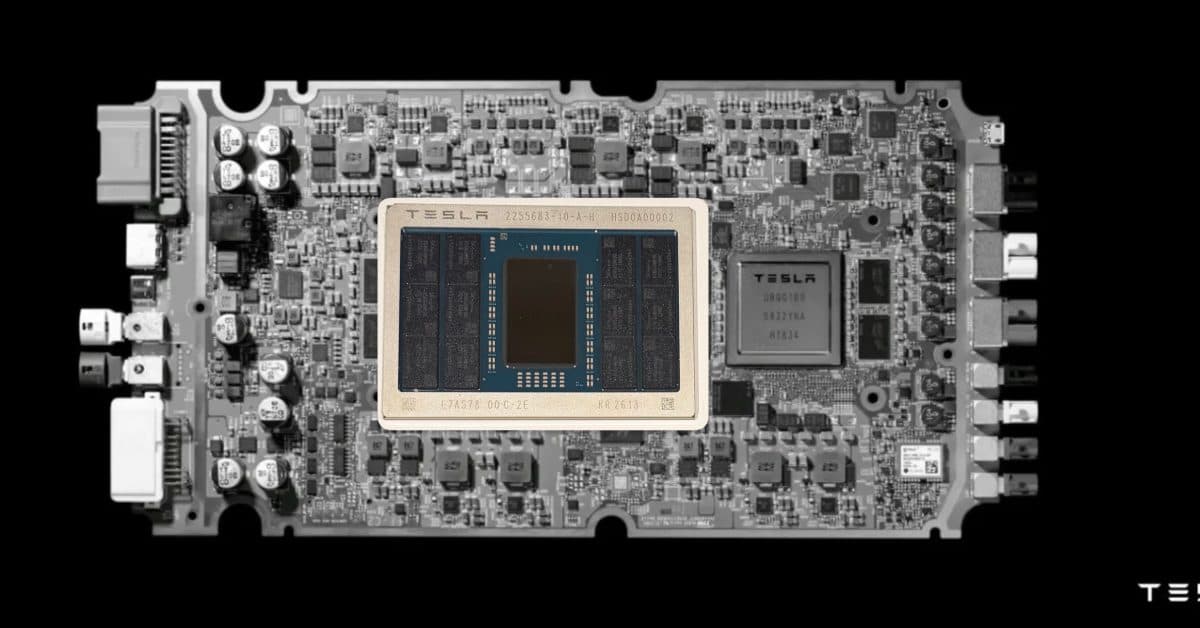
Tesla Taped Out AI5 Chip, Musk Says — Nearly 2 Years Behind Schedule
Why It Matters
The delay means Tesla’s autonomous‑driving roadmap will rely on older compute for another year, risking competitive disadvantage and eroding customer confidence in promised full self‑driving capabilities.
Key Takeaways
- •Tesla AI5 chip tape‑out marks design lock, moving to TSMC fab.
- •Volume production now expected mid‑2027, over a year later than promised.
- •Cybercab will launch on AI4 hardware, delaying AI5 deployment.
- •AI6 slated for Samsung 2 nm, already slipped six months.
- •Repeated chip delays risk eroding customer trust in Tesla’s FSD roadmap.
Pulse Analysis
Tesla’s announcement that its AI5 processor has been taped out signals the finalization of a design that promises up to ten times the compute of the current AI4 generation. In semiconductor terms, tape‑out is the point at which a chip’s layout is frozen and sent to a foundry—in this case TSMC—for manufacturing. The move follows a series of missed milestones; the company originally pledged AI5 hardware in the second half of 2025, yet the design only reached completion in April 2026. The typical automotive‑grade silicon ramp takes 12‑18 months, pushing realistic volume shipments to mid‑2027.
Because the Cybercab’s production line is slated for Q2 2026, Tesla will equip the new robotaxi with the existing AI4 platform rather than the promised AI5, extending the life of the older hardware across its model range. This delay hampers the rollout of more advanced Full Self‑Driving (FSD) neural networks that rely on higher throughput, potentially widening the gap between Tesla and rivals such as Waymo and Cruise, which already run custom ASICs at larger scales. Investors and consumers alike are left questioning whether Tesla can deliver on its autonomous‑driving promises before the hardware catches up.
Tesla’s broader “Terafab” initiative, a $25 billion chip‑fabrication complex in Austin backed by Intel, underscores the company’s ambition to internalize silicon production and reduce reliance on external foundries. While the partnership may eventually lower costs and accelerate future nodes such as the 2 nm AI6, current yield challenges at Samsung already pushed AI6 volume to late 2027. The cumulative effect of repeated chip postponements could strain Tesla’s brand credibility and affect its valuation, especially as analysts compare its hardware roadmap against the more predictable cadence of traditional automotive suppliers and pure‑play AI chipmakers.
Tesla taped out AI5 chip, Musk says — nearly 2 years behind schedule
Comments
Want to join the conversation?
Loading comments...