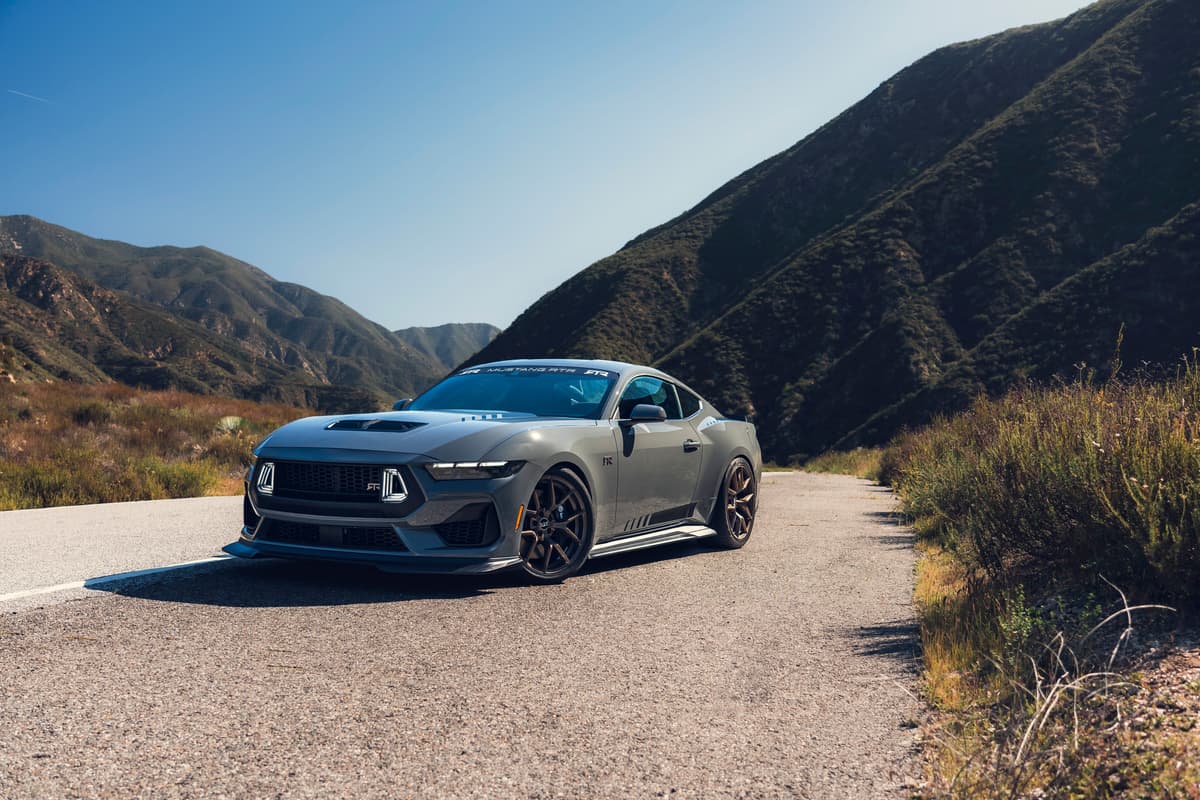
Tested: The 2025 Mustang RTR Spec 3 Manual Doesn't Meet Expectations
Why It Matters
The Spec 3 illustrates the risk of premium‑priced dealer tuners delivering marginal performance gains, challenging buyers’ expectations and pressuring OEMs to justify high‑cost performance packages.
Key Takeaways
- •810 hp RTR Spec 3 costs $109,808, $28k more than stock GT.
- •0‑60 mph 4.7 s, slower than stock manual GT’s 4.2 s.
- •Braking 163 ft vs GT’s 153 ft; skidpad 0.92 g vs 0.99 g.
- •No upgraded clutch; stock clutch struggles with 800 hp output.
- •Styling upgrades turn heads, but performance gap hurts value.
Pulse Analysis
Performance‑tuned OEM collaborations have become a staple of the American muscle market, and Ford’s partnership with RTR Vehicles is no exception. The 2025 Mustang RTR Spec 3 arrives with a factory‑installed Whipple supercharger, a bespoke suspension kit, and a suite of visual upgrades that push the car’s price north of $100,000. On paper, the 810‑horsepower output and aggressive aero suggest a track‑ready monster, yet the package is built on the stock GT’s drivetrain, relying on the original clutch and a set of Nitto summer tires that favor drift over straight‑line grip. This engineering compromise limits the car’s ability to translate raw power into measurable performance gains.
In real‑world testing, the Spec 3 fell short of its own promises. Acceleration to 60 mph lagged behind the stock manual GT by half a second, and the quarter‑mile time was marginally slower despite a higher top‑end speed. Braking distances and skidpad figures confirmed a loss of chassis balance, a symptom of the unchanged suspension geometry paired with a heavier, less agile body kit. The absence of a reinforced clutch—an omission tied to preserving Ford’s warranty coverage—means owners must contend with potential reliability issues when extracting the full 800‑plus horsepower, a concern that seasoned enthusiasts cannot ignore.
For consumers, the Spec 3’s story is a cautionary tale about paying a premium for aesthetics and brand cachet without commensurate performance returns. Buyers seeking a truly track‑capable Mustang may find better value by purchasing a stock GT and retrofitting aftermarket superchargers, clutches, and tires, albeit without factory warranty protection. Meanwhile, Ford and its tuning partners must reassess how to deliver genuine performance upgrades that justify steep price tags, perhaps by integrating stronger drivetrain components and offering more transparent performance data. The market will likely reward those who can blend visual appeal with measurable speed and handling improvements.
Tested: The 2025 Mustang RTR Spec 3 Manual Doesn't Meet Expectations
Comments
Want to join the conversation?
Loading comments...