Companies Mentioned

Why It Matters
The test illustrates the booming aftermarket demand for affordable performance on compact cars while exposing the reliability trade‑offs that can deter mainstream adoption.
Key Takeaways
- •Six tuner cars entered; only four finished the three‑day desert test.
- •Modifications cost ranged from $2,680 to $39,261, showing high entry barrier.
- •Small‑engine turbo and supercharger builds added 30‑70 hp but risked failures.
- •Youth drivers favor affordable performance upgrades, driving aftermarket growth.
- •Real‑world testing revealed fragility: piston failure and sensor issues halted two cars.
Pulse Analysis
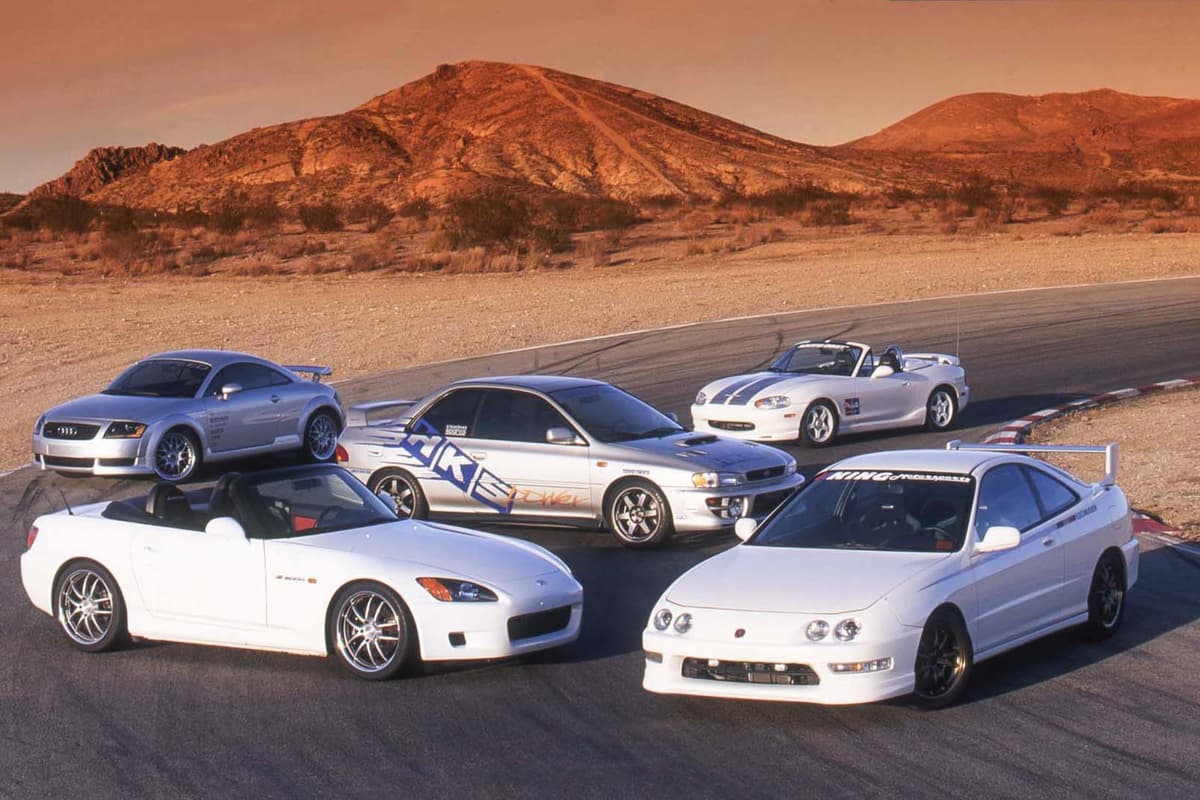
The early 2000s saw a surge in small‑engine tuning, driven by a generation that grew up in front‑seat commuter cars rather than V‑8 muscle. Car and Driver’s test captured this shift, gathering a diverse lineup—from a Mazda Miata to a turbo‑charged Subaru Impreza—reflecting the breadth of the aftermarket scene showcased at SEMA. By convening at Willow Springs and the Honda Proving Center, the editors provided a rare real‑world laboratory where enthusiasts could see how street‑legal modifications perform beyond the dyno, highlighting both the allure and the logistical challenges of such projects.
Financially, the builds illustrate a steep price spectrum. Entry‑level upgrades, such as Neuspeed’s $1,000 intake and exhaust on an Audi TT, cost under $5,000, while comprehensive packages like HKS’s Subaru conversion topped $39,000, encompassing turbo hardware, chassis reinforcement, and bespoke wheels. These investments yielded modest power gains—typically 30 to 70 horsepower—but also introduced failure points, as seen when the Vortech Civic’s supercharged engine suffered a piston break and the HKS Impreza stalled due to a mass‑air sensor fault. The data suggest that while performance can be dramatically improved, reliability often suffers without extensive engineering and testing resources.
For the market, the findings signal a growing appetite among younger drivers for tunable, affordable performance platforms. The modest cost of entry, combined with the cultural cachet of aftermarket parts, fuels a vibrant ecosystem of specialty shops and parts manufacturers. However, the fragility exposed in the desert test warns that consumers must balance enthusiasm with realistic expectations of durability and warranty risk. As credit remains accessible and the DIY ethos persists, the aftermarket is poised to expand, but manufacturers will need to address reliability to sustain long‑term growth.
Tested: Turn-of-the-Century Tuner Cars
Comments
Want to join the conversation?
Loading comments...