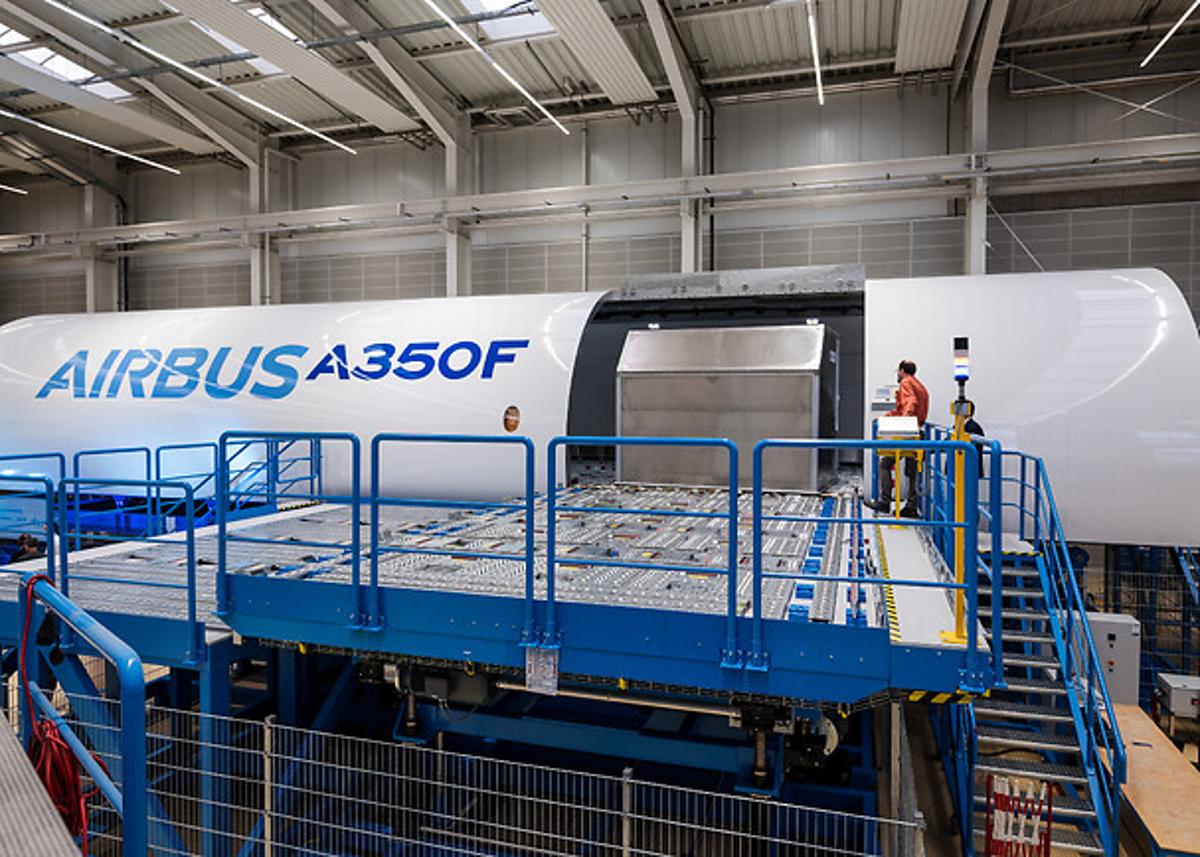
Testing the A350F’s Cargo Loading and Main Deck Door Actuation Systems
Companies Mentioned
Why It Matters
Electrifying the cargo door and loading system cuts weight and maintenance costs, accelerating the A350F’s market entry and setting a new efficiency benchmark for freighters.
Key Takeaways
- •All‑electric cargo door reduces weight, space, and hydraulic complexity.
- •20‑tonne test rig mimics A350F’s 170‑inch door for certification.
- •Cargo Zero validates loading of 28‑tonne pallets and engine mock‑ups.
- •Mixed‑reality tools streamline assembly and testing of the CLS components.
Pulse Analysis
Airbus’s A350F freighter represents a shift toward fully electric aircraft subsystems, beginning with its main‑deck cargo door. By replacing traditional hydraulics with geared rotary actuators, the door can open or close in 60 seconds even in 40‑knot crosswinds, trimming both mass and system complexity. This innovation not only improves fuel efficiency but also eases maintenance, a critical factor for operators seeking lower operating costs in a competitive cargo market.
The "Cargo Zero" test rig in Bremen serves as a near‑full‑scale replica of the A350F’s cargo hold, complete with a 170‑inch door, roller tracks, and power‑drive units. Using mixed‑reality tools such as HoloLens, engineers overlay virtual components onto the physical structure, accelerating integration of the Cargo Loading System (CLS). The rig has already demonstrated the ability to maneuver pallets up to 28 tonnes and a mock‑up turbofan engine, confirming that ground crews can handle the heaviest unitized loads safely and efficiently. These rigorous simulations feed directly into the EASA certification dossier, de‑risking the upcoming flight‑test campaign.
Beyond the A350F, Airbus’s move to electric actuation and digital‑first testing signals a broader industry trend. Eliminating hydraulic lines reduces leak risks and simplifies aircraft architecture, while the use of digital twins and mixed‑reality accelerates development cycles. For airlines, the promise of lighter, more reliable cargo operations translates into higher payload capacity and lower turnaround times. As the freighter market rebounds, the A350F’s technology could become a template for next‑generation cargo aircraft, reinforcing Airbus’s position as an innovator in commercial aviation.
Testing the A350F’s cargo loading and main deck door actuation systems
Comments
Want to join the conversation?
Loading comments...