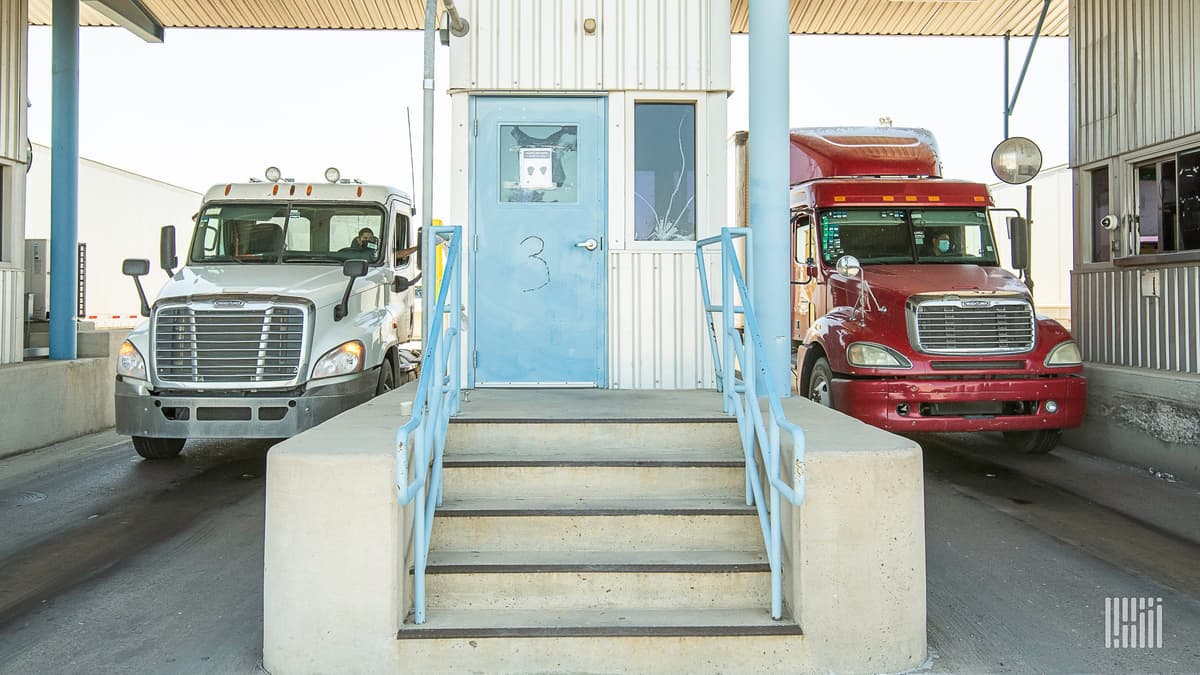
Texas Border Bridge Revamps Truck Crossing Schedule to Reduce Wait Times
Why It Matters
Prioritizing loaded freight reduces congestion and speeds delivery for time‑critical goods, strengthening the efficiency of the U.S.–Mexico supply chain. The change also sets a template for other border crossings facing similar bottlenecks.
Key Takeaways
- •Empty trucks now processed 12 p.m.–11 p.m. weekdays
- •Loaded freight retains 7 a.m. morning priority
- •Wait times expected to drop during peak hours
- •Eagle Pass handles $3.58 B in February trade
- •Change mirrors southern‑border focus on loaded freight
Pulse Analysis
The new schedule at Eagle Pass reflects a targeted effort to align inspection resources with demand patterns. By moving empty tractor movements to off‑peak hours, Customs officials free up the high‑volume morning window for loaded trucks that carry automotive parts, consumer goods, and other time‑sensitive cargo. Early‑morning processing, now beginning at 7 a.m., allows carriers to maintain tighter delivery windows, while the later‑day window for empties reduces lane congestion and improves overall lane utilization.
For shippers and logistics providers, the adjustment translates into measurable operational gains. Faster clearance for loaded freight can shave hours off cross‑border transit, a critical advantage for just‑in‑time manufacturers that rely on the Eagle Pass corridor for inbound auto components. The port’s February trade volume of $3.58 billion—nearly three‑quarters of which are imports—highlights its importance in the North American supply chain. Carriers can now better predict crossing times, optimize driver hours, and lower fuel costs associated with idle waiting.
Eagle Pass is part of a broader southern‑border trend that prioritizes productive freight over repositioning moves. Similar scheduling tweaks are being explored at Laredo, El Paso, and other high‑traffic ports, signaling a shift toward data‑driven, demand‑responsive border management. As trade volumes rebound and automotive supply chains remain volatile, these operational refinements could become a standard tool for mitigating bottlenecks, enhancing trade fluidity, and supporting the United States’ competitive logistics network.
Texas border bridge revamps truck crossing schedule to reduce wait times
Comments
Want to join the conversation?
Loading comments...