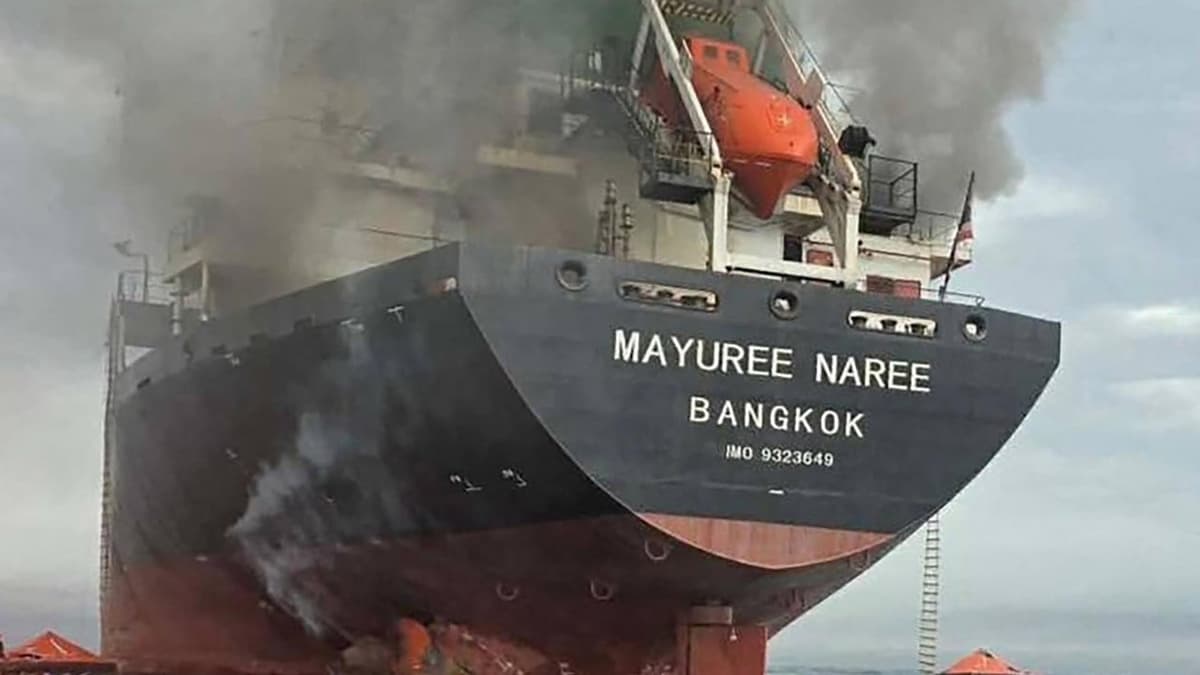
Thailand Confirms Deaths of 3 Cargo Ship Crew in Gulf Attack
Why It Matters
The deaths underscore the heightened geopolitical risk to commercial shipping in a chokepoint that moves over $20 billion of oil daily, prompting firms to reassess route security. The tentative ceasefire offers a brief window for trade flow restoration, but uncertainty remains.
Key Takeaways
- •Three Thai crew members died after Mayuree Naree attack
- •Iran struck vessel amid retaliation for US‑Israeli strikes
- •Twenty surviving crew repatriated to Thailand in March
- •Omani authorities assisted in rescuing returning crew members
- •Two‑week Iran‑US ceasefire allows limited strait passages
Pulse Analysis
The Strait of Hormuz has long been a flashpoint, but the recent Iranian strike on the Thai‑flagged Mayuree Naree highlights how quickly regional tensions can translate into direct threats to commercial vessels. While the incident resulted in the tragic loss of three Thai seafarers, it also exposed the vulnerability of supply chains that depend on uninterrupted oil and cargo flows through this narrow corridor. Companies with exposure to Middle‑East logistics are now weighing the cost of rerouting versus the insurance premiums associated with heightened conflict risk.
In response to the February US‑Israeli air campaign, Tehran employed a strategy of asymmetric pressure, effectively sealing the strait and targeting ships it deemed supportive of its adversaries. The Mayuree Naree, departing from a UAE port, became an unintended casualty, illustrating how collateral damage can arise even when vessels are not directly involved in the conflict. The involvement of Omani authorities in rescuing the majority of the crew demonstrates regional cooperation, yet the incident also raises questions about the adequacy of existing maritime security protocols and the need for real‑time threat intelligence.
The newly brokered two‑week ceasefire between Iran and the United States offers a tentative reprieve, allowing limited vessel transits under coordinated military oversight. However, the fragile nature of this pause means that shippers must remain vigilant, as any escalation could instantly reverse the modest gains in traffic flow. For investors and policymakers, the episode serves as a reminder that geopolitical volatility in the Gulf can swiftly impact global energy prices, insurance markets, and the broader outlook for international trade.
Thailand confirms deaths of 3 cargo ship crew in Gulf attack
Comments
Want to join the conversation?
Loading comments...