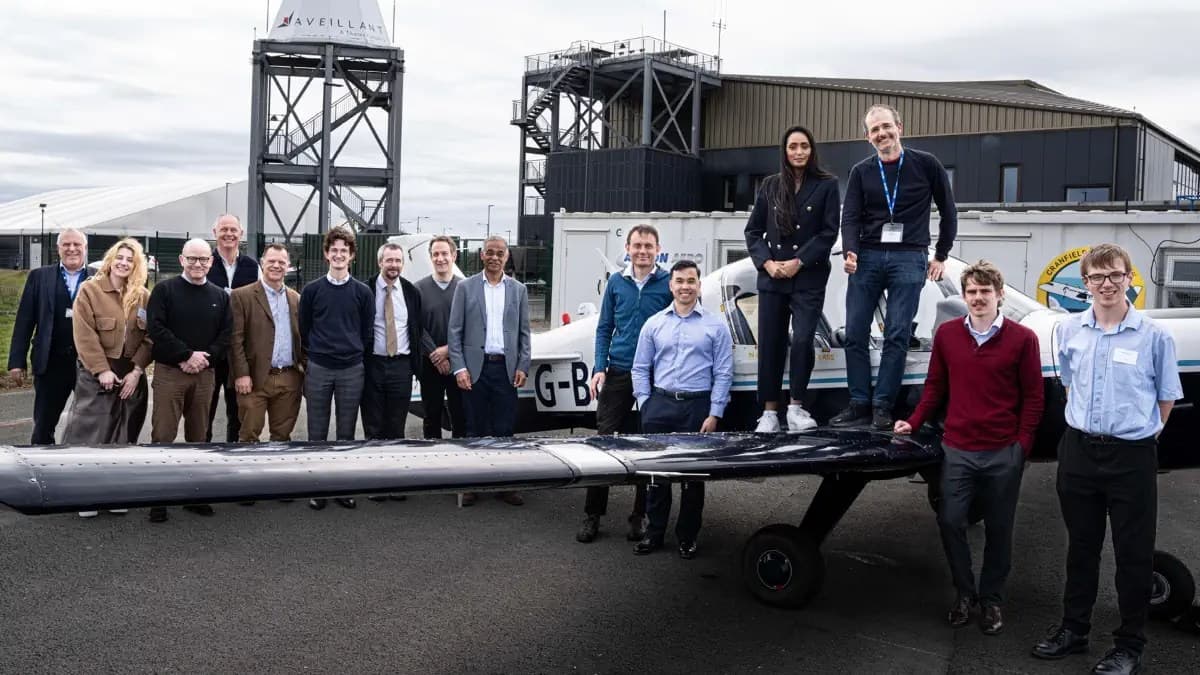
Thales, Viasat and Partners Complete Beyond Visual Line of Sight (BVLOS) Connectivity Demo

Why It Matters
The demo provides concrete proof that resilient, multi‑link connectivity can meet the safety standards required for large‑scale BVLOS operations, unlocking commercial drone markets and easing regulatory approval.
Key Takeaways
- •BVLOS flight trials proved multi‑link satcom, cellular, C‑band reliability
- •Viasat’s Velaris network and TTP’s Gotonomi terminals enabled UAV connectivity
- •ESA’s Iris RPAS program builds evidence for safe drone integration in shared airspace
- •Thales coordinated system integration, targeting urban air mobility scalability
- •Successful demo supports regulators’ path to approve large‑scale BVLOS operations
Pulse Analysis
The rapid expansion of Beyond‑Visual‑Line‑of‑Sight drone missions is reshaping logistics, infrastructure inspection, and emerging urban air‑mobility concepts. Operators demand command‑and‑control links that remain uninterrupted across diverse environments, a challenge traditionally met by either terrestrial networks or satellite links alone. Multi‑link connectivity—combining satellite, cellular and dedicated C‑band radios—offers redundancy, lower latency, and higher availability, addressing the stringent safety thresholds regulators impose on BVLOS flights. As autonomous aircraft scale, the industry is converging on hybrid architectures that can dynamically switch between links, ensuring continuous situational awareness and mission integrity.
ESA’s Iris RPAS programme brings together satellite giants, defense integrators, and niche technology firms to test these hybrid models in realistic conditions. The recent Cranfield trial showcased Viasat’s Velaris satellite service paired with TTP’s low‑size‑weight‑power Gotonomi terminals, while Dimetor supplied real‑time airspace awareness through its AirborneRF platform. By orchestrating satellite, cellular and C‑band streams on a single UAV, the partners demonstrated seamless handover and robust data integrity, creating a data‑driven evidence base that regulators can reference when drafting BVLOS certification standards. The collaborative approach also accelerates technology maturation, reducing the time to market for commercial operators seeking reliable, scalable connectivity solutions.
Beyond the immediate technical validation, the successful demo signals a turning point for the broader drone ecosystem. Urban Air Mobility (UAM) providers, logistics firms, and public‑sector agencies are watching closely, as proven multi‑link reliability lowers the risk profile of high‑value BVLOS services. Europe’s commitment, underscored by ESA’s €4.5 billion (≈$5 billion) annual R&D budget and Thales’ €22.1 billion (≈$24 billion) 2025 sales, positions the region as a leader in secure aviation communications. Meanwhile, Viasat’s recent Inmarsat acquisition expands its global footprint, enabling it to offer end‑to‑end connectivity for both terrestrial and non‑terrestrial networks. This convergence of technology, funding, and regulatory momentum is set to accelerate commercial BVLOS deployments, driving new revenue streams and reshaping airspace management worldwide.
Thales, Viasat and partners complete Beyond Visual Line of Sight (BVLOS) connectivity demo
Comments
Want to join the conversation?
Loading comments...