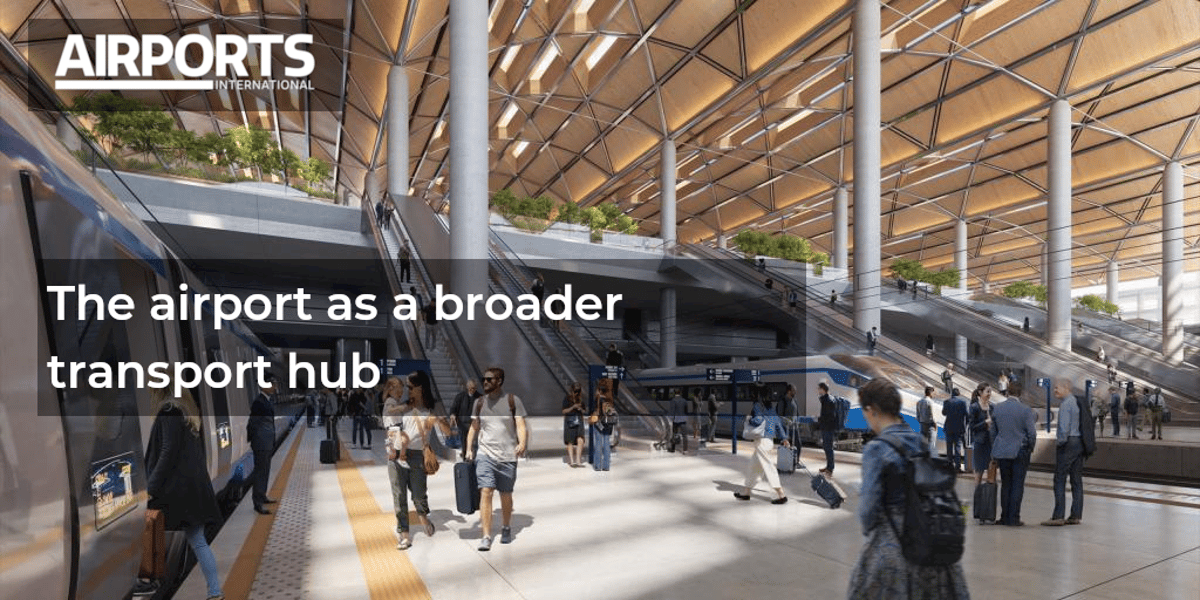
The Airport as a Broader Transport Hub
•February 28, 2026
0
Why It Matters
Integrated transport hubs reduce carbon emissions and congestion while unlocking new revenue streams for airports, making them critical nodes in future smart‑city ecosystems.
Key Takeaways
- •Airports now judged on multimodal connectivity
- •Rail links cut passenger carbon footprints
- •eVTOLs emerging as airport last‑mile solutions
- •Integrated ticketing simplifies door‑to‑door travel
- •Policy incentives drive sustainable transport hubs
Pulse Analysis
The rise of multimodal airports reflects a broader trend toward seamless, end‑to‑end mobility. By linking air terminals with high‑speed rail, metro systems and road networks, airports can capture passengers earlier in their journey and extend their influence beyond the tarmac. This connectivity not only improves the passenger experience but also creates ancillary revenue opportunities through retail, parking and data services tied to the broader travel chain.
Sustainability is a primary driver behind this evolution. Governments worldwide are tightening emissions targets, prompting airports to cut car dependency and promote low‑carbon alternatives such as rail and electric ground transport. Initiatives like Lufthansa Express Rail demonstrate how integrated ticketing can shift travelers from road to rail, delivering measurable reductions in CO₂ per passenger kilometer. Moreover, emerging technologies like electric vertical take‑off and landing (eVTOL) aircraft promise to serve as rapid, low‑emission links between city centers and airports, further diversifying the mobility mix.
From a strategic perspective, airports that embed themselves within regional transport ecosystems gain a competitive edge. They become indispensable hubs for logistics, tourism and business travel, attracting airlines seeking efficient feeder connections. Investment in infrastructure—such as dedicated rail stations, multimodal concourses and digital platforms for unified booking—enhances resilience against disruptions and aligns with smart‑city initiatives. As cities prioritize congestion mitigation and climate goals, airports that act as integrated transport nodes will shape the future of urban mobility and economic growth.
The airport as a broader transport hub
0
Comments
Want to join the conversation?
Loading comments...