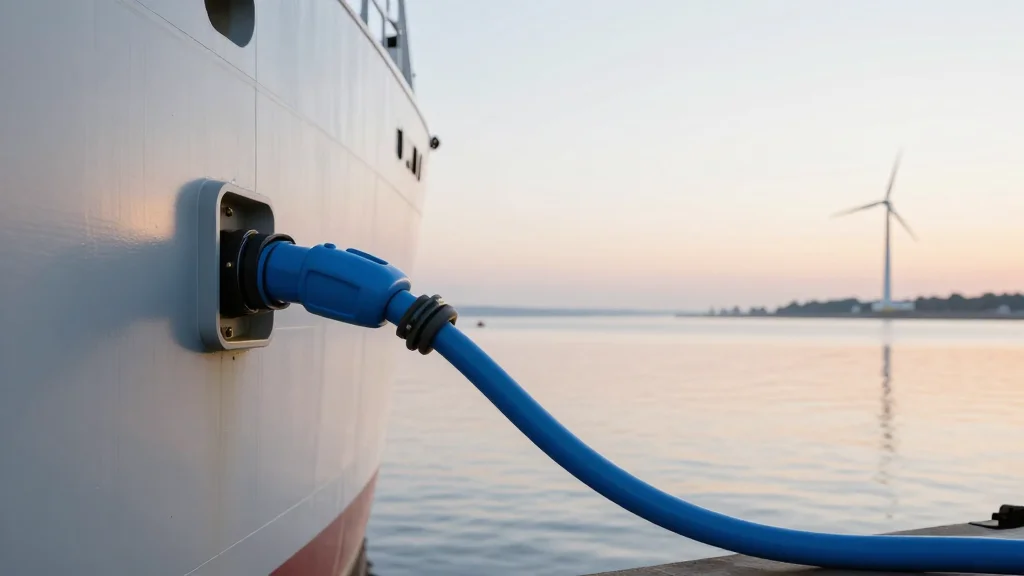
The Alternative Fuels Infrastructure Regulation for Shipping
Why It Matters
A tighter AFIR will accelerate decarbonisation of European shipping, delivering climate, health, and energy‑security benefits while creating a market for clean‑fuel and electrification technologies.
Key Takeaways
- •EU maritime sector emits 145 Mt CO₂ annually, 3% of EU total
- •Ports contribute ~6.5 Mt CO₂, degrading air quality and health
- •AFIR requires shoreside electricity by 2030, but covers limited ships
- •Fuel mandate only references fossil gas, restricting clean‑fuel rollout
- •More ambitious rules could transform ports into green energy hubs
Pulse Analysis
European shipping remains a stubborn source of emissions, responsible for roughly 145 million tonnes of CO₂ in 2024—about three percent of the EU’s total output. While the sector’s share of transport emissions may rise to one‑third by 2050, the most acute impacts are felt in ports, where an estimated 6.5 million tonnes of CO₂, alongside SOx, NOx and PM2.5, degrade local air quality and threaten the health of nearby communities and seafarers. These figures underscore why policymakers view ports as critical leverage points for meeting the EU’s climate and public‑health objectives.
The Alternative Fuels Infrastructure Regulation (AFIR) seeks to address this challenge by mandating shoreside electricity for designated vessels by 2030 and by urging the development of alternative‑fuel bunkering infrastructure across European waters. However, the current draft leaves significant gaps: the electrification requirement applies only to a subset of ships, and the fuel provision primarily references fossil‑gas solutions, falling short of a full decarbonisation pathway. The Commission’s ongoing call for evidence presents a strategic window for stakeholders to push for broader coverage, including larger vessels and truly zero‑carbon fuels such as hydrogen or ammonia.
If the review results in a more ambitious rulebook, ports could evolve into green energy hubs, catalyzing investment in on‑shore power, renewable generation, and clean‑fuel supply chains. This transformation would not only slash in‑port emissions and improve public health but also reinforce Europe’s energy security by diversifying fuel sources. For ship owners, early adoption of electrified berths and low‑carbon bunkering could lower operating costs and future‑proof fleets against tightening emissions standards, creating a win‑win for industry and the environment.
The Alternative Fuels Infrastructure Regulation for Shipping
Comments
Want to join the conversation?
Loading comments...