
Companies Mentioned
Why It Matters
W‑engines illustrate how packaging efficiency can deliver luxury performance, yet the shift toward electrified hybrids signals the end of this exotic architecture in mainstream automotive strategy.
Key Takeaways
- •Early 1900s Anzani W3 powered the Blériot XI across the English Channel
- •VW's W12 powers Bentley Continental GT and Audi A8, showcasing luxury performance
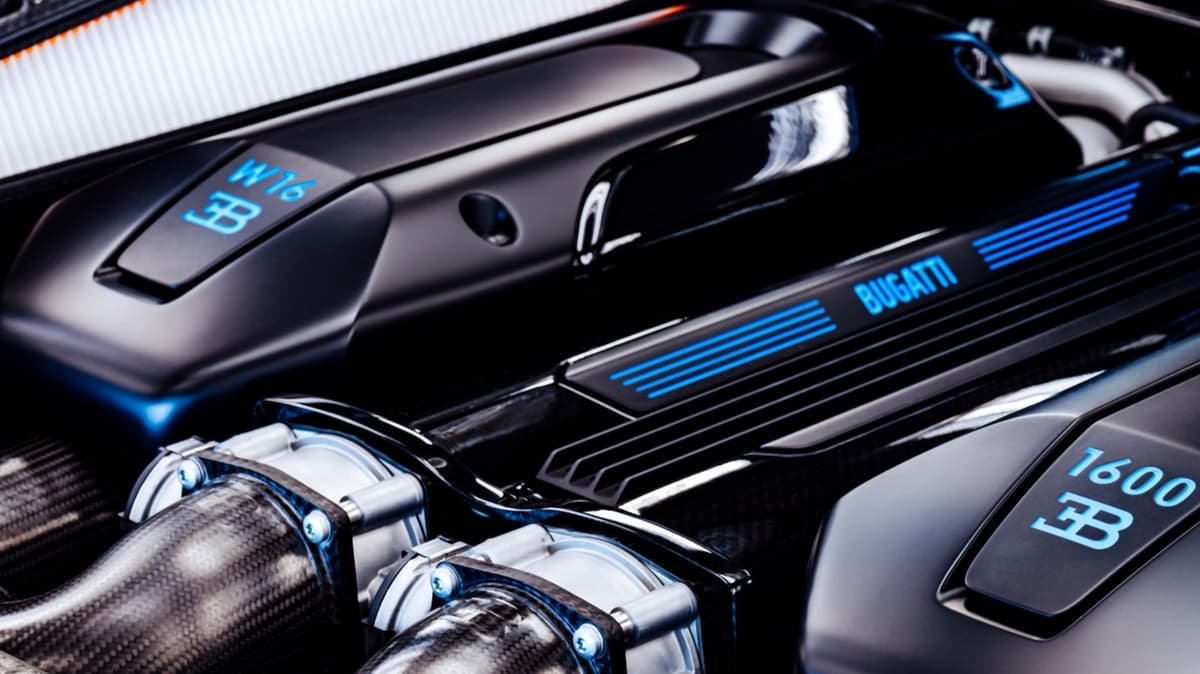
- •Bugatti's W16 produced 1,600 hp; now replaced by hybrid V16
- •W8 fit Passat's engine bay, offering a compact eight‑cylinder layout
- •W18 remained concept-only, never reaching production in any vehicle
Pulse Analysis
The concept of a "W" engine dates back to the pioneering days of aviation, when engineers like Alessandro Anzani experimented with three‑cylinder arrangements to power lightweight aircraft such as the Blériot XI. These early designs demonstrated the potential of stacking multiple cylinder banks to achieve high power output without excessive length, a principle later refined by the Napier Lion W12 that powered British bombers and set land‑speed records in the 1930s. Though the technology originated in the skies, its compact form factor eventually attracted automotive innovators seeking to squeeze more cylinders into limited engine bays.
Volkswagen Group capitalized on the W architecture in the early 2000s, merging two narrow‑angle VR blocks on a single crankshaft to create the W8, W12 and W16 families. The W8 allowed the Passat to host an eight‑cylinder engine without sacrificing cabin space, while the W12 became a hallmark of ultra‑luxury models from Bentley and Audi, delivering smooth power and a distinctive sound. Bugatti’s W16, with four turbochargers and nearly 1,600 hp in its final iteration, showcased the extreme performance ceiling of the layout, albeit at the cost of massive cooling and weight requirements.
Market dynamics are now reshaping the relevance of W engines. As emissions regulations tighten and consumers gravitate toward electrified powertrains, manufacturers are phasing out the most complex W configurations. Bentley announced the end of its W12 line in 2024, pivoting to a hybrid V8, and Bugatti is replacing its legendary W16 with a hybrid V16 for upcoming hypercars. The phase‑out highlights a broader industry trend: while the W engine remains a technical marvel, its future lies more in heritage and niche applications than in mainstream vehicle platforms.
The Different Types Of W Engines Explained
Comments
Want to join the conversation?
Loading comments...