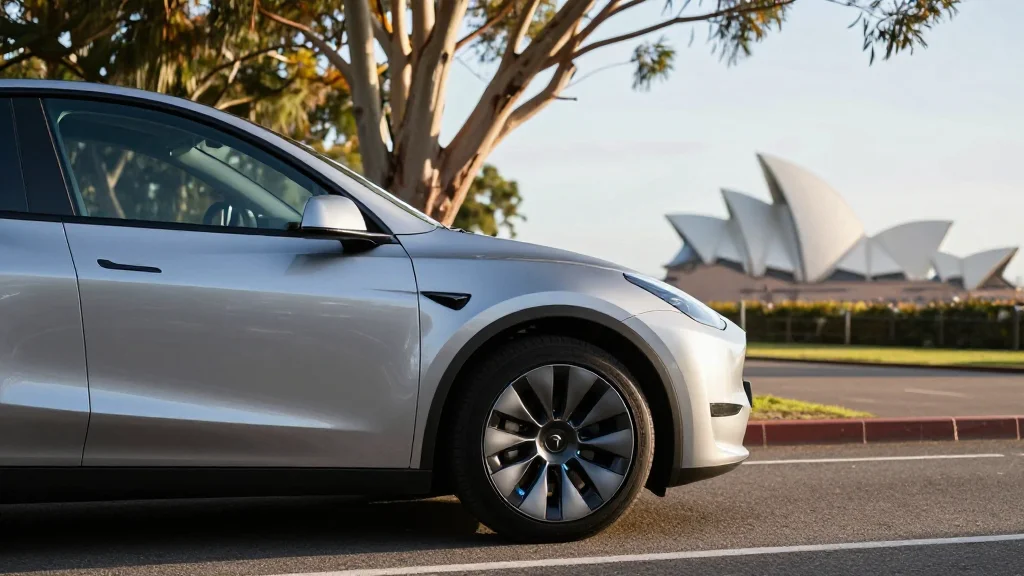
The Driven Podcast: EVs Hit 20% as Tesla Tops Australia
Companies Mentioned
Why It Matters
Crossing the 20% threshold marks a critical mass for EV adoption, prompting manufacturers to accelerate Australian rollouts and influencing policy on emissions and infrastructure. Tesla’s lead underscores the brand’s market‑share advantage and sets a benchmark for competitors.
Key Takeaways
- •EVs capture over 20% of Australian new car sales
- •Tesla Model Y becomes Australia’s top‑selling vehicle
- •Cadillac launches first electric SUV models in Australia
- •EV growth driven by federal incentives and charging expansion
Pulse Analysis
Australia’s EV market hit a milestone in June 2026, with electric vehicles accounting for just over one‑fifth of all new car registrations. This surge reflects a confluence of factors: generous federal rebates, expanding public‑charging networks, and a growing consumer appetite for low‑emission mobility. Analysts note that the 20% share aligns Australia with leading EV markets such as Norway and the Netherlands, suggesting that the country is shedding its historical reliance on internal‑combustion vehicles faster than many peers.
Tesla’s Model Y clinching the top‑selling spot underscores the brand’s strategic positioning in the Australian market. The Model Y’s blend of range, price point, and brand cachet resonates with a broad buyer base, from families to fleet operators. Competitors are scrambling to match its appeal, with legacy automakers accelerating the launch of locally‑adapted electric models. The episode’s preview of Cadillac’s electric SUVs hints at a diversification of premium EV options, potentially reshaping the luxury segment’s dynamics in Australia.
The broader implications are significant for investors, policymakers, and industry players. A sustained 20% EV penetration will likely trigger stricter emissions standards and incentivize further expansion of fast‑charging infrastructure, especially in regional hubs. Automakers may prioritize Australian production or assembly lines to meet demand and avoid import tariffs. For consumers, the trend promises greater model variety and competitive pricing, accelerating the transition to a low‑carbon transportation ecosystem. Stakeholders should monitor upcoming policy adjustments and infrastructure investments as key drivers of the next growth phase.
The Driven Podcast: EVs hit 20% as Tesla tops Australia
Comments
Want to join the conversation?
Loading comments...