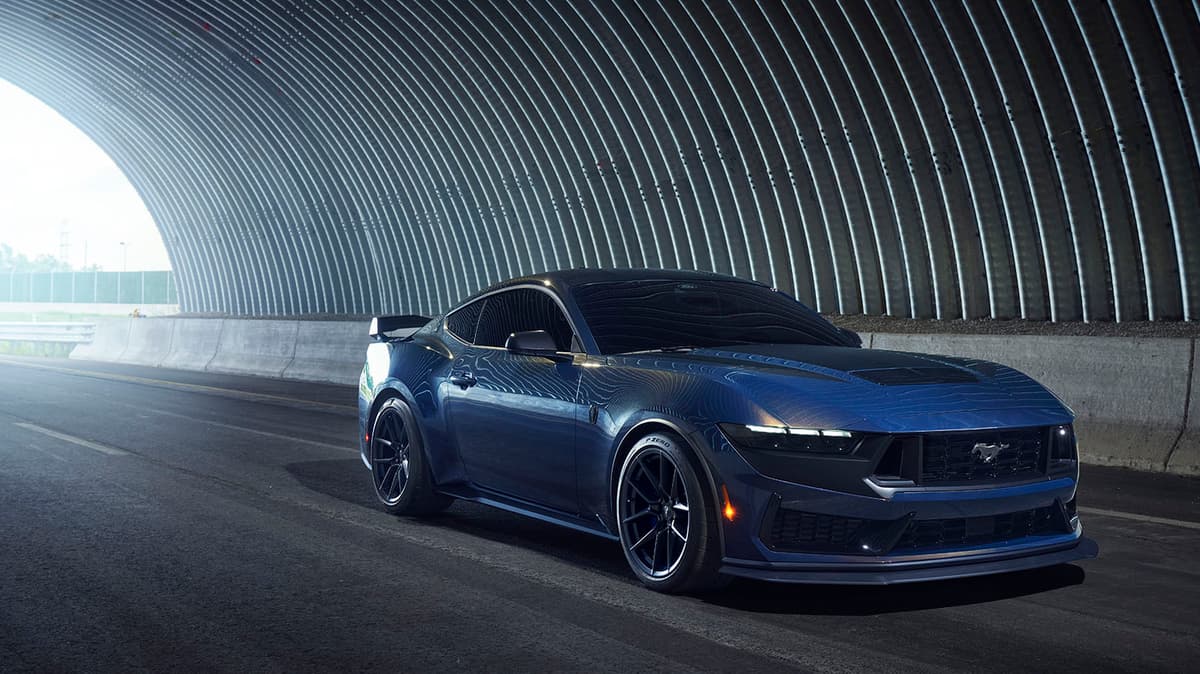
The Ford Mustang Dark Horse's Purported 500 HP Might Not Be What It Seems
Why It Matters
The discrepancy between claimed and measured power affects buyer expectations and dealer marketing, while exposing the broader challenge of reliable performance metrics in the automotive industry.
Key Takeaways
- •Dark Horse claims 500 hp, 100 hp per liter naturally aspirated.
- •Road & Track dyno tests showed 421–465 hp wheel output.
- •45 hp spread highlights dyno calibration differences, not engine inconsistency.
- •Consistent testing needed for reliable performance comparisons.
- •Mustang remains sole V8 pony car after Camaro, Challenger exits.
Pulse Analysis
The Mustang Dark Horse arrives as Ford’s most aggressive iteration of the iconic pony car, extracting a full 500 horsepower from the same 5.0‑liter Coyote block that powers the GT. Achieving 100 hp per liter without forced induction places the engine among an elite group of naturally aspirated powerplants, a metric that resonates with enthusiasts who value linear throttle response and mechanical purity. This power bump is marketed as a clear differentiator in a shrinking field of American V8 coupes.
However, the real‑world performance story diverges when the car hits the dyno. Road & Track’s experiment, using four Southern California chassis dynos, recorded wheel‑horsepower numbers from 420.8 to 465, a spread of nearly 45 hp. Such variance stems from differences in dyno design, calibration standards, and even ambient conditions, not from inconsistencies in the engine itself. For consumers, this means advertised crank figures can be misleading unless the testing environment is disclosed, and for manufacturers, it highlights the importance of standardized measurement protocols to maintain credibility.
With Chevrolet ending the Camaro and Dodge discontinuing the Challenger, the Mustang now stands alone as the sole V8‑powered American pony car. This monopoly amplifies scrutiny on performance claims, as buyers compare the Dark Horse not only to legacy models but also to imported sports cars. Transparent, repeatable testing will become a competitive advantage, pushing automakers to adopt more uniform dyno standards or to provide raw crank data alongside wheel‑horsepower results. The Dark Horse’s story thus serves as a case study in how spec sheets, testing methodology, and market dynamics intersect in today’s performance‑car segment.
The Ford Mustang Dark Horse's Purported 500 HP Might Not Be What It Seems
Comments
Want to join the conversation?
Loading comments...