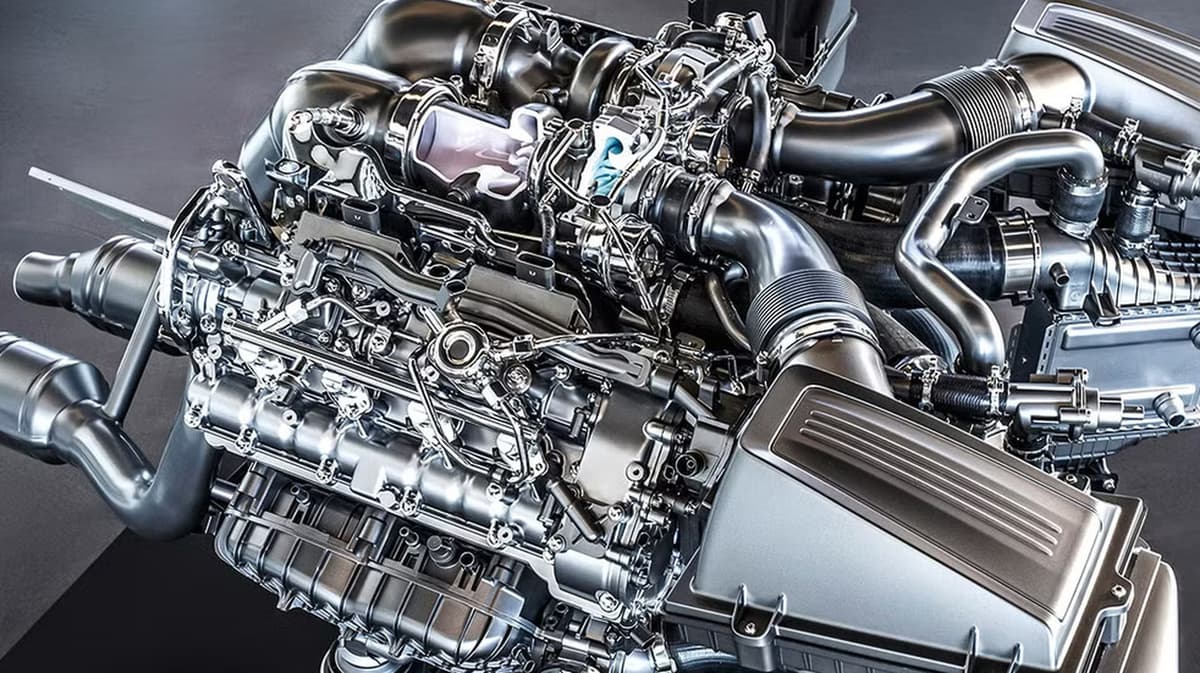
The Hot Vee Engine Layout Revolutionized Turbocharging, And This Was The First Carmaker To Use One

Companies Mentioned
Why It Matters
Hot‑vee architecture reshapes power‑train packaging and performance, influencing how premium manufacturers meet emissions and efficiency targets while delivering faster throttle response.
Key Takeaways
- •BMW X6 debuted the first production hot‑vee engine in 2008
- •Turbo spooling improves due to shorter exhaust path in hot‑vee layout
- •Cooler intake charge reduces detonation risk and boosts efficiency
- •Early N63 models faced valve‑stem, turbo, and oil‑consumption issues
- •Later N63 TU updates restored reliability and expanded to other brands
Pulse Analysis
The hot‑vee configuration marks a pivotal shift in turbocharged engine design, moving the compressors into the V‑angle rather than the traditional exhaust‑side placement. By routing exhaust gases directly into centrally located turbos, manufacturers achieve faster spool times and lower turbo lag, a critical advantage for performance‑focused vehicles. This layout also frees up space around the engine, allowing engineers to lower the centre of gravity and improve weight distribution—key factors in handling dynamics for sports sedans and SUVs alike.
BMW’s 2008 X6 was the first production car to employ the hot‑vee, using the 4.4‑liter N63 twin‑turbo V8. Although the engine delivered 402‑523 horsepower and 443‑553 lb‑ft of torque, early iterations were plagued by valve‑stem wear, turbo failures, and excessive oil consumption. These reliability concerns sparked debate among enthusiasts and forced BMW to roll out successive technical updates (TU, TU2, TU3) that refined cooling, lubrication and turbo durability. The evolution of the N63 illustrates how pioneering technology often requires iterative engineering to balance performance gains with long‑term dependability.
Today, the hot‑vee has become a staple across the high‑performance segment, appearing in Mercedes‑AMG GT, Ferrari’s 296 V6, and Lamborghini’s V8 Temerario. Its adoption aligns with stricter emissions regulations, as the compact design facilitates better thermal management and enables smaller displacement engines to meet power targets. For the broader automotive market, the hot‑vee signals a trend toward more integrated, space‑efficient powertrains that deliver both exhilarating performance and compliance with evolving efficiency standards.
The Hot Vee Engine Layout Revolutionized Turbocharging, And This Was The First Carmaker To Use One
Comments
Want to join the conversation?
Loading comments...