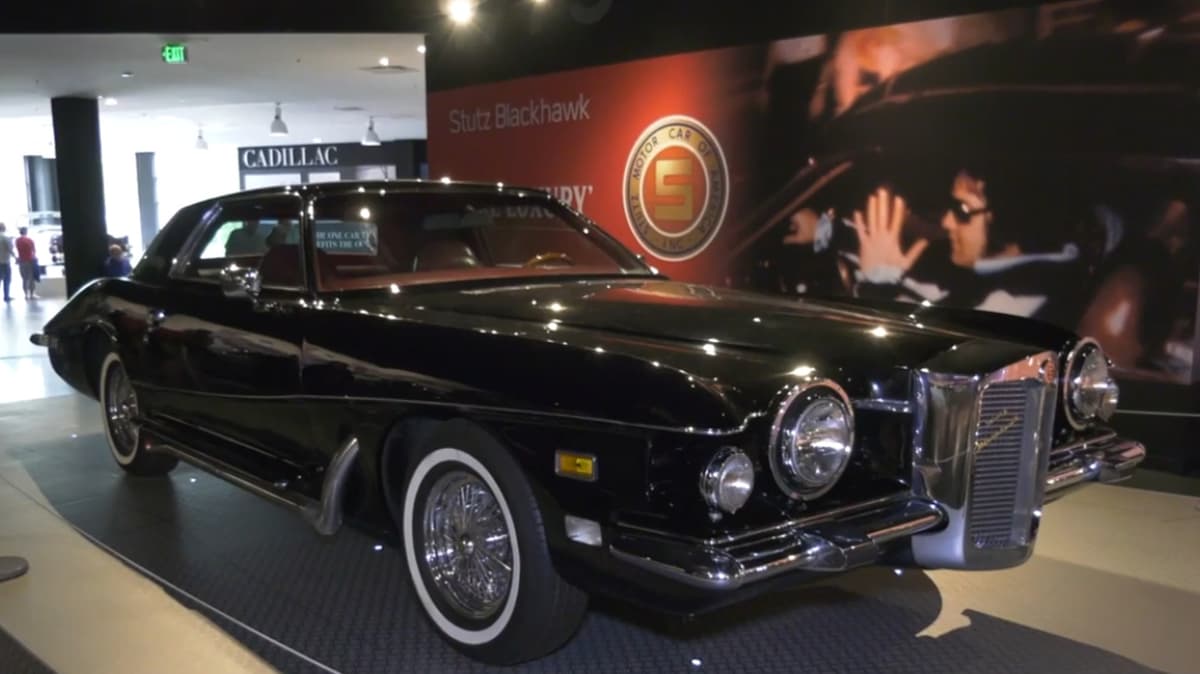
The Last Car Elvis Presley Ever Drove Was A Classy Stutz Fit For A King
•March 1, 2026
0
Why It Matters
Elvis’s high‑profile endorsement boosted the niche Stutz revival and highlighted the power of celebrity influence on luxury automotive markets. The story illustrates how star‑driven demand can revive historic marques and shape collector value.
Key Takeaways
- •Elvis purchased five Stutz Blackhawks, gifting two away
- •1973 Blackhawk III was Elvis’s final driven vehicle
- •Stutz revived as neoclassic using 1969 Pontiac Grand Prix chassis
- •Carrozzeria Padane in Italy hand‑crafted bespoke Blackhawk bodies
- •Elvis added gold trim, lamb‑wool carpet, and car phone
Pulse Analysis
The Stutz brand, originally founded in 1898, found new life in the late 1960s when investor James O’Donnell teamed with legendary designer Virgil Exner and a young John DeLorean. Their strategy was to marry 1930s‑era styling with contemporary American engineering, using the Pontiac Grand Prix as a mechanical foundation. By showcasing a prototype at the Los Angeles Auto Show, they attracted Elvis Presley, whose immediate enthusiasm secured the first Blackhawk sale and generated priceless publicity for the fledgling neoclassic venture.
Elvis’s 1973 Blackhawk III epitomized bespoke luxury. After the Grand Prix chassis arrived in Modena, Italy, Carrozzeria Padane stripped it down and installed an extravagant body with 18‑karat gold‑plated trim, red leather upholstery, and Australian lamb‑wool carpeting. At Presley’s request, a car phone was integrated—a rare feature that blended cutting‑edge communication with classic design. The vehicle’s opulent interior contrasted sharply with his well‑known pink Cadillacs, reinforcing his image as a king of both music and high‑end automobiles.
The king’s automotive choices have lasting cultural and market implications. Celebrity ownership elevates obscure marques, driving collector interest and inflating resale values for models like the Stutz Blackhawk, BMW 507, and Ferrari Dino. Preservation efforts at Graceland and high‑profile auctions keep these cars in the public eye, illustrating how entertainment icons can shape automotive heritage. For industry observers, Elvis’s collection serves as a case study in how star power can resurrect legacy brands and create enduring luxury narratives.
The Last Car Elvis Presley Ever Drove Was A Classy Stutz Fit For A King
0
Comments
Want to join the conversation?
Loading comments...