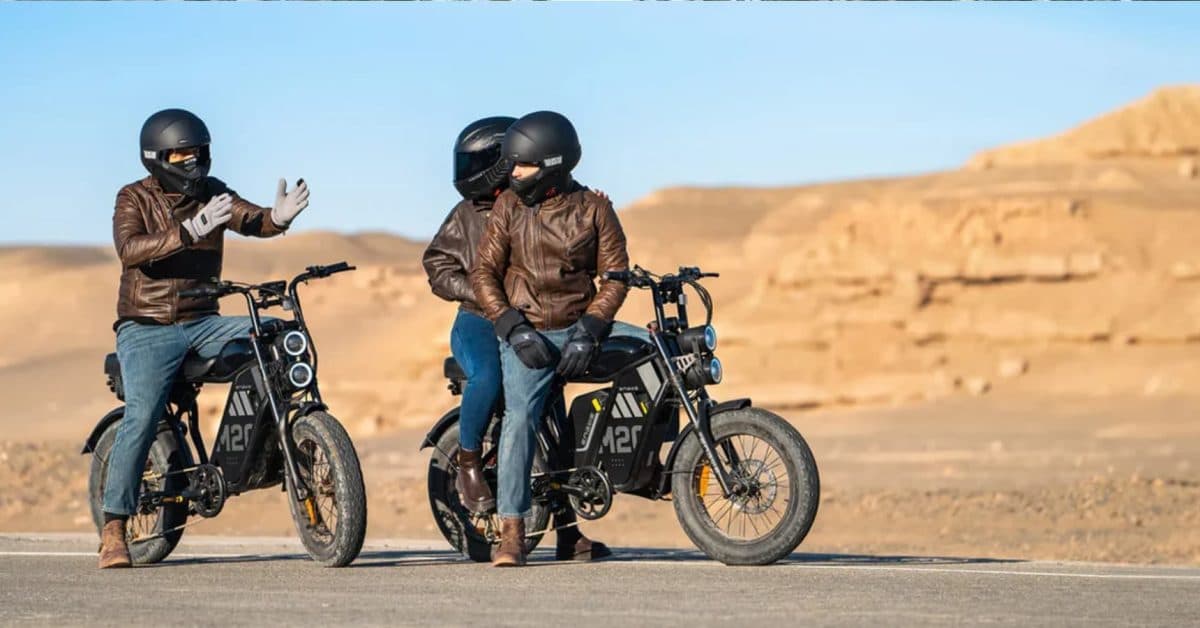
The New Low-Cost 40 MPH E-Moped that Teens Will Love and HOAs Will Hate
•March 3, 2026
0
Why It Matters
The M20 3.0 brings high‑performance e‑moto capability to a budget segment, potentially expanding the market but also raising safety, licensing, and HOA concerns.
Key Takeaways
- •3,300 W motor delivers 120 Nm torque.
- •40 mph speed unlocked after 95 % owner activation.
- •Single battery version priced at $1,399.
- •Dual‑battery option extends range to 180 miles.
- •Regulatory classification varies; may require moped licensing.
Pulse Analysis
The rapid growth of light‑electric motorcycles, or e‑motos, reflects consumers’ desire for faster, hill‑climbing capability without the cost of full‑size motorcycles. Engwe’s M20 3.0 leverages this trend by delivering a 3,300 W motor and 40 mph top speed at a price traditionally associated with entry‑level e‑bikes. By offering a high‑capacity 60 V battery system that can be charged in under three hours, the M20 3.0 competes directly with premium electric scooters and low‑displacement motorcycles, positioning itself as a disruptive value proposition in the urban mobility space.
From a technical standpoint, the M20 3.0’s full‑suspension chassis, 4‑piston hydraulic disc brakes, and 20×4.0‑inch tires provide a riding experience that rivals many mid‑range electric motorcycles. The dual‑battery option doubles the usable energy to 1.2 kWh, extending the claimed range to 180 miles—far beyond typical e‑bike limits. This combination of power, range, and rapid charging narrows the performance gap between affordable e‑bikes and higher‑priced electric motorcycles, making high‑speed electric two‑wheelers accessible to a broader audience.
However, the bike’s classification ambiguity introduces regulatory challenges. Because it can exceed 30 mph, many jurisdictions may require registration, insurance, or a motorcycle endorsement, especially once the 40 mph mode is unlocked. Homeowners’ associations and municipalities are also likely to impose restrictions, citing safety and noise concerns. As e‑motos like the M20 3.0 gain traction, manufacturers and policymakers will need to align standards to balance innovation with public safety, shaping the future landscape of personal electric transport.
The new low-cost 40 MPH e-moped that teens will love and HOAs will hate
0
Comments
Want to join the conversation?
Loading comments...