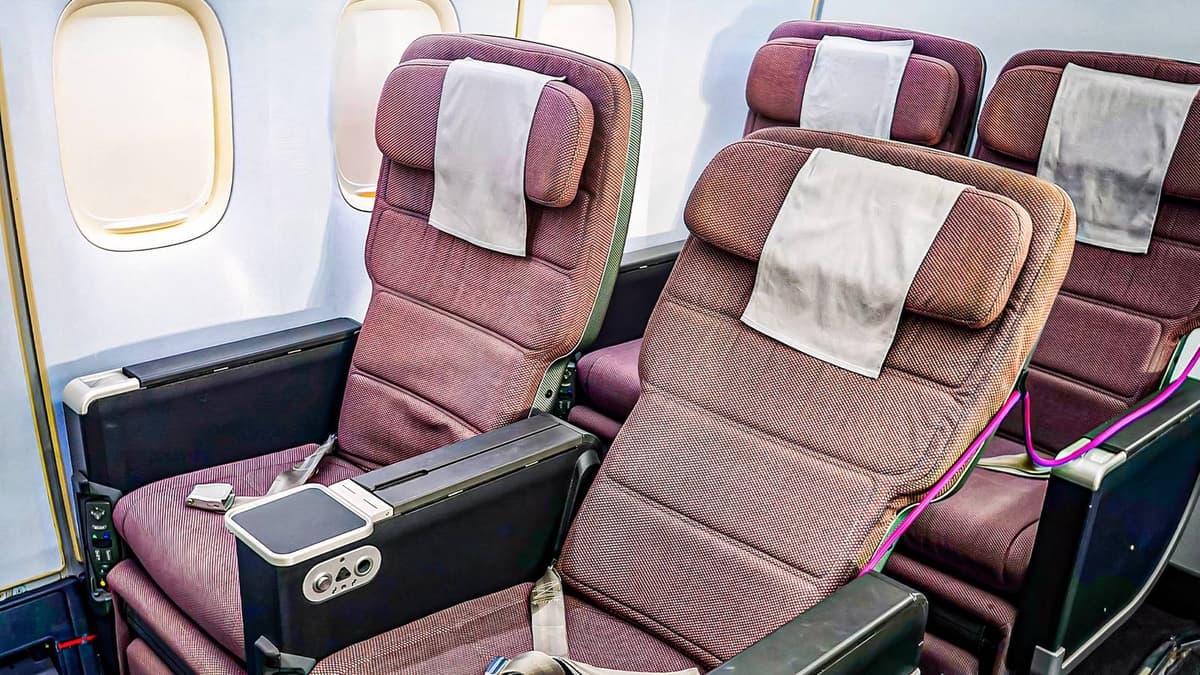
The Premium Economy Boom That Expanded Fast Is Now A Revenue Staple
•March 4, 2026
0
Why It Matters
It provides a scalable, high‑margin product that strengthens airline revenue management and meets rising passenger expectations for comfort on long‑haul flights.
Key Takeaways
- •Premium economy originated in 1970s, now global standard
- •Hybrid carriers add premium seats, blurring service lines
- •Seats offer 42‑inch pitch versus economy's 31‑inch
- •Airlines install premium cabins on new A350 and 787s
- •Higher yields and load factor balance boost airline profitability
Pulse Analysis
The premium‑economy concept traces its roots to Qantas’s business‑class experiment in the late 1970s and Virgin Atlantic’s “Mid Class” in the early 1990s. Over three decades the cabin migrated from a niche offering to an expected class on wide‑body jets, proving that airlines can profitably segment demand between economy and business. This evolution mirrors broader industry trends toward differentiated products that capture incremental revenue without the cost structure of full‑service business cabins.
Today, legacy carriers and hybrid low‑cost airlines alike install factory‑built premium cabins on Airbus A350 and Boeing 787 fleets, delivering seat pitches of 42 inches compared with the 31‑inch economy standard. The product bundles priority check‑in, extra baggage, upgraded meals and amenity kits, creating a tangible value proposition for long‑haul travelers. Social media amplification—exemplified by a viral TikTok review of Air Premia’s cabin—has heightened passenger awareness, turning premium‑economy from an optional upgrade into a competitive differentiator.
From a financial perspective, premium‑economy acts as a pricing bridge that lifts overall yields while smoothing load‑factor volatility. Airlines can target price‑sensitive customers willing to pay a modest premium for comfort, thereby filling seats that might otherwise remain empty in pure economy cabins. As new aircraft arrive with dedicated premium sections and connectivity solutions like Starlink become standard, the segment is poised to become a permanent pillar of airline network planning and revenue strategy.
The Premium Economy Boom That Expanded Fast Is Now A Revenue Staple
0
Comments
Want to join the conversation?
Loading comments...