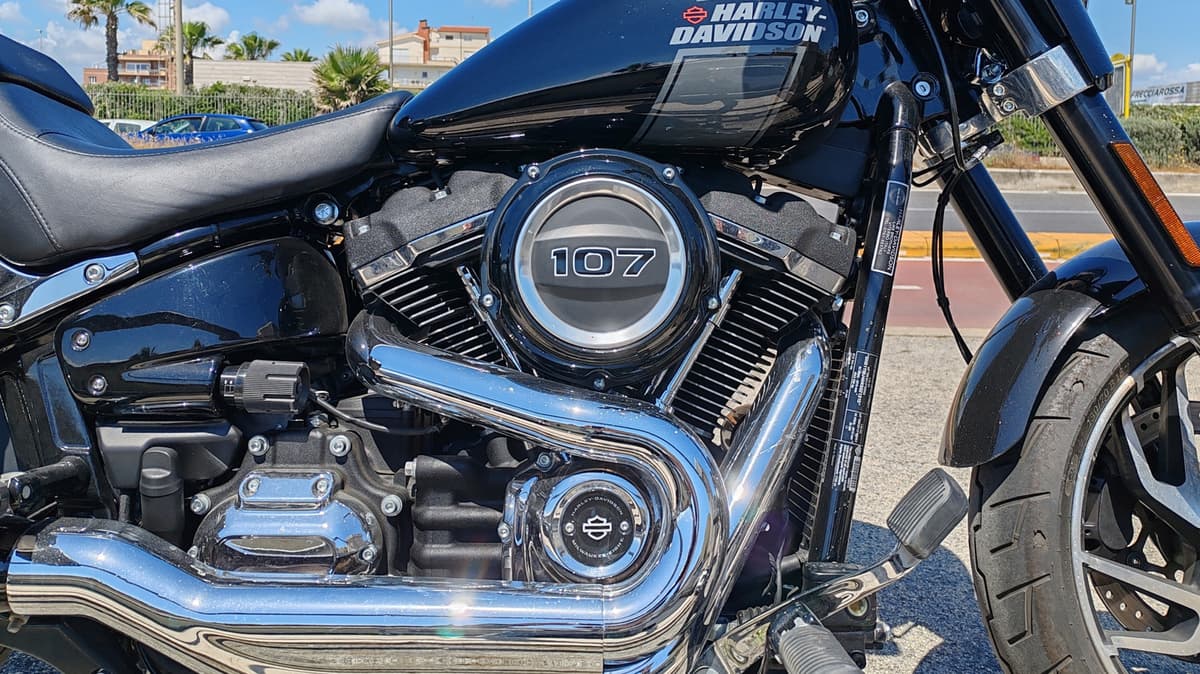
The Pros & Cons Of Harley-Davidson's Milwaukee-Eight Engine

Why It Matters
The Milwaukee‑Eight shows Harley adapting to regulatory pressure while preserving performance, influencing its market relevance and future product strategy.
Key Takeaways
- •Four‑valve, single‑cam design boosts efficiency and power
- •Counter‑balancer cuts vibrations, enabling long‑distance comfort
- •Early models suffered oil‑pump sumping, fixed after 2020
- •Torque peaks at low RPMs, 111‑130 lb‑ft range
- •Purists claim reduced “Harley soul” despite technical gains
Pulse Analysis
Harley‑Davidson’s engine lineage has long been defined by the Twin Cam V‑twin, which powered the brand for nearly two decades. Rising Euro‑5 emissions standards and a shrinking segment of riders demanding raw grunt forced the company to rethink its powertrain. The result was the Milwaukee‑Eight, introduced in 2017 as the ninth‑generation “Big Twin.” By moving to a single‑cam, four‑valve architecture and reinstating a chain‑driven cam, Harley aimed to blend classic V‑twin character with modern efficiency, positioning itself for a more regulated market.
The Milwaukee‑Eight delivers measurable performance gains. Four spark plugs and four valves per cylinder improve combustion completeness, translating into roughly an 11 % lift in both torque and acceleration over the outgoing Twin Cam 103. Peak torque arrives low in the rev range—111 lb‑ft at 3,250 rpm for the 107 ci version and 130 lb‑ft for the 117 ci model—providing effortless overtaking. A counter‑balancer neutralizes about 75 % of primary vibrations, while targeted oil‑cooling and optional “Twin‑Cooling” keep temperatures in check. Battery‑charging output at idle jumps 50 %, supporting accessories without draining the battery.
Early production runs revealed reliability gaps that threatened the engine’s reputation. An undersized oil pump caused “sumping,” trapping oil in the crankcase and degrading performance, a flaw corrected with a redesigned pump for 2020 models. Some units also experienced oil transfer to the primary case and occasional crankshaft spline failures. Beyond technical issues, purists argue the reduced vibration and smoother operation strip away the iconic Harley “soul.” Nevertheless, the Milwaukee‑Eight’s efficiency and power enable Harley‑Davidson to meet stringent emissions while expanding its touring lineup, a trade‑off many riders are willing to accept.
The Pros & Cons Of Harley-Davidson's Milwaukee-Eight Engine
Comments
Want to join the conversation?
Loading comments...