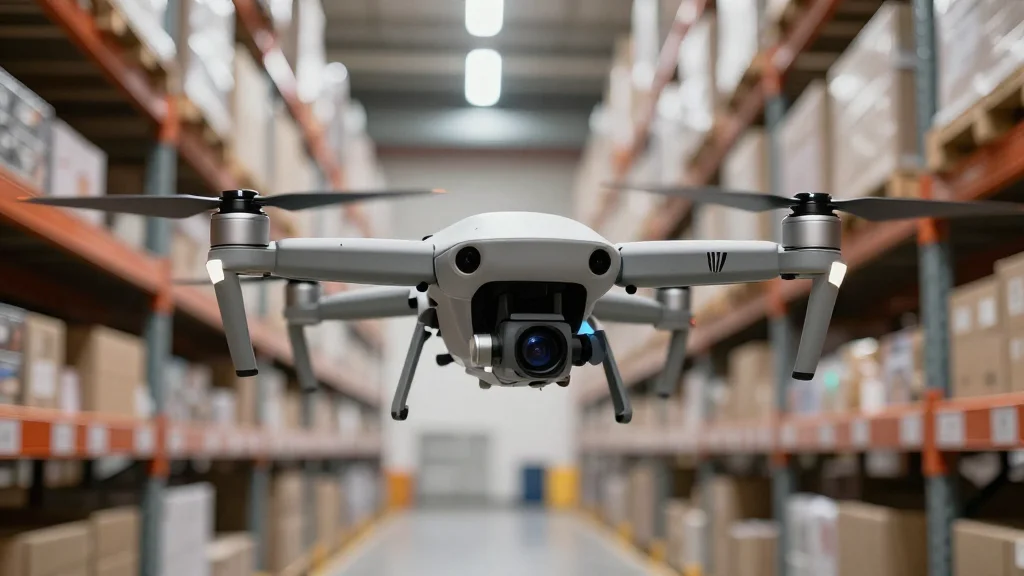
The Rise of Drones for Taking Physical Inventory
Why It Matters
Drones turn a traditionally labor‑intensive, revenue‑impacting process into a low‑cost, high‑accuracy operation, strengthening compliance and profitability for supply‑chain firms.
Key Takeaways
- •Drones cut inventory cycle time from days to under 48 hours
- •Autonomous navigation eliminates aisle congestion and safety risks
- •Real‑time WMS integration provides instant discrepancy alerts
- •Night‑time drone runs avoid disrupting order fulfillment
- •New drone‑maintenance roles offset warehouse labor shortages
Pulse Analysis
The physical inventory count has long been a logistical bottleneck, forcing warehouses to pause order picking for days of manual counting. Under U.S. GAAP, companies must verify stock levels annually, and many have added quarterly or monthly cycles to protect balance‑sheet integrity. Rising labor scarcity and the high cost of two‑person verification have accelerated interest in automation. Drones now offer a way to meet FASB requirements without pulling human staff from the floor, turning a disruptive, expensive exercise into a scheduled, low‑impact operation.
Modern inventory drones combine lidar mapping, high‑resolution cameras and RFID readers to capture barcode data at speeds unattainable by humans. Pre‑programmed flight paths and obstacle‑avoidance algorithms let them weave through narrow aisles while maintaining centimeter‑level positioning. The captured data streams directly into cloud‑based warehouse management systems, where AI‑driven analytics flag mismatches and generate real‑time adjustment reports. Accuracy rates reported by early adopters exceed 99.5%, dramatically reducing the need for costly recounts and tightening the book‑to‑physical variance that can trigger audit findings.
From a financial perspective, drone‑enabled inventories shrink labor expenses and accelerate cycle counts, delivering a clear return on investment within 12‑18 months for midsize distribution centers. The technology also creates a niche maintenance workforce, shifting job profiles from repetitive scanning to drone diagnostics, software updates and data stewardship. As more retailers and third‑party logistics providers pilot the solution, industry standards for drone safety and data security are coalescing, paving the way for broader regulatory acceptance. Ultimately, the convergence of autonomous robotics and cloud WMS platforms is reshaping inventory control into a continuous, data‑rich process rather than an annual chore.
The Rise of Drones for Taking Physical Inventory
Comments
Want to join the conversation?
Loading comments...