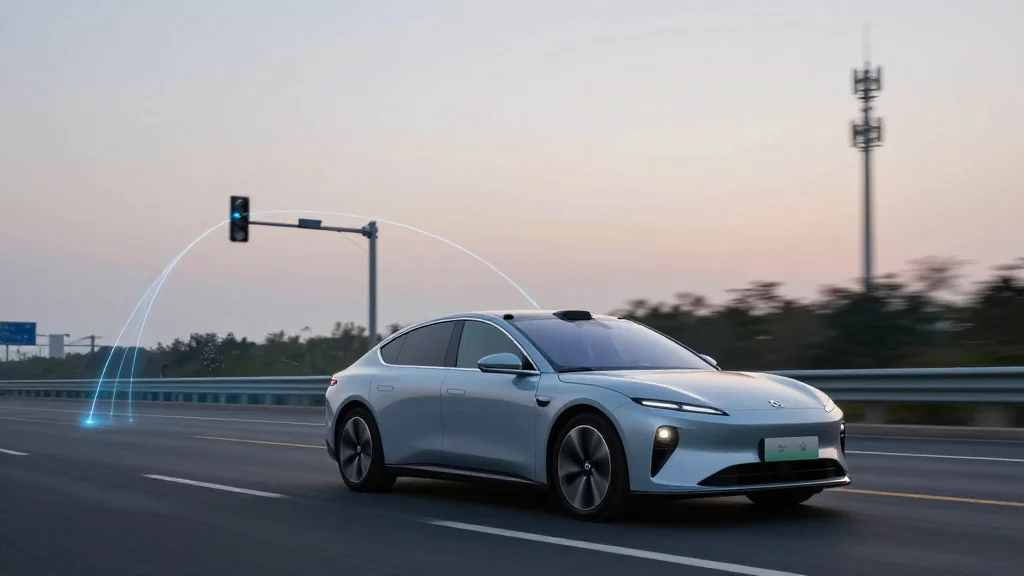
The Road to Safer Mobility: How Connected Car Data Can Transform Road Safety
Why It Matters
By turning every car into a connected sensor, V2X reduces collisions, lowers insurance costs and creates a multi‑billion‑dollar data ecosystem for automakers, fleets and municipalities.
Key Takeaways
- •Highway accidents cause 36% of Indian fatalities despite 2.3% road length
- •V2X enables real‑time vehicle‑to‑vehicle, infrastructure, and pedestrian communication
- •Telematics now supports remote diagnostics, predictive maintenance, and OTA updates
- •ADAS powered by V2X reduces collision risk and improves driver awareness
- •Industry expects V2X adoption to cut accident rates and boost autonomous fleets
Pulse Analysis
The stark disparity between India's highway network and its fatality statistics underscores the urgency of smarter mobility solutions. While highways represent only 2.3 % of the country's road mileage, they account for more than 36 % of traffic deaths. Connected‑vehicle ecosystems, anchored by telematics and the emerging V2X (vehicle‑to‑everything) framework, promise to shift this balance. By turning cars into data‑rich nodes that exchange information with each other, infrastructure, and pedestrians, these technologies lay the groundwork for a proactive safety layer that can anticipate hazards before they materialise.
V2X communication expands the situational awareness that traditional ADAS offers. Vehicle‑to‑vehicle (V2V) links share speed, position and trajectory data, enabling adaptive cruise control and collision‑avoidance systems to react milliseconds faster than vision‑only sensors. Vehicle‑to‑infrastructure (V2I) feeds real‑time traffic‑signal timing, road‑work alerts and weather warnings directly to the cockpit, smoothing traffic flow and reducing congestion‑related crashes. Meanwhile, vehicle‑to‑pedestrian (V2P) alerts warn cyclists and walkers of approaching cars in low‑visibility zones. Coupled with mature telematics platforms, these capabilities also support remote diagnostics, predictive maintenance and over‑the‑air software updates, extending vehicle uptime and security.
Automakers and fleet operators are already embedding V2X chips in new models, driven by tighter safety regulations and the commercial lure of lower insurance premiums. Analysts project that global V2X deployments could reach over 300 million units by 2030, creating a parallel data market valued in the billions of dollars. For businesses, the shift means new revenue streams from data‑as‑a‑service, OTA feature monetisation, and analytics‑driven fleet optimisation. As accident rates gradually decline, the broader ecosystem—hardware suppliers, cloud providers, and municipalities—will reap the economic and societal benefits of safer, more efficient roadways.
The road to safer mobility: How connected car data can transform road safety
Comments
Want to join the conversation?
Loading comments...