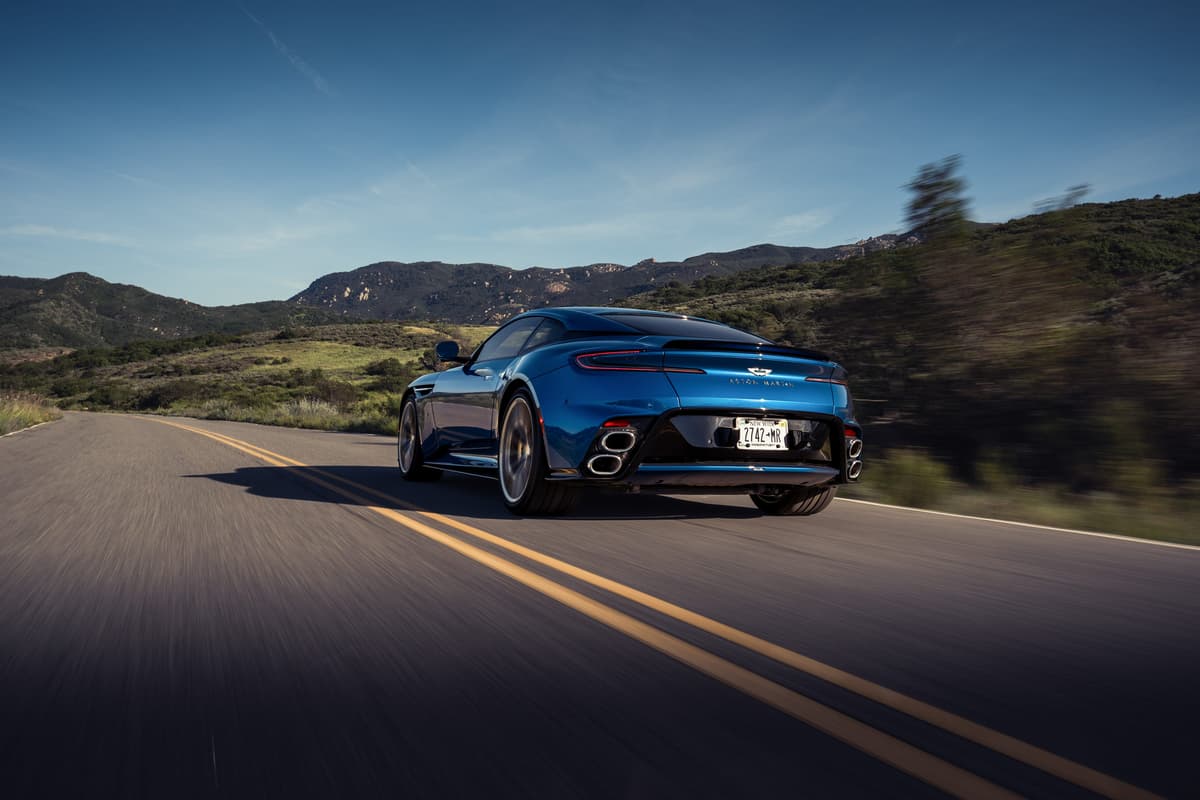
The Rules of Engagement: Aston Martin DB12 S Drive
Why It Matters
The DB12 S signals Aston Martin’s push to compete directly with other ultra‑luxury performance coupes, reinforcing its relevance in a market where buyers demand both raw power and daily usability. Its standard carbon‑ceramic brakes and aerodynamic upgrades set a new benchmark for the brand’s engineering ambition.
Key Takeaways
- •DB12 S outputs 690 hp, 10 hp more than standard
- •0‑60 mph in ~3.2 seconds, 0.1‑sec improvement
- •Carbon‑ceramic brakes become standard, enhancing handling
- •Larger rear anti‑roll bar and aero tweaks sharpen cornering
- •Base price $300,100; carbon‑fiber options add $100,000
Pulse Analysis
Aston Martin’s DB12 S arrives as a calculated evolution rather than a radical redesign, targeting enthusiasts who crave a visceral connection with the road. By increasing boost pressure to lift output to 690 hp and fine‑tuning the throttle response, the S model delivers a more linear power curve that feels alive at every rev. The retuned eight‑speed automatic, paired with a quicker launch‑control sequence, trims the 0‑60 time to an estimated 3.2 seconds, a modest yet meaningful gain that underscores the brand’s focus on engagement over outright speed. Complementary upgrades—firmer dampers, a 0.5 mm thicker rear anti‑roll bar, and standard carbon‑ceramic brakes—enhance chassis confidence, while the dual‑stacked exhaust and revised aero elements provide an unmistakable auditory and visual presence.
In the broader luxury sports‑car arena, the DB12 S positions Aston Martin against rivals such as the Ferrari Roma, Porsche 911 Turbo S, and Lamborghini Huracán Evo. These competitors have long offered carbon‑ceramic brakes as optional or standard, making Aston’s decision to include them a strategic move to close the performance gap. Aerodynamic refinements, including a front lip with biplane splitters and a rear diffuser, echo trends seen in high‑performance GT models, delivering better downforce without sacrificing the DB12’s sleek silhouette. The result is a vehicle that can hold its own on both the track and the highway, appealing to buyers who expect race‑inspired technology in a grand‑tourer package.
For Aston Martin, the DB12 S is more than a halo car; it serves as a testbed for technologies that may filter down to future models, reinforcing the brand’s engineering credibility. The $300,100 starting price, plus up to $100,000 for carbon‑fiber trim, places the S firmly in the ultra‑luxury segment, where consumers are willing to pay a premium for exclusivity and performance. As the market leans toward electrification, the DB12 S demonstrates that internal‑combustion excellence still has a passionate audience, buying time for the marque to transition its powertrain strategy while maintaining relevance among affluent performance buyers.
The Rules of Engagement: Aston Martin DB12 S Drive
Comments
Want to join the conversation?
Loading comments...