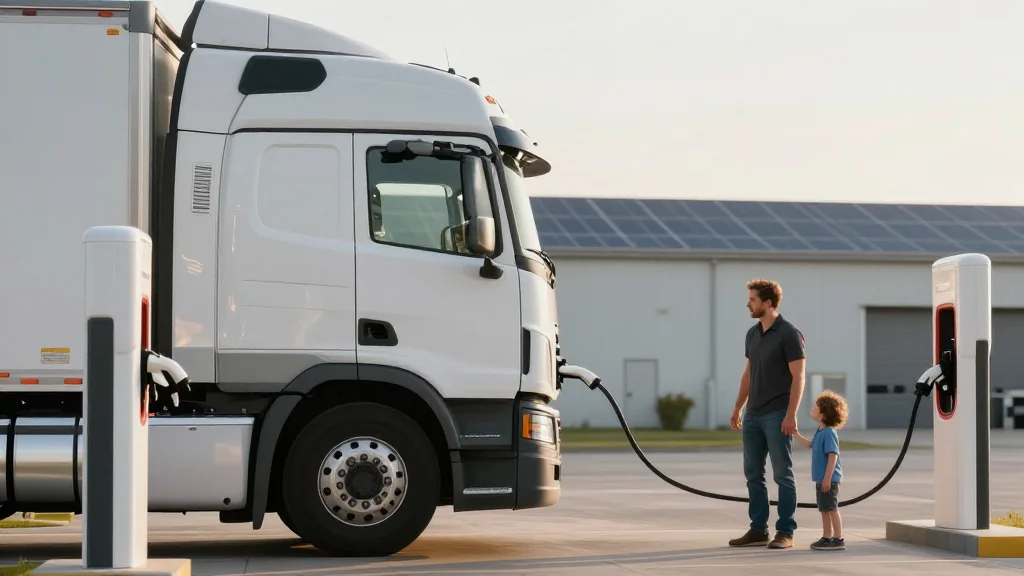
The Semi Is Finally Real
Companies Mentioned
Why It Matters
The Semi could accelerate the shift to zero‑emission freight, cutting transportation costs and a sizable share of road‑transport emissions, while cementing Tesla’s dominance beyond passenger cars.
Key Takeaways
- •Tesla Semi offers up to 500 miles range, beating rivals
- •Base price $290k, $100k cheaper than competing electric trucks
- •California offers up to $120k rebate, spurring 1,200+ orders
- •Tesla plans 64 megacharger sites, adding 300 miles in 30 minutes
- •Heavy trucks cause ~33% of road CO2, Semi could cut emissions
Pulse Analysis
Tesla’s decision to retire the Model S and Model X production lines marks a strategic pivot toward commercial vehicles, a market the company has been courting for nearly a decade. The Semi, unveiled in 2017, finally entered a high‑volume assembly line at the Nevada Gigafactory, signaling that the long‑running development delays are ending. By leveraging the same manufacturing expertise that reshaped passenger‑car expectations, Tesla aims to replicate its disruptive formula on the heavy‑truck segment, where electrification has lagged behind passenger vehicles.
The Semi’s specifications directly address the economics that have held fleets back. With a 500‑mile electric range and a base price of $290,000—about $100,000 cheaper than comparable Daimler or Volvo models—the truck promises lower total‑cost‑of‑ownership once diesel fuel prices, which have surged amid geopolitical tensions, are factored in. California’s $1 billion clean‑truck incentive, offering up to $120,000 per vehicle, has already generated more than 1,200 applications, effectively neutralizing the upfront price gap. Complementing the hardware, Tesla is deploying roughly 64 megacharger stations capable of delivering 300 miles of range during a standard 30‑minute rest, aligning with federal Hours‑of‑Service rules.
Beyond the balance sheet, the Semi could reshape freight emissions, which account for roughly one‑third of global road‑transport CO₂ and nearly half of U.S. nitrogen‑oxide output. By displacing diesel power, the truck promises measurable air‑quality gains for communities along busy corridors. However, Tesla’s success hinges on delivering a reliable, nationwide charging network and overcoming competition from Chinese battery‑truck makers and European incumbents fighting California’s regulations. If the megacharger rollout stays on schedule and adoption scales, the Semi may not only cement Tesla’s foothold in commercial vehicles but also accelerate the broader transition to zero‑emission logistics.
The Semi is finally real
Comments
Want to join the conversation?
Loading comments...