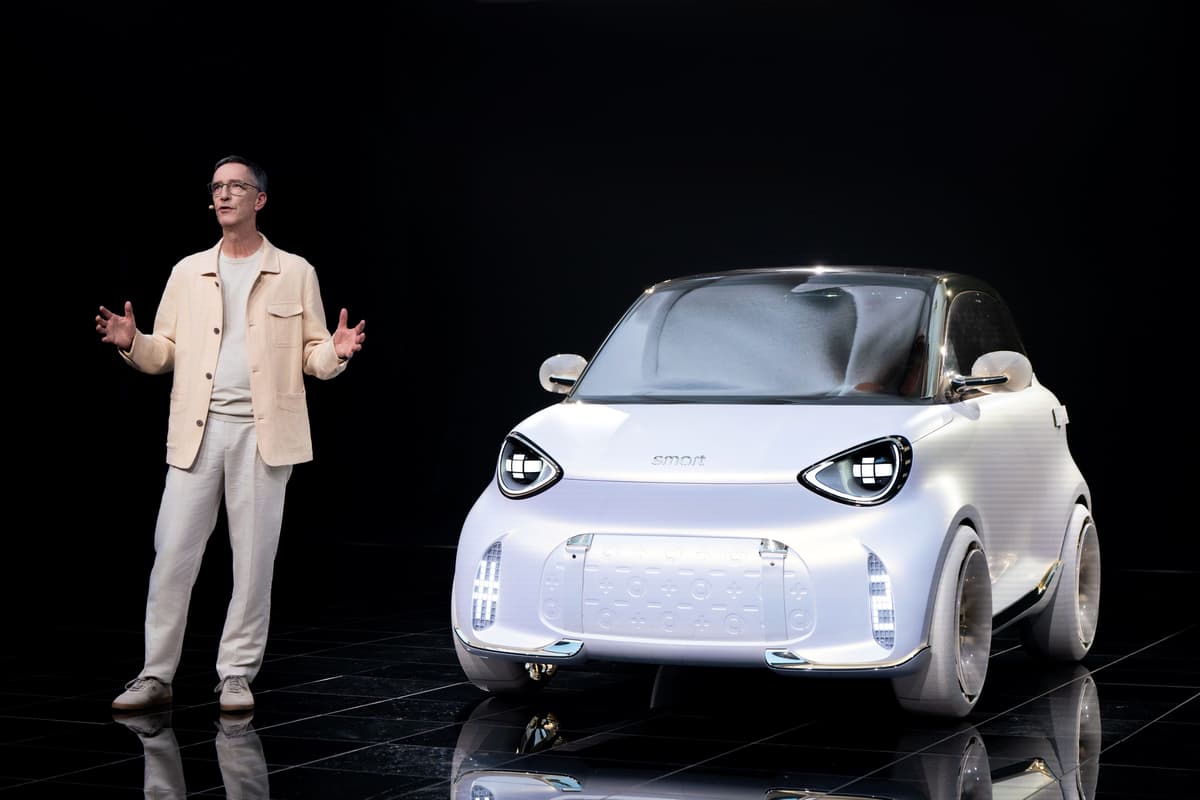
The Smart ForTwo Is Coming Back Again, But Not in America
Why It Matters
The launch revives a niche EV segment that could reshape urban mobility in Europe and China, while the U.S. exclusion highlights lingering market‑entry challenges for micro‑cars.
Key Takeaways
- •Smart #2 concept targets 186‑mile EV range.
- •Charges 10%‑80% in 20 minutes via DC fast charging.
- •Fourth‑gen ForTwo will launch in Europe, China, selected markets 2026.
- •U.S. market excluded due to past sales weakness and tariff headwinds.
- •Joint venture blends Mercedes engineering with Geely cost efficiency.
Pulse Analysis
Urban centers worldwide are grappling with congestion, parking scarcity, and emissions mandates, creating fertile ground for ultra‑compact electric vehicles. The Smart ForTwo, originally launched in 1998, struggled to find a foothold in the U.S. but resonated in densely populated European cities where space is at a premium. By re‑imagining the ForTwo as a modern EV, Smart is tapping into a growing consumer appetite for low‑cost, low‑impact transportation that can zip through city streets without the range anxiety of larger battery packs.
The #2 concept’s technical claims—approximately 186 miles of range and a 20‑minute DC fast‑charge from 10% to 80%—place it squarely within the sweet spot for daily urban commutes. While the exact battery capacity remains undisclosed, the rapid‑charge capability suggests a high‑power architecture likely supported by Geely’s cost‑effective battery sourcing and Mercedes‑Benz’s power‑train expertise. This partnership blends German engineering rigor with Chinese manufacturing scale, potentially delivering a competitively priced EV that can undercut larger city cars while maintaining brand credibility.
Strategically, Smart’s decision to forego the U.S. market reflects both historical sales shortfalls and current tariff pressures that make importing a micro‑EV less economical. Focusing on Europe, China and select markets allows the brand to concentrate marketing spend and dealer networks where micro‑mobility is already embraced. If the ForTwo gains traction, it could signal a broader shift toward ultra‑compact EVs as a viable segment, prompting other manufacturers to revisit the micro‑car formula for urban fleets and shared‑mobility services. The success of this launch will be a bellwether for the viability of niche EV offerings in a market dominated by larger crossovers and sedans.
The Smart ForTwo Is Coming Back Again, But Not in America
Comments
Want to join the conversation?
Loading comments...