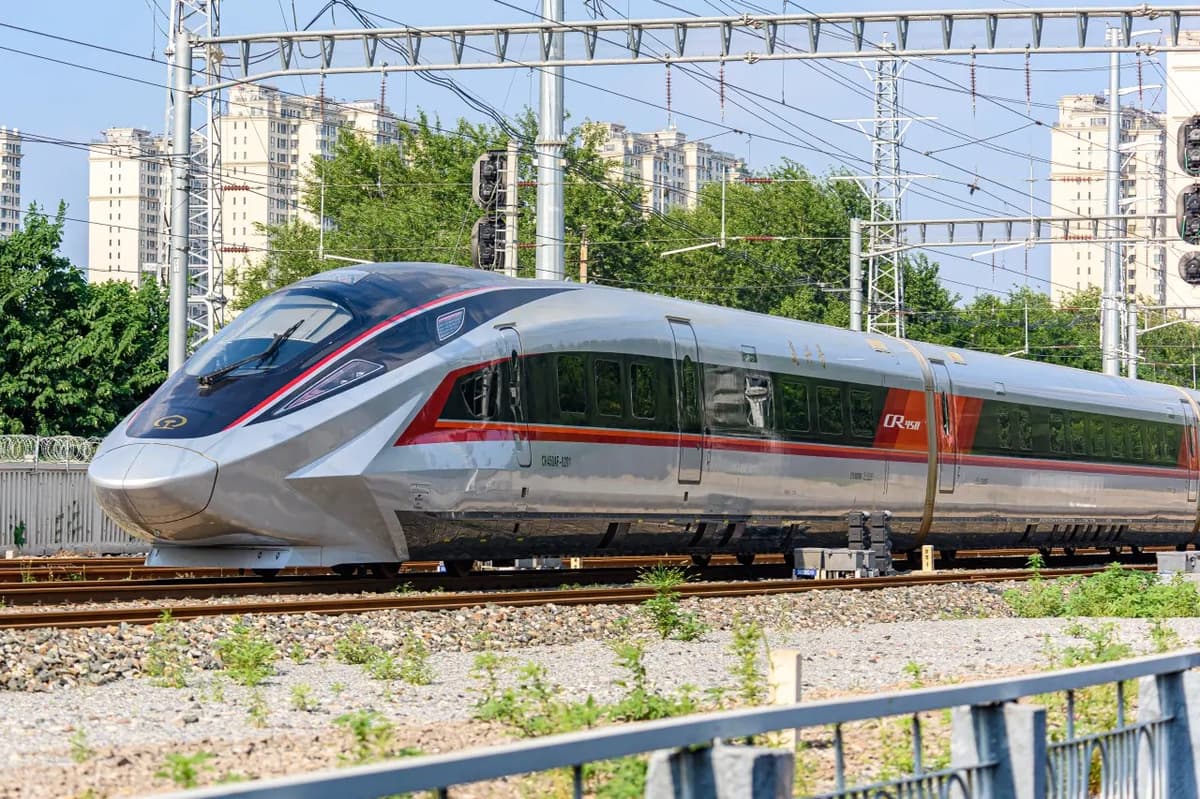
The World’s Fastest Conventional Train Is Nearing Launch in China
•March 10, 2026
0
Why It Matters
The CR450’s 400 km/h capability could set a new benchmark for conventional rail, strengthening China’s export potential and reshaping global high‑speed standards. Its domestic technology base also reduces reliance on foreign suppliers, boosting the national rail industry’s competitiveness.
Key Takeaways
- •CR450 aims for 400 km/h commercial speed.
- •Tested up to 453 km/h, 896 km/h combined.
- •Over 300,000 km of operational testing completed.
- •Uses domestic bogies, pantographs, high‑voltage cables.
- •Energy use under 22 kWh per kilometre.
Pulse Analysis
China’s high‑speed rail network has long set the pace for commercial velocity, and the upcoming CR450 train pushes that envelope even further. Designed to cruise at 400 km/h, the CR450 would eclipse the current 350 km/h ceiling of the CR400 series and outstrip the operational speeds of Japan’s Shinkansen N700S and France’s TGV Duplex, which top out near 320 km/h. By achieving a tested peak of 453 km/h, the prototype demonstrates that conventional steel‑wheel rail can rival maglev performance without the associated infrastructure costs, reinforcing China’s leadership in rail engineering.
The CR450’s engineering package centers on domestically sourced components that shave weight and boost efficiency. A lighter aluminium‑alloy carbody, combined with permanent‑magnet traction motors, reduces energy consumption to below 22 kWh per kilometre—comparable to the older CR400 despite the higher speed. Aerodynamic refinements lower drag, while advanced regenerative braking shortens the emergency stopping distance to under 6,500 metres. By producing bogies, pantographs and high‑voltage cables in‑house, CRRC minimizes reliance on foreign suppliers, creating a more resilient supply chain and lowering lifecycle costs for operators.
The commercial rollout of the CR450 could reshape global high‑speed rail economics. With a 400 km/h service speed, travel times between major Chinese cities would shrink dramatically, enhancing passenger throughput and revenue potential. Export‑ready technology positions CRRC to capture contracts in emerging markets seeking fast, cost‑effective rail solutions, challenging the dominance of European and Japanese manufacturers. However, realizing the full benefit will require parallel upgrades to track, signaling and maintenance regimes, as well as rigorous safety certification. If these hurdles are cleared, the CR450 may set a new industry benchmark for conventional high‑speed trains.
The world’s fastest conventional train is nearing launch in China
0
Comments
Want to join the conversation?
Loading comments...