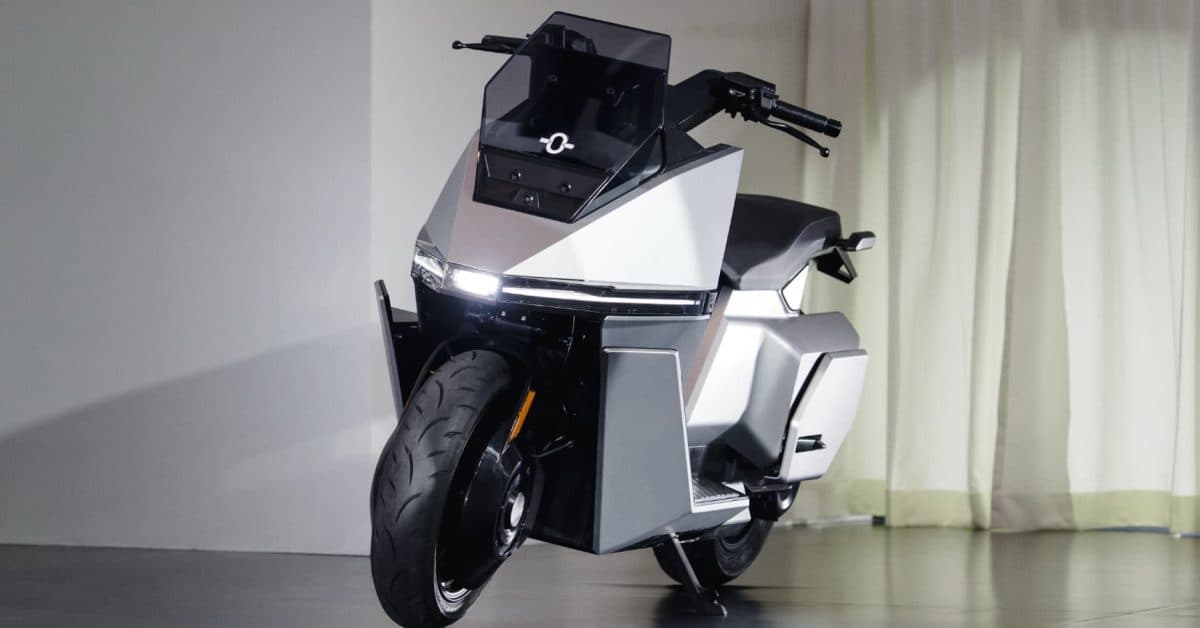
The World’s First Self-Balancing Electric Motorcycle Is Now Entering Production
Why It Matters
Self‑balancing capability could lower the entry barrier for new riders and reshape two‑wheel mobility, while OMOWAY’s production move signals a shift from concept to commercial viability.
Key Takeaways
- •OMO X uses aerospace-grade control moment gyroscope.
- •Self‑balancing tech aims at beginner rider safety.
- •Pre‑orders start Indonesia April 2026, launch May.
- •Full active safety includes slip, curve, obstacle assistance.
- •Mobility One robot leverages same balancing platform.
Pulse Analysis
The OMO X’s core innovation is its control‑moment gyroscope, a device traditionally reserved for satellite attitude control. By rapidly shifting angular momentum, the gyroscope provides continuous stabilization, allowing the motorcycle to remain upright at a standstill or low speed. Coupled with a sensor suite that feeds real‑time data to on‑board AI, the system can react within milliseconds, delivering not only balance but also active safety interventions such as slip detection and obstacle avoidance. This integration of aerospace‑grade hardware with consumer‑grade software marks a notable convergence of industries.
From a market perspective, OMOWAY’s decision to launch first in Indonesia reflects a strategic focus on emerging economies where two‑wheel transport dominates and rider skill gaps are pronounced. The country’s dense urban environments and growing middle class present a fertile testing ground for a bike that promises easier handling for novices and older riders alike. If pricing aligns with local purchasing power, the OMO X could capture a sizable share of the region’s electric two‑wheel market, prompting established manufacturers like Honda and Yamaha to accelerate their own stability solutions.
Beyond motorcycles, the same balancing platform powers the newly announced Mobility One robot, hinting at broader applications in last‑mile logistics and service automation. A fleet of self‑balancing delivery units could navigate crowded streets with minimal infrastructure changes, offering a scalable alternative to traditional wheeled carts. However, the technology’s commercial success will hinge on durability, maintenance costs, and consumer acceptance of a vehicle that partially rides itself. As regulatory bodies evaluate safety standards for autonomous two‑wheelers, OMOWAY’s rollout will serve as a real‑world benchmark for the next generation of moto‑robots.
The world’s first self-balancing electric motorcycle is now entering production
Comments
Want to join the conversation?
Loading comments...