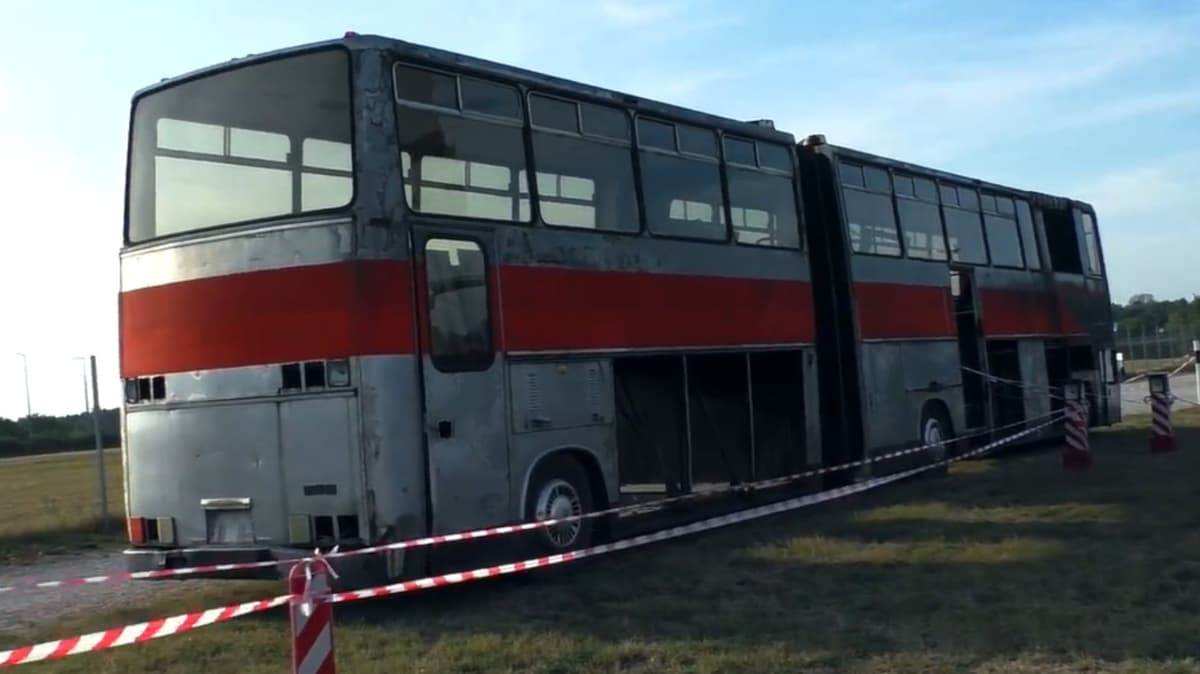
These Airport Buses Would've Changed The Way We Board Airplanes

Companies Mentioned
Why It Matters
The choice between buses and bridges directly influences airport capital spend, airline cost structures, and passenger experience, shaping future infrastructure strategies.
Key Takeaways
- •Dulles uses mobile lounges since 1962 for passenger transport.
- •1980s Hungarian Ikarus PAL T buses never entered production.
- •Boarding buses reduce bridge installation costs of millions dollars.
- •Bridges offer weather protection and better accessibility for disabled.
- •Budget carriers still use buses to cut operational expenses.
Pulse Analysis
The evolution of passenger transport at airports reflects broader shifts in aviation logistics. Early experiments, such as Hungary’s Ikarus PAL T buses, aimed to merge luggage handling and boarding into a single vehicle, promising streamlined operations. Although the PAL T never entered mass production, its concept foreshadowed modern mobile lounges like those at Washington Dulles, which have become a reliable alternative for aircraft positioned far from terminals. These vehicles demonstrate how airports can adapt infrastructure to accommodate diverse aircraft configurations without extensive construction.
Cost efficiency drives many airlines toward bus‑based boarding, especially low‑cost carriers operating at congested hubs. Installing a jet bridge can run into the millions of dollars, a barrier for airports with limited capital or for airlines serving remote gates. Mobile shuttles also offer flexibility, allowing rapid reallocation of gates during peak periods. However, bridges retain a competitive edge by shielding passengers from inclement weather, reducing safety risks associated with tarmac transfers, and complying with accessibility regulations that favor level, enclosed pathways.
Looking ahead, autonomous electric shuttles could revive the bus boarding model with added sustainability benefits. Advances in battery technology and AI navigation promise quieter, emission‑free transport that integrates seamlessly with terminal operations. If regulators endorse these innovations, airports may revisit bus‑centric designs to balance cost, passenger comfort, and environmental goals, potentially reshaping the boarding landscape for the next generation of travelers.
These Airport Buses Would've Changed The Way We Board Airplanes
Comments
Want to join the conversation?
Loading comments...