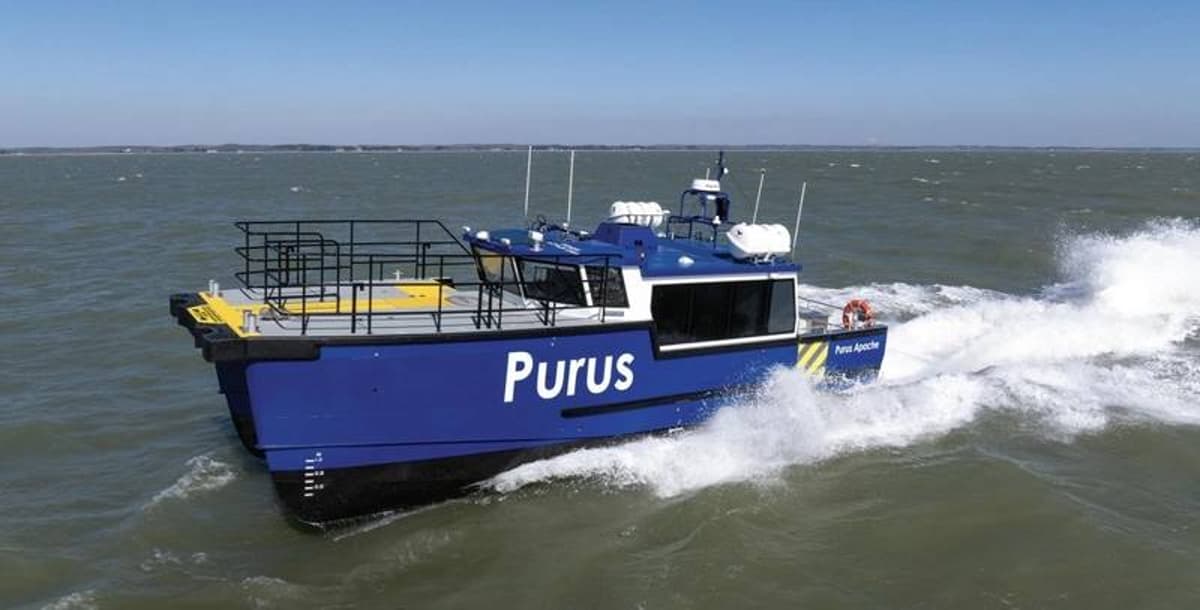
Third Purus Daughter Craft Undergoes Final Outfitting, Sea Trials to Come
•February 27, 2026
0
Why It Matters
The craft demonstrates how offshore support operators can meet stricter emission standards while delivering superior comfort and operational flexibility, giving Purus a competitive edge in the growing daughter‑craft market.
Key Takeaways
- •Engines installed: Volvo Penta IPS drives.
- •IMO Tier 3 exhaust treatment reduces emissions.
- •Design validated via CFD and tank testing.
- •Dual role: near‑shore CTV and offshore daughter craft.
- •Low‑noise propulsion enhances passenger comfort.
Pulse Analysis
The offshore support sector is increasingly pressured to adopt greener, more efficient vessels. Daughter crafts like Purus’s third unit address this demand by integrating IMO Tier 3 exhaust after‑treatment, which significantly cuts nitrogen oxides and particulate matter. Coupled with Volvo Penta’s IPS pod drives, the craft achieves lower fuel consumption and reduced acoustic signatures—critical factors for both regulatory compliance and client expectations in environmentally sensitive regions.
From a technical standpoint, the vessel’s hull benefits from advanced computational fluid dynamics (CFD) modeling and scale‑free tank testing, delivering a shape that minimizes resistance while enhancing stability. Motion‑softening features, such as a high bow with a low‑propulsor configuration, improve passenger comfort during rough seas. The interior design follows Diverse Marine’s proven CTV philosophy, offering sprung seating, step‑free decks, and concealed deck equipment, all of which reduce maintenance burdens and streamline crew operations.
Strategically, Purus’s rollout of a versatile daughter craft expands its service portfolio, allowing operators to deploy the vessel as a near‑shore crew transfer vessel (CTV) or as an offshore daughter craft launched from a larger SOV/CSOV platform. This flexibility meets the evolving needs of offshore wind, oil‑gas, and subsea projects that require rapid, safe personnel movement. By delivering a low‑emission, high‑comfort platform, Purus positions itself as a preferred supplier in a market where sustainability and operational efficiency are paramount.
Third Purus Daughter Craft Undergoes Final Outfitting, Sea Trials to Come
0
Comments
Want to join the conversation?
Loading comments...