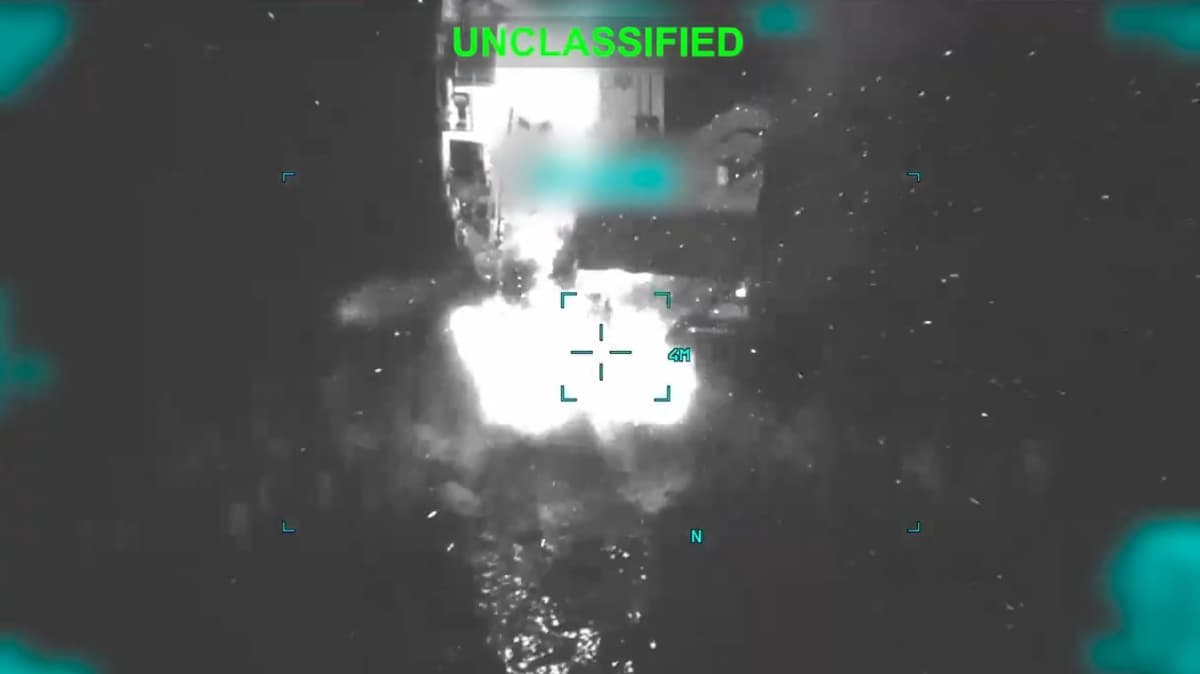
Third Tanker Engine Room Fire After US Missile Strike Off Oman
Why It Matters
The attack underscores escalating tensions over the US‑enforced Iran oil blockade, raising safety concerns for commercial shipping and prompting diplomatic protests from India and the IMO.
Key Takeaways
- •Jalveer engine-room fire follows two similar attacks off Oman this week
- •US missiles targeted the tanker for allegedly breaching Iran blockade
- •All 20 Indian crew members are safe; evacuation ongoing
- •India and IMO condemn US strikes on commercial vessels
- •US says nine vessels disabled, 135 redirected since April 13 blockade
Pulse Analysis
The United States has intensified its maritime interdiction campaign in the Gulf of Oman, using precision‑guided Hellfire missiles to enforce a blockade aimed at curbing Iran’s oil exports. Since the blockade’s launch on April 13, US Central Command reports disabling nine non‑compliant vessels and redirecting more than a hundred ships. The recent strike on the Jalveer, a bitumen tanker flagged to Guinea‑Bissau but owned by an Indian firm, illustrates how the policy is extending beyond Iranian‑flagged ships to any vessel suspected of transporting Iranian cargo, heightening the risk profile for global tanker routes.
The incident has immediate diplomatic repercussions. India’s Ministry of External Affairs confirmed that all 20 Indian crew members are safe, yet the evacuation underscores the vulnerability of seafarers caught in geopolitical cross‑fires. Both India and the International Maritime Organization have publicly condemned the US actions, echoing criticism sparked by the earlier Settebello attack that resulted in three Indian fatalities. These condemnations may pressure Washington to reassess its rules of engagement, especially as commercial operators demand clearer guidelines to avoid costly disruptions and potential loss of life.
For the broader shipping industry, the series of engine‑room fires signals a shift in risk calculations for vessels transiting the Gulf of Oman. Insurers are likely to adjust premiums, and charterers may reroute cargoes to avoid the contested corridor, potentially increasing freight rates on alternative routes such as the Cape of Good Hope. As the US continues to assert its blockade, stakeholders must monitor evolving legal interpretations of maritime security and the impact on global oil supply chains, which could reverberate through energy markets worldwide.
Third tanker engine room fire after US missile strike off Oman
Comments
Want to join the conversation?
Loading comments...