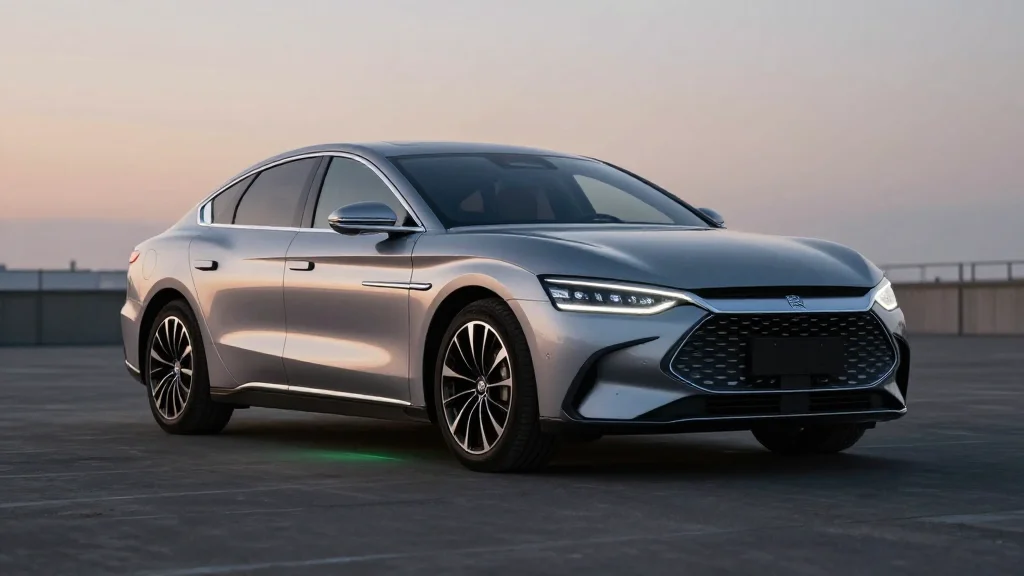
This Chinese Automaker Just Made The Most Efficient Engine Ever
Companies Mentioned
Why It Matters
The achievement revives the relevance of internal‑combustion engines and gives Geely a competitive edge that could pressure global OEMs to accelerate efficiency upgrades. It also supports stricter emissions targets while extending the life of hybrid architectures.
Key Takeaways
- •Geely's i‑HEV reaches 48.4% thermal efficiency, world record.
- •Combined fuel economy hits 105 miles per gallon.
- •Efficiency beats previous best of ~42% from Nissan, Toyota.
- •AI algorithms optimize energy flow in the hybrid system.
- •Applicable to both 1.5‑L and 2.0‑L engines.
Pulse Analysis
The 48.4 percent thermal efficiency reported by Geely marks a watershed moment for internal‑combustion technology. Historically, production engines have lingered in the mid‑20s to low‑40s range, with the best‑in‑class hybrids barely crossing the 42 percent threshold. By pushing efficiency close to the 50 percent mark—approaching the levels seen in Formula 1 power units—Geely demonstrates that sophisticated combustion can still deliver substantial gains in power output and fuel savings, challenging the narrative that ICEs are obsolete.
Geely’s breakthrough is rooted in an AI‑enhanced i‑HEV architecture that continuously balances engine load, electric assist, and regenerative braking. This digital control layer extracts more usable energy from each combustion cycle, allowing the same 1.5‑L or 2.0‑L block to achieve 105 mpg in real‑world testing. For China’s rapidly expanding auto market, the technology offers a pathway to meet tightening CO₂ regulations without a full shift to battery‑only vehicles, preserving existing manufacturing investments while delivering consumer‑facing fuel‑efficiency benefits.
The global implications are equally profound. Competitors such as Toyota, Hyundai and Volkswagen will likely accelerate their own efficiency programs or seek licensing deals to close the gap. Investors may view Geely’s patent portfolio as a new revenue stream, while regulators could cite the achievement when shaping future fuel‑economy standards. Ultimately, the development underscores a hybrid future where smarter ICEs coexist with electrification, extending the relevance of combustion power for at least another decade.
This Chinese Automaker Just Made The Most Efficient Engine Ever
Comments
Want to join the conversation?
Loading comments...