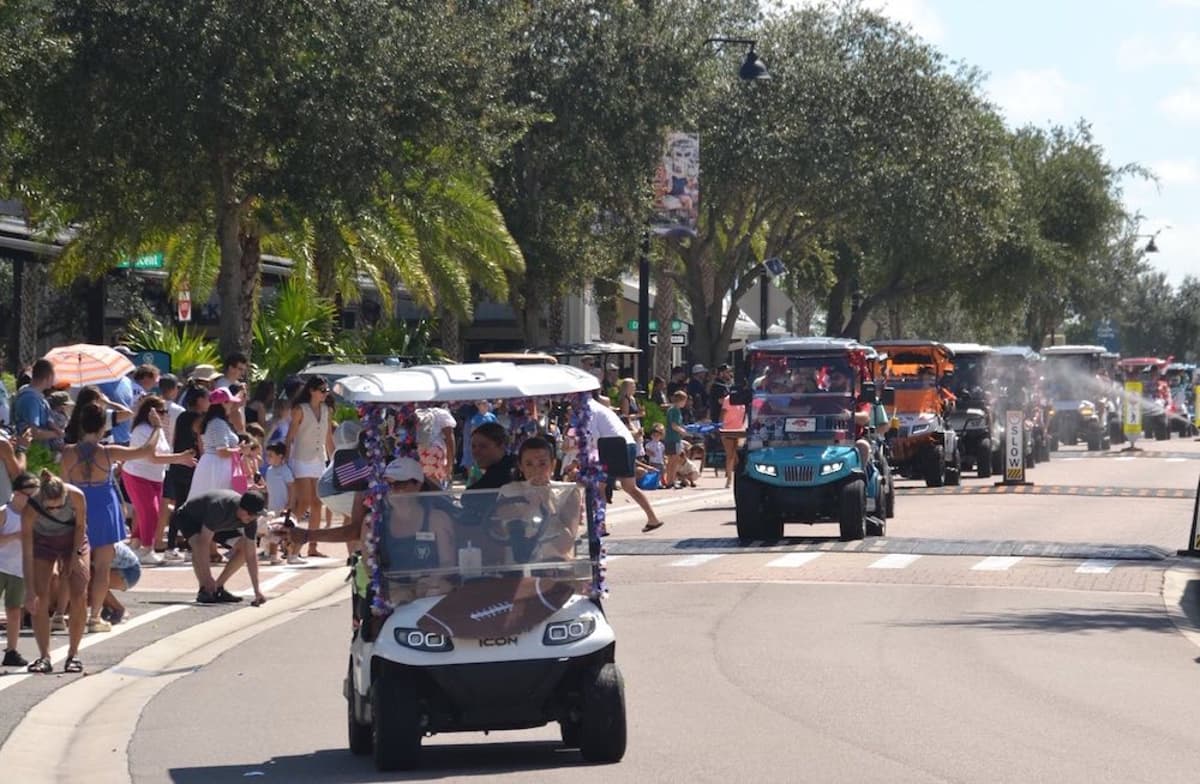
This Florida Town Gives Residents a Free Golf Cart with Each New Home
Why It Matters
The incentive accelerates adoption of alternative transportation, reducing traffic congestion and emissions while showcasing a replicable blueprint for sustainable suburban development. It signals a shift in real‑estate value propositions toward mobility‑focused amenities.
Key Takeaways
- •Babcock Ranch gives a free golf cart with every new home purchase.
- •Community features 100+ miles of bike trails and 10 mph speed limits.
- •Plans include small delivery vehicles to curb e‑commerce van traffic.
- •Residents report reduced car use for everyday trips like grocery runs.
- •Model aims to inspire car‑light development in auto‑centric regions.
Pulse Analysis
Babcock Ranch’s free‑golf‑cart program is more than a marketing gimmick; it reflects a deliberate urban design strategy that prioritizes low‑speed, non‑automotive travel. By integrating over 100 miles of dedicated bike and cart pathways, the community reduces reliance on traditional cars for routine errands, from trips to Publix to visits to the local pool. The 10 mph speed caps in school zones further reinforce safety and encourage walking and cart use, creating a cohesive, walkable environment that aligns with emerging preferences for health‑centric, environmentally friendly lifestyles.
The initiative arrives amid growing scrutiny of suburban sprawl and its contribution to traffic congestion and greenhouse‑gas emissions. Planners nationwide are experimenting with "car‑light" solutions, such as micro‑mobility hubs, curbside electric scooters, and restricted delivery zones. Babcock Ranch’s plan to introduce smaller, electric delivery vehicles aims to curb the surge of large e‑commerce vans that dominate many neighborhoods, potentially lowering noise and pollution levels. By offering a tangible alternative—free golf carts—the town demonstrates how incentives can shift resident behavior, a lesson that could inform policy decisions in other auto‑dependent metros.
For developers, the model reshapes the value proposition of new homes. Buyers now consider mobility amenities alongside traditional factors like square footage and school districts. The rapid uptake of homes in Babcock Ranch suggests that integrating transportation incentives can boost sales and differentiate projects in a competitive market. However, scaling this approach will require supportive infrastructure, zoning adjustments, and collaboration with local governments to address challenges such as parking, safety standards, and integration with existing road networks. If successfully replicated, such communities could become a cornerstone of the next generation of sustainable suburban growth.
This Florida town gives residents a free golf cart with each new home
Comments
Want to join the conversation?
Loading comments...