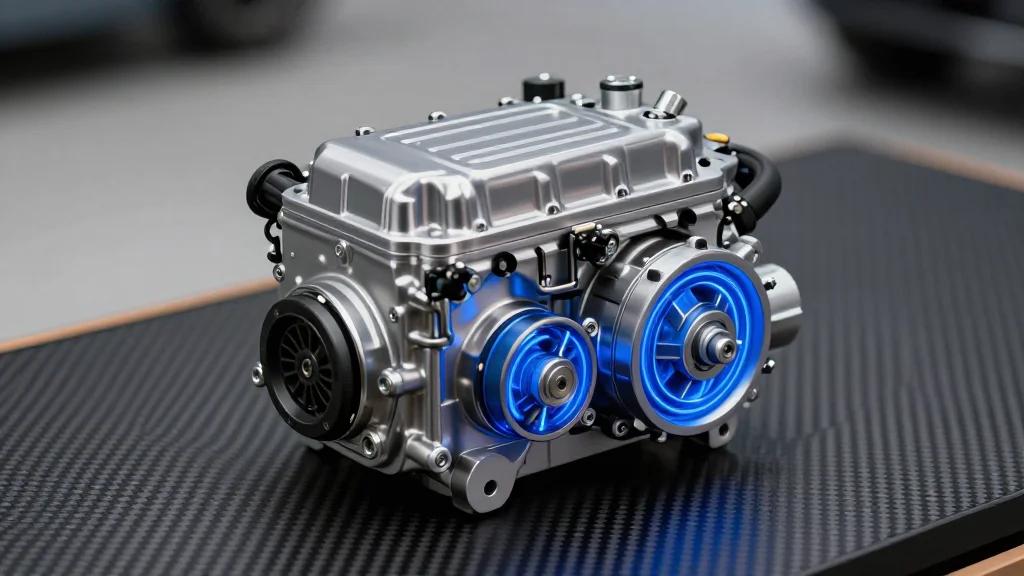
This Tiny Hybrid Engine Will Convert Your EV To Gasoline: 'All-In-One'
Companies Mentioned
Why It Matters
The X‑Range C15 gives manufacturers a fast path to extend EV range and hedge against uncertain battery economics, potentially accelerating hybrid adoption in markets where charging infrastructure lags.
Key Takeaways
- •Horse X‑Range C15 adds 1.5‑L engine to EVs as hybrid
- •Flat-pack design fits under low floor, preserving vehicle interior space
- •Two power options: 94 hp naturally aspirated or 148 hp turbocharged
- •Conversion requires custom mounts, fuel tank placement, and system tuning
Pulse Analysis
Hybrid conversions are gaining traction as automakers grapple with the high cost of battery packs and uneven global charging networks. By embedding a small gasoline engine alongside an electric motor, the X‑Range C15 offers a pragmatic compromise: drivers retain electric‑only operation for daily commutes while gaining a range‑extending boost for longer trips. This dual‑power strategy mirrors the early success of plug‑in hybrids, but the flat, drop‑in design promises a quicker, more cost‑effective retrofit for existing EV platforms, potentially opening a new aftermarket niche.
Technically, the C15’s flat‑lay configuration mirrors the packaging tricks used in low‑floor vans, allowing the unit to sit beneath the chassis without sacrificing cabin height. The integrated F15 motor replaces the front drive unit, while the C15 1.5‑liter engine serves as a range extender or primary drive in a parallel‑hybrid layout. Power output options—94 hp NA or 148 hp turbo—cover a spectrum from modest city driving to spirited performance. However, the conversion is not plug‑and‑play; manufacturers must engineer custom engine mounts, locate a fuel tank, and integrate cooling systems, adding engineering overhead that could limit early adoption to niche or fleet applications.
If the X‑Range C15 proves reliable and cost‑effective, it could reshape the powertrain roadmap for mid‑size and compact vehicles, especially in regions where EV adoption stalls due to charging gaps. OEMs might offer a single chassis that ships with the hybrid kit as an optional factory‑installed package, reducing tooling expenses and inventory complexity. Competitors are likely to watch closely, spurring a wave of modular hybrid solutions that blend internal‑combustion simplicity with electric efficiency, ultimately influencing regulatory strategies and consumer expectations in the evolving mobility landscape.
This Tiny Hybrid Engine Will Convert Your EV To Gasoline: 'All-In-One'
Comments
Want to join the conversation?
Loading comments...