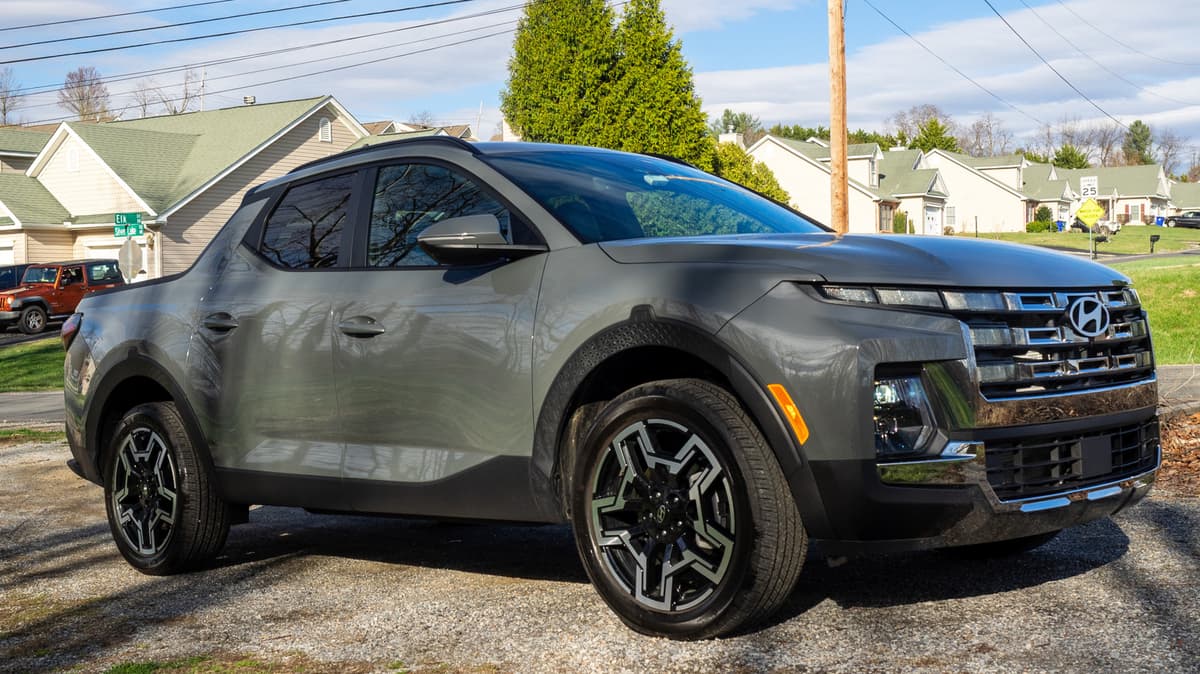
Time's Up For The Hyundai Santa Cruz, And One Final Fling Shows Why
Companies Mentioned
Why It Matters
The Santa Cruz’s exit leaves Ford’s Maverick as the sole affordable compact pickup, reshaping a segment that could have spurred broader competition and hybrid adoption. Hyundai’s shift signals a strategic pivot toward larger trucks, where it hopes to capture new market share.
Key Takeaways
- •2026 is the final model year for Hyundai Santa Cruz.
- •Santa Cruz starts at $29,750; Maverick starts under $28,150.
- •No hybrid option limits fuel economy compared to Maverick's 37 mpg.
- •Sales peaked 36,675 in 2023, dropped to 25,499 in 2025.
- •Hyundai plans midsize body‑on‑frame truck launch by 2030.
Pulse Analysis
Hyundai’s decision to retire the Santa Cruz marks the end of a brief experiment in the burgeoning compact pickup market, a segment that has seen limited participation since the early 2010s. While the Santa Cruz offered a stylish crossover‑derived ride and a respectable payload of up to 5,000 lb, its lack of a hybrid variant left it trailing the Ford Maverick, which delivers 37 mpg combined and a lower entry price. This gap in fuel efficiency and price elasticity proved decisive as consumers gravitated toward the Maverick’s more truck‑like aesthetic and DIY‑friendly branding.
The sales trajectory tells a clear story: after an initial surge, Santa Cruz volumes slipped from a 2023 peak of 36,675 units to just over 25,000 in 2025. The decline reflects both internal competition from Hyundai’s own Tucson lineup and external pressure from Ford’s aggressive pricing and hybrid options. Moreover, the Santa Cruz’s buyer base skewed toward existing Hyundai owners rather than attracting new entrants, limiting its market expansion. In contrast, the Maverick captured a sizable share of first‑time truck buyers, bolstering Ford’s foothold in the segment.
Looking ahead, Hyundai’s announced midsize, body‑on‑frame truck for a 2030 debut suggests a strategic realignment toward higher‑margin, larger vehicles where the brand can differentiate with design and technology. By exiting the compact truck arena, Hyundai can reallocate engineering resources to develop a competitive midsize offering, potentially incorporating hybrid or electric powertrains to meet evolving emissions standards. The Santa Cruz’s farewell thus underscores a broader industry trend: manufacturers are consolidating efforts around segments with clearer profit potential and consumer demand.
Time's Up For The Hyundai Santa Cruz, And One Final Fling Shows Why
Comments
Want to join the conversation?
Loading comments...