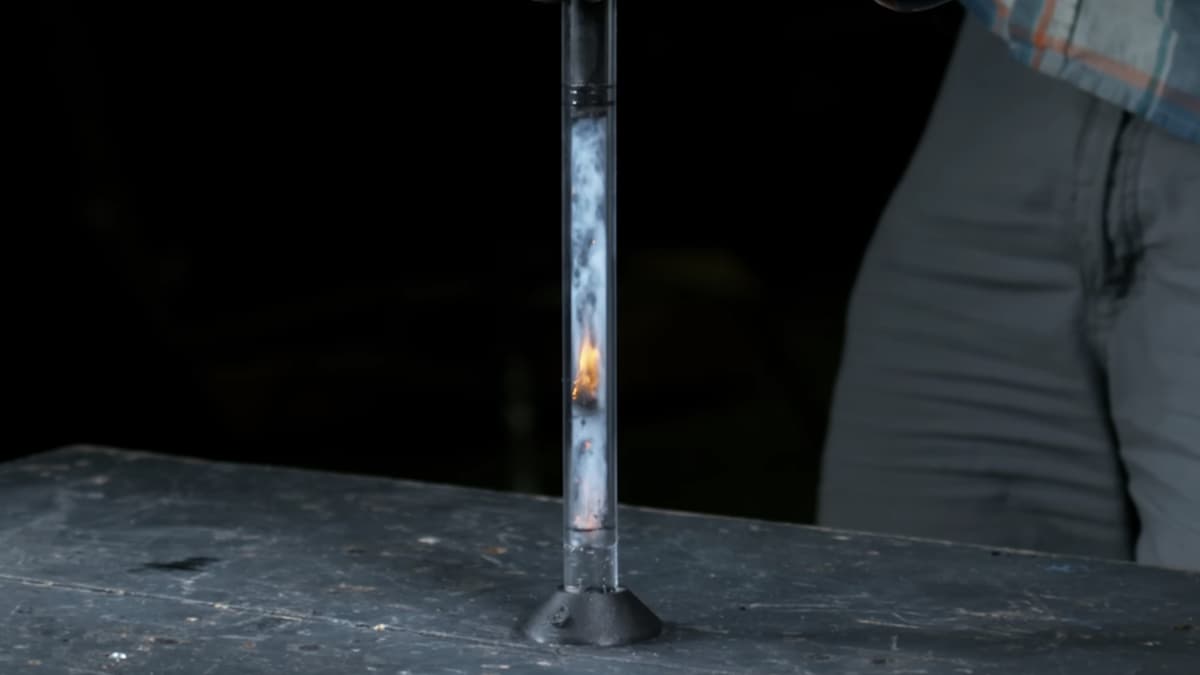
To Visualize How Diesel Fuel Detonates, Here It Is Igniting In Slow Motion

Why It Matters
Visualizing diesel ignition demystifies a core automotive technology, aiding engineers, educators, and enthusiasts while underscoring the efficiency advantages of compression‑ignition engines.
Key Takeaways
- •Transparent fire piston shows 25:1 compression, close to real diesel engines
- •Char cloth ignition mirrors Rudolf Diesel’s original coal‑dust experiments
- •Diesel auto‑ignites at lower temperature than gasoline, enabling compression ignition
- •Mazda’s SPCCI blends spark and compression ignition for higher efficiency
Pulse Analysis
The Warped video brings a century‑old principle to a modern audience by filming a see‑through fire piston in slow motion. The device, essentially a high‑pressure syringe, compresses air to roughly 25 times its original volume—comparable to the compression ratios found in contemporary diesel engines. By first igniting char cloth, the presenter recreates Rudolf Diesel’s 1890s experiments with coal dust, offering a tangible link between historical invention and today’s digital content. This visual aid not only entertains but also serves as a practical teaching tool for engineering students and hobbyists seeking a clear picture of compression ignition.
Beyond the spectacle, the video underscores the fundamental chemistry that separates diesel from gasoline. Diesel’s higher flash point and lower auto‑ignition temperature mean it can combust solely from the heat generated by compressing air, eliminating the need for a spark plug. In contrast, gasoline requires a spark because its volatility and higher auto‑ignition temperature make spontaneous combustion unlikely under typical compression ratios. Understanding these fuel properties is crucial for designers aiming to improve thermal efficiency, reduce emissions, and optimize engine durability across passenger‑car and heavy‑duty platforms.
Modern manufacturers are building on this principle to meet stricter emissions standards and consumer demand for fuel economy. Mazda’s Skyactiv‑SPCCI system, for example, combines a spark plug with high‑compression operation to achieve a leaner burn and lower nitrogen‑oxide output while retaining diesel‑like efficiency. As the industry explores alternative fuels—such as renewable diesel and bio‑derived hydrocarbons—the visual clarity provided by Warped’s experiment helps stakeholders grasp how subtle changes in fuel chemistry or compression strategy can ripple through performance, regulatory compliance, and market adoption. The video thus bridges educational content with real‑world automotive innovation.
To Visualize How Diesel Fuel Detonates, Here It Is Igniting In Slow Motion
Comments
Want to join the conversation?
Loading comments...