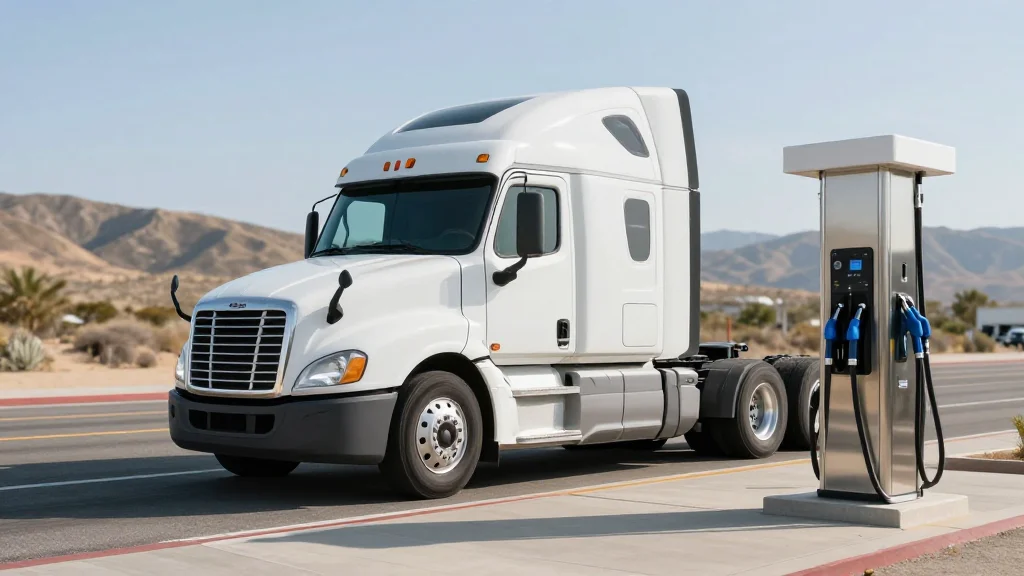
Toyota Backs 40 Hydrogen Class 8 Trucks for Southern California Logistics

Companies Mentioned

Why It Matters
The Toyota‑Hyroad deal provides a rare, real‑world test of hydrogen fuel‑cell trucks in a market that has struggled to achieve scale. By pairing vehicles with dedicated refueling infrastructure, the partnership can generate data on total cost of ownership, station economics and vehicle reliability—key variables that have so far limited broader adoption. Success could validate hydrogen as a viable complement to battery‑electric trucks for specific freight corridors, prompting additional private and public investment. At the same time, the arrangement highlights the challenges of building a hydrogen market from the bottom up. The need for a corporate sponsor to stitch together assets, customers and fuel supply underscores the current absence of organic demand. Policymakers and investors will watch the trial closely to gauge whether subsidies and infrastructure spending can be justified without a clear commercial pull.
Key Takeaways
- •Toyota will deliver 40 Class 8 hydrogen trucks to Hyroad for Southern California logistics.
- •Hyroad, led by ex‑Nikola executives, acquired the truck assets from Nikola’s remains.
- •Toyota will build hydrogen refueling stations in Ontario, California to support the fleet.
- •California hydrogen price rose from $16.50/kg in 2019 to $34.55/kg in 2024.
- •Fuel cost per mile for hydrogen trucks ($0.49‑$0.58) remains higher than battery‑electric trucks ($0.057‑$0.10).
Pulse Analysis
Toyota’s approach reflects a long‑term, option‑value play rather than a short‑term commercial push. By embedding itself across the supply chain—vehicle, fuel, and infrastructure—the automaker can capture data, protect its fuel‑cell IP and keep the technology alive while the market matures. This mirrors Toyota’s earlier hydrogen bets, such as the Mirai sedan and fuel‑cell bus programs, which survived despite weak economics because they served as learning platforms.
The 40‑truck pilot is strategically placed in Southern California, a region with aggressive zero‑emission mandates and generous subsidies for hydrogen stations. If the trial demonstrates that trucks can run at high utilization and that stations can break even without continuous subsidies, it could unlock a cascade of private capital. However, the stark cost differential with battery‑electric trucks means that hydrogen will likely remain niche, serving routes where weight, range or rapid refueling are decisive.
In the broader freight sector, the trial may force a re‑evaluation of policy incentives. Governments that have poured billions into hydrogen infrastructure will need concrete evidence of market traction to justify continued spending. Toyota’s experiment could either provide that proof point or reinforce the argument that battery‑electric solutions are the more pragmatic path for decarbonizing heavy haulage.
Toyota backs 40 hydrogen Class 8 trucks for Southern California logistics
Comments
Want to join the conversation?
Loading comments...